日本語
1) 何を扱うページ?
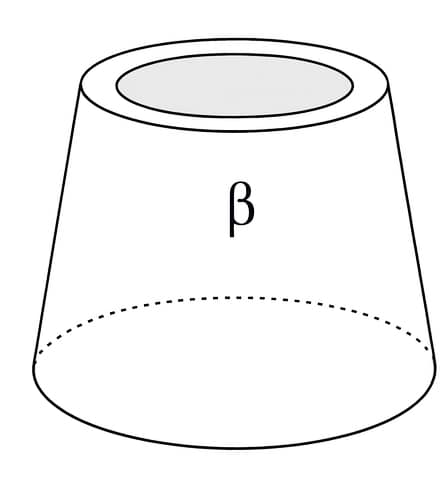
β-シクロデキストリン(βCD)は、ドーナツ状の“分子の器”として働き、分子を包み込んだり、表面に固定して機能を与えたりできます。
ここでは、βCDの「包接(ホスト–ゲスト)」特性が、材料・環境・分析分野でどう役立つかが分かる論文を3本紹介します。
選定論文(JIF順・上位3本)
Paper 1(Chemical Engineering Journal / 2026)
Synergistic effect of hydrogen bond network and molecular cage enables wide-temperature quasi-solid zinc-ion batteries
– Journal: Chemical Engineering Journal(Vol. 529, 2026)
– DOI: 10.1016/j.cej.2026.173033
– ねらい(何が課題?)
– 亜鉛イオン電池は安全性が高い一方、電解質が「温度」に弱いと性能が落ちやすい
– やったこと(方法)
– 水素結合ネットワーク(分子間の“弱い結びつき”)と、分子ケージ(“分子のカゴ”)の考え方を組み合わせ、準固体電解質を設計
– 分かりやすいポイント(結果の要点)
– 低温〜高温まで、電池が動きやすい条件を広げる設計指針を提示
– 電解質を「液体っぽい利点」と「固体っぽい安定性」の両方に寄せる発想
– βCDとの関係(この分野での意味)
– βCDは“分子の器”として 分子ケージ設計・水素結合ネットワーク制御に使われやすく、電解質・ゲル材料の機能設計に応用される
– 応用イメージ
– 低温環境での蓄電、屋外・寒冷地利用、再エネ平準化など
Paper 2(Biomaterials / 2026)
Smart multifunctional ROS-responsive supramolecular hydrogel based on β-cyclodextrin for chronic wound healing
– Journal: Biomaterials(2026)
– DOI: 10.1016/j.biomaterials.2026.124006
– ねらい(何が課題?)
– 慢性創傷(治りにくい傷)では、炎症や活性酸素(ROS)が関与して治癒が遅れやすい
– やったこと(方法)
– βCDの包接能を利用した超分子(非共有結合)ゲルを設計し、ROSに応答する“スマート”材料として働かせる
– 分かりやすいポイント(結果の要点)
– 傷環境(ROSなど)に応じて性質が変わることで、治癒を助ける材料設計の方向性を示す
– “化学結合でガチガチに固めない”ので、柔軟に機能を盛り込みやすい
– βCDとの関係(この分野での意味)
– βCDは、薬剤や機能分子を可逆的に保持・放出させる設計に向き、医用ハイドロゲルで活躍しやすい
– 応用イメージ
– 創傷被覆材、ドラッグデリバリー、刺激応答型バイオ材料
Paper 3(Separation and Purification Technology / 2025)
Enantioseparation of twenty chiral compounds in capillary electrophoresis using cyclodextrin derivatives, ionic liquids, and their combination as chiral selectors
– Journal: Separation and Purification Technology(2025)
– DOI: 10.1016/j.seppur.2025.131702
– ねらい(何が課題?)
– 右手・左手のように“鏡像関係”の分子(鏡像異性体:エナンチオマー)は、薬効や安全性が異なることがある
– そのため、分析で「片方だけを分けて測る」技術が重要
– やったこと(方法)
– キャピラリー電気泳動(CE)で、CD誘導体・イオン液体・その組合せを「キラルセレクター」として使い分離条件を検討
– 分かりやすいポイント(結果の要点)
– 多数(20種類)のキラル化合物を対象に、分離性能を高める組合せの考え方を整理
– 実務分析で役立つ“条件探索の道筋”を提供
– βCDとの関係(この分野での意味)
– βCDやその誘導体は、分子を包み込むことで左右の違い(キラリティ)を見分ける“分子の手袋”として働く
– 応用イメージ
– 医薬品品質管理、環境分析、食品・香料分析
用語ミニ解説(短く)
- βCD(β-シクロデキストリン):環状オリゴ糖。内側が疎水的で分子を包みやすい。
- 包接(ホスト–ゲスト):ホスト(βCD)がゲスト分子を取り込む相互作用。
- 超分子(supramolecular):共有結合ではなく、水素結合などで組み上がる分子集合体。
- ROS:活性酸素種。炎症・酸化ストレスに関係。
- エナンチオマー分離(キラル分離):鏡像異性体を分ける分析技術。
参考文献(ファイル内の論文)
- Wu, J. et al. Synergistic effect of hydrogen bond network and molecular cage enables wide-temperature quasi-solid zinc-ion batteries. Chemical Engineering Journal 529 (2026). DOI: 10.1016/j.cej.2026.173033
- Tian, J. et al. Smart multifunctional ROS-responsive supramolecular hydrogel based on β-cyclodextrin for chronic wound healing. Biomaterials (2026). DOI: 10.1016/j.biomaterials.2026.124006
- Wang, M. et al. Enantioseparation of twenty chiral compounds in capillary electrophoresis using cyclodextrin derivatives, ionic liquids, and their combination as chiral selectors. Separation and Purification Technology (2025). DOI: 10.1016/j.seppur.2025.131702
English (for website)
What this page covers
β-Cyclodextrin (βCD) is a doughnut-shaped “molecular host” that can include (encapsulate) guest molecules and provide functions to materials and interfaces.
Below are three selected papers (from the attached file) that illustrate how βCD-related concepts contribute to energy storage, biomedical hydrogels, and chiral separation/analysis.
Selected papers (Top 3 by JIF)
Paper 1 (Chemical Engineering Journal / 2026)
Synergistic effect of hydrogen bond network and molecular cage enables wide-temperature quasi-solid zinc-ion batteries
– Journal: Chemical Engineering Journal (Vol. 529, 2026)
– DOI: 10.1016/j.cej.2026.173033
– Motivation
– Zinc-ion batteries are attractive for safety, but electrolyte performance can be sensitive to temperature.
– Approach
– A quasi-solid electrolyte concept combining a hydrogen-bond network with a molecular-cage design.
– Key takeaways (in bullet points)
– Provides a design strategy to widen the usable temperature window.
– Suggests how to balance “liquid-like conductivity” and “solid-like stability.”
– Relevance to βCD research
– βCD is often used as a host/molecular-cage motif and as a network modifier in gels/electrolytes.
Paper 2 (Biomaterials / 2026)
Smart multifunctional ROS-responsive supramolecular hydrogel based on β-cyclodextrin for chronic wound healing
– Journal: Biomaterials (2026)
– DOI: 10.1016/j.biomaterials.2026.124006
– Motivation
– Chronic wounds are associated with inflammation and oxidative stress (ROS), delaying healing.
– Approach
– A βCD-enabled supramolecular hydrogel designed to respond to ROS.
– Key takeaways (in bullet points)
– Demonstrates how stimulus-responsive behavior can be integrated into soft materials.
– Highlights the advantage of non-covalent assembly for multifunctional design.
– Relevance to βCD
– βCD host–guest interactions enable reversible loading/release of functional molecules.
Paper 3 (Separation and Purification Technology / 2025)
Enantioseparation of twenty chiral compounds in capillary electrophoresis using cyclodextrin derivatives, ionic liquids, and their combination as chiral selectors
– Journal: Separation and Purification Technology (2025)
– DOI: 10.1016/j.seppur.2025.131702
– Motivation
– Enantiomers can show different bioactivity and safety profiles; reliable chiral analysis is essential.
– Approach
– Capillary electrophoresis (CE) using cyclodextrin derivatives, ionic liquids, and combinations as chiral selectors.
– Key takeaways (in bullet points)
– Summarizes practical condition-design logic across 20 chiral compounds.
– Useful for analytical workflows in pharmaceuticals and environmental samples.
– Relevance to βCD
– βCD derivatives act as “molecular gloves” that distinguish left/right-handed molecules.
Mini glossary
- βCD (β-cyclodextrin): cyclic oligosaccharide; hydrophobic cavity enables inclusion of guest molecules.
- Host–guest inclusion: reversible encapsulation of a guest by a host molecule.
- Supramolecular: assembled via non-covalent interactions (e.g., hydrogen bonding).
- ROS: reactive oxygen species.
- Chiral separation / enantioseparation: separation of mirror-image isomers.
References (from the attached file)
- Wu, J. et al. Chemical Engineering Journal 529 (2026). DOI: 10.1016/j.cej.2026.173033
- Tian, J. et al. Biomaterials (2026). DOI: 10.1016/j.biomaterials.2026.124006
- Wang, M. et al. Separation and Purification Technology (2025). DOI: 10.1016/j.seppur.2025.131702