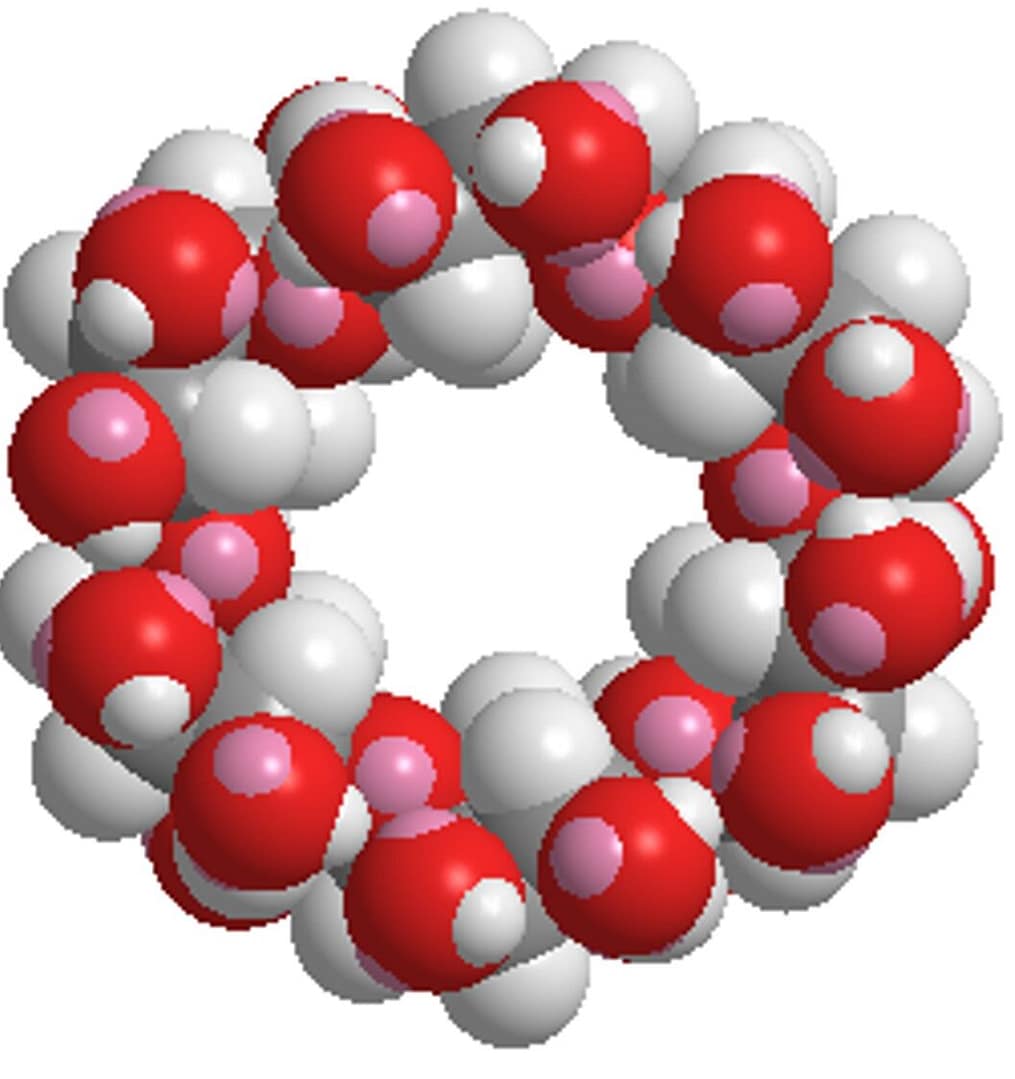
この記事は、シクロデキストリン(CD、αCDを含む)の考え方と、応用の広がりを一般の方向けにまとめたものです。
※「αCD」にフォーカスしつつ、レビュー論文が扱う“CD全体(α/β/γ)”の視点も含めて整理しています。
1. α-シクロデキストリン(αCD)って何?
シクロデキストリン(CD)は、ブドウ糖が輪っか状につながった分子です。
真ん中に「空洞(ポケット)」があるため、そこに別の分子が“入る(包接する)”ことで、性質が変わります。
- 水に溶けにくい分子を、溶けやすくする
- におい・刺激・分解を抑えて安定化する
- 分子同士の“くっつき方”を設計し、材料(ゲル等)を作る
2. 3本のレビュー論文が教えるポイント(やさしい要約)
(A) CDは「分子 → 応用」まで幅広く使える(全体像の整理)
CDの基礎から、環境・産業・医療などの応用までを俯瞰して整理したレビューです。
「CDは“分子を扱う道具”であり、用途が横断的に広がる」というイメージがつかめます。
- どんな場面でCDが役立つか(応用マップ)
- 最近の動向をまとめた総説
(B) “自己修復するゲル”=やわらかい材料を分子の結合で作る
「自己修復(self-healing)」するゲルは、切れても戻るような動的な結合を利用します。
CDのような超分子相互作用は、こうした“戻れる結合”の設計に向いています。
- 生体材料(組織工学)に向けたゲル設計の考え方
- “分子の引っかかり”を使って、やさしい条件で材料化する発想
(C) ドラッグデリバリー(薬の放出)へ:注射できるゲル、体内で固まるゲル
薬を必要な場所・タイミングで働かせるため、ゲルの中に薬を入れて徐放する設計が重要です。
超分子の“結合モチーフ”を使うと、流動性(注射しやすさ)や体内でのゲル化などを調整できる、という整理がされています。
- “剪断で流れて、止まると固まる”材料(shear-thinning)
- 体内(その場)でゲル化する設計(in situ gelation)
- 薬と材料の相互作用(drug–matrix interactions)で放出を制御
3. 研究・教育での見せ方(HP向けの一言例)
- 分子レベルの「包む」発想が、医療材料や環境浄化に直結する
- CDは「化学」「材料」「生命」「環境」をまたいで使える横断ツール
- “自己修復ゲル”“注射できるゲル”など、未来のやさしい医療材料の設計にもつながる
用語ミニ解説
- 包接(inclusion):分子の空洞に別の分子が入ること
- 超分子(supramolecular):共有結合ではなく、弱い相互作用の組み合わせでできる分子集合体
- ハイドロゲル(hydrogel):水を多く含む、やわらかい材料(ゼリーのようなイメージ)
- 自己修復(self-healing):壊れても相互作用で“戻る”性質
- 徐放(controlled release):薬などをゆっくり放出すること
参考文献(添付ファイルより)
- Bernhard, S et al. (2021). Supramolecular engineering of hydrogels for drug delivery. ADVANCED DRUG DELIVERY REVIEWS. DOI: 10.1016/j.addr.2021.02.002
- Crini, G et al. (2018). Cyclodextrins, from molecules to applications. ENVIRONMENTAL CHEMISTRY LETTERS. DOI: 10.1007/s10311-018-0763-2
- Saunders, L et al. (2019). Self-Healing Supramolecular Hydrogels for Tissue Engineering Applications. MACROMOLECULAR BIOSCIENCE. DOI: 10.1002/mabi.201800313
α-Cyclodextrin (αCD) and Supramolecular Materials: A 3‑Review Overview for the Public
This article is a public‑friendly summary based strictly on the three review papers included in the attached file.
While we highlight α‑cyclodextrin (αCD), the reviews often discuss cyclodextrins (α/β/γ) as a family, so we organize the key ideas accordingly.
1. What is α‑Cyclodextrin (αCD)?
Cyclodextrins (CDs) are ring‑shaped sugar molecules with a small inner cavity (“pocket”).
When another molecule fits into that pocket (often described as “inclusion/encapsulation”), the guest molecule’s properties can change.
Typical outcomes include:
- improving apparent solubility of hydrophobic molecules
- stabilizing sensitive molecules (odor, irritation, degradation)
- designing soft materials (e.g., hydrogels) via supramolecular interactions
2. What the three review papers teach (plain‑language takeaways)
(A) From “molecules” to broad applications: a big‑picture map
One review provides a panoramic overview of cyclodextrins—from fundamental concepts to diverse applications across fields.
It helps readers understand CDs as a cross‑disciplinary toolbox.
(B) Self‑healing hydrogels: soft materials built with reversible interactions
Self‑healing hydrogels rely on dynamic, reversible bonding, so the material can recover after damage.
Cyclodextrin‑based supramolecular motifs are well‑suited to this “reversible connection” concept.
- design logic for tissue‑engineering hydrogels
- gentle formation through supramolecular assembly
(C) Drug delivery hydrogels: injectability, in‑situ gelation, and controlled release
For drug delivery, the material must control where and when drugs are released.
Supramolecular “binding motifs” can tune injectability and in‑situ gelation and help regulate drug–matrix interactions.
- shear‑thinning behavior (flows under force, holds shape at rest)
- in‑situ gelation (gelation at the target site)
- controlled release via drug–matrix interactions
3. Short lines you can use on a lab website (examples)
- Molecular “encapsulation” concepts can translate directly to biomedical materials and environmental solutions.
- Cyclodextrins are a cross‑field platform spanning chemistry, materials, life science, and environmental science.
- Self‑healing and injectable hydrogels illustrate how supramolecular design enables gentler next‑generation materials.
Mini‑glossary
- Inclusion/encapsulation: a guest molecule sits inside a host cavity
- Supramolecular: assemblies held together by multiple weak interactions rather than permanent covalent bonds
- Hydrogel: water‑rich soft material (jelly‑like)
- Self‑healing: ability to recover after damage via reversible interactions
- Controlled release: gradual release of drugs or molecules over time
References (from the attached file)
- Bernhard, S et al. (2021). Supramolecular engineering of hydrogels for drug delivery. ADVANCED DRUG DELIVERY REVIEWS. DOI: 10.1016/j.addr.2021.02.002
- Crini, G et al. (2018). Cyclodextrins, from molecules to applications. ENVIRONMENTAL CHEMISTRY LETTERS. DOI: 10.1007/s10311-018-0763-2
- Saunders, L et al. (2019). Self-Healing Supramolecular Hydrogels for Tissue Engineering Applications. MACROMOLECULAR BIOSCIENCE. DOI: 10.1002/mabi.201800313