date: 2026-01-10
tags: [“Cyclodextrin”, “αCD”, “Supramolecular”, “Host–Guest”, “Materials”]
このページは、αCDに関連して頻繁に参照される「古典」文献を3本選び、一般向けに要点をまとめたものです。
まず結論(ここがポイント)
- αCDは“分子を包む”ホスト分子:におい・薬・色素などを入れて性質を変えられます。
- 材料(ゲル)設計にも効く:ほどける結合=加工しやすい・自己修復など。
- 分子機械の文脈でも重要:ロタキサンなどでCDが“輪”として登場します。
ピックアップ文献 3本(解説付き)
Paper 1
書誌:Crini, G, Fourmentin, S, Fenyvesi, É, Torri, G, Fourmentin, M, Morin-Crini, N (2018). Cyclodextrins, from molecules to applications. Environmental Chemistry Letters. DOI: 10.1007/s10311-018-0763-2 (https://doi.org/10.1007/s10311-018-0763-2)
(Web of Science: WOS:000451136500013 / 被引用数: 263)
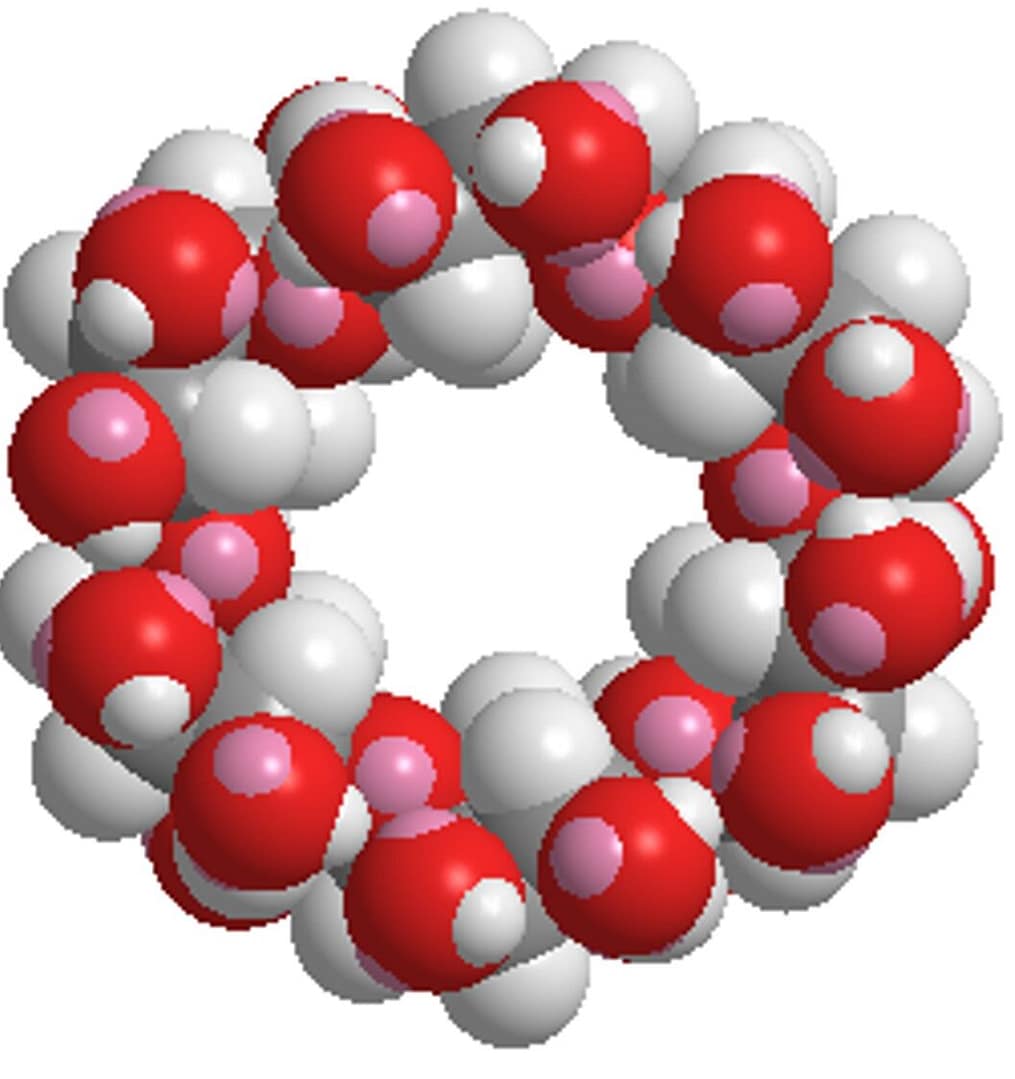
シクロデキストリン(CD)は“分子を包み込む”性質をもつ環状糖で、αCDはその中でも空洞(キャビティ)が最も小さいタイプです。応用(医薬、環境、材料)に直結する基礎として、まず全体像をつかめる総説を1本入れました。
この論文でわかること
– CDの構造と「包接(ホスト–ゲスト)」の基本、誘導体化の考え方
– 医薬・食品・化粧品・環境浄化など、分野横断の応用マップ
– 近年の研究動向(機能材料・ナノテクなど)を短時間で俯瞰できる
読みどころ(HP向け):図やまとめ(応用カテゴリ、代表例)を拾い読みすると、HP記事の導入・図解に使いやすいです。
Paper 2
書誌:Bernhard, S, Tibbitt, MW (2021). Supramolecular engineering of hydrogels for drug delivery. Advanced Drug Delivery Reviews. DOI: 10.1016/j.addr.2021.02.002 (https://doi.org/10.1016/j.addr.2021.02.002)
(Web of Science: WOS:000651730200014 / 被引用数: 283)
αCDは“可逆な結合”を利用した材料設計でも重要です。例えば、αCDを含む超分子相互作用を使うと、注射できるゲル(ハイドロゲル)や自己修復材料のように、外力で流れて止まる材料設計が可能になります。
この論文でわかること
– 「超分子結合(ほどける結合)」でネットワーク強度や粘弾性を調整
– 薬物と材料の相性(親和性)を設計して、放出速度をコントロール
– “せん断で流れて、置くと固まる”など、使い勝手に直結する機能
読みどころ(HP向け):「結合様式→材料特性→ドラッグデリバリー性能」の流れが、一般向け解説(たとえ話)に落とし込みやすいです。
Paper 3
書誌:Sauvage, JP (2017). From Chemical Topology to Molecular Machines (Nobel Lecture). Angewandte Chemie-International Edition. DOI: 10.1002/anie.201702992 (https://doi.org/10.1002/anie.201702992)
(Web of Science: WOS:000408605300014 / 被引用数: 685)
分子機械の古典的世界(カテナン、ロタキサン)では、“輪”と“軸”のような部品が組み合わさり、外部刺激で動きが制御されます。CD(特にαCD)はロタキサンの“輪”として登場することがあり、超分子化学の代表例としてよく引用されます。
この論文でわかること
– 「結び目/絡み合い(トポロジー)」という視点で分子を設計する発想
– カテナン・ロタキサンなど“機械的結合”分子の基本概念
– 光・酸化還元など外部刺激で動作する“分子機械”へ展開
読みどころ(HP向け):αCDそのものの総説というより、CDが登場する“超分子設計の文脈”を掴むのに向いた文献です(HPの背景説明に便利)。
用語ミニ解説(3つだけ)
- シクロデキストリン(CD):ブドウ糖が輪になった分子。外側は親水性、内側は疎水性で“分子を入れる空洞”を持ちます。
- αCD / βCD / γCD:空洞の大きさが違う3兄弟(αが最小)。入る分子のサイズで使い分けます。
- 超分子(ホスト–ゲスト)相互作用:共有結合ではなく、弱い力(疎水性相互作用、静電相互作用など)で“出たり入ったり”できる結合。
参考文献(このページで扱った3報)
- Crini, G, Fourmentin, S, Fenyvesi, É, Torri, G, Fourmentin, M, Morin-Crini, N (2018). Cyclodextrins, from molecules to applications. Environmental Chemistry Letters. DOI: 10.1007/s10311-018-0763-2 (https://doi.org/10.1007/s10311-018-0763-2)
- Bernhard, S, Tibbitt, MW (2021). Supramolecular engineering of hydrogels for drug delivery. Advanced Drug Delivery Reviews. DOI: 10.1016/j.addr.2021.02.002 (https://doi.org/10.1016/j.addr.2021.02.002)
- Sauvage, JP (2017). From Chemical Topology to Molecular Machines (Nobel Lecture). Angewandte Chemie-International Edition. DOI: 10.1002/anie.201702992 (https://doi.org/10.1002/anie.201702992)
α‑Cyclodextrin (αCD) — 3 Classic Papers (from Web of Science)
This page summarizes three frequently cited ‘classic’ papers related to α‑cyclodextrin (αCD), selected only from the attached Web of Science dataset.
Key takeaways
- αCD is a host molecule that can encapsulate guests and modify their properties.
- αCD enables functional materials via reversible supramolecular binding (e.g., injectable/self‑healing gels).
- CDs also appear in molecular machines (e.g., as ring components in rotaxanes), providing a powerful conceptual link.
Selected papers with plain‑language commentary
Paper 1
Reference: Crini, G, Fourmentin, S, Fenyvesi, É, Torri, G, Fourmentin, M, Morin-Crini, N (2018). Cyclodextrins, from molecules to applications. Environmental Chemistry Letters. DOI: 10.1007/s10311-018-0763-2 (https://doi.org/10.1007/s10311-018-0763-2)
(Web of Science: WOS:000451136500013 / Times Cited: 263)
Cyclodextrins (CDs) are cyclic sugars that can host other molecules in their hydrophobic cavity. α‑Cyclodextrin (αCD) has the smallest cavity among the common CDs. This review is a good starting point to understand the big picture—from fundamentals to applications.
What you’ll learn
– Core concepts: structure, host–guest inclusion, and derivatization
– Cross‑disciplinary application map (pharma, food, cosmetics, environment, etc.)
– A concise overview of recent directions in CD research
Website-friendly tip: Skim the figures and summary tables first; they translate well into website-friendly diagrams.
Paper 2
Reference: Bernhard, S, Tibbitt, MW (2021). Supramolecular engineering of hydrogels for drug delivery. Advanced Drug Delivery Reviews. DOI: 10.1016/j.addr.2021.02.002 (https://doi.org/10.1016/j.addr.2021.02.002)
(Web of Science: WOS:000651730200014 / Times Cited: 283)
αCD is also useful in materials design via reversible supramolecular interactions. Such interactions enable injectable/shear‑thinning hydrogels and self‑healing networks—features that directly connect molecular binding to macroscopic function.
What you’ll learn
– Tuning mechanics of polymer networks using reversible supramolecular motifs
– Controlling drug release by engineering drug–matrix affinity
– Design principles for “flows under stress, solidifies at rest” materials
Website-friendly tip: The ‘chemistry → mechanics → delivery performance’ storyline is ideal for public-facing explanations.
Paper 3
Reference: Sauvage, JP (2017). From Chemical Topology to Molecular Machines (Nobel Lecture). Angewandte Chemie-International Edition. DOI: 10.1002/anie.201702992 (https://doi.org/10.1002/anie.201702992)
(Web of Science: WOS:000408605300014 / Times Cited: 685)
In the classic world of molecular machines (catenanes/rotaxanes), components are mechanically interlocked and their motion can be controlled by external stimuli. CDs (including αCD) often appear as ring components in rotaxane architectures—making this Nobel lecture a valuable conceptual reference.
What you’ll learn
– Molecular design from the viewpoint of chemical topology
– Key ideas behind mechanically interlocked molecules
– How external stimuli (light, redox, etc.) can direct molecular motion
Website-friendly tip: This is less an αCD-focused review and more a conceptual backbone for explaining why CD-based host–guest chemistry matters.
Mini glossary (3 terms)
- Cyclodextrin (CD): cyclic glucose oligomers with a hydrophobic cavity that can host guest molecules.
- αCD / βCD / γCD: common CDs with different cavity sizes (α is the smallest).
- Supramolecular (host–guest) interaction: reversible, noncovalent binding that enables dynamic functions.
References (3 papers used on this page)
- Crini, G, Fourmentin, S, Fenyvesi, É, Torri, G, Fourmentin, M, Morin-Crini, N (2018). Cyclodextrins, from molecules to applications. Environmental Chemistry Letters. DOI: 10.1007/s10311-018-0763-2 (https://doi.org/10.1007/s10311-018-0763-2)
- Bernhard, S, Tibbitt, MW (2021). Supramolecular engineering of hydrogels for drug delivery. Advanced Drug Delivery Reviews. DOI: 10.1016/j.addr.2021.02.002 (https://doi.org/10.1016/j.addr.2021.02.002)
- Sauvage, JP (2017). From Chemical Topology to Molecular Machines (Nobel Lecture). Angewandte Chemie-International Edition. DOI: 10.1002/anie.201702992 (https://doi.org/10.1002/anie.201702992)