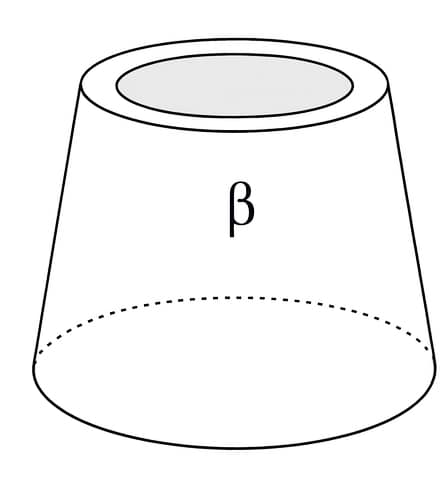
β-シクロデキストリン(βCD)関連
作成日: 2026-01-24
日本語(JP)
0. βCDって何?(やさしい説明)
β-シクロデキストリン(βCD)は、ブドウ糖が輪っか状につながった分子で、
– 外側は水になじみやすい(親水性)
– 内側に“空洞(ポケット)”があり、油っぽい分子を包み込める(疎水性)
という特徴があります。
この「包み込む(包接)」性質を使って、溶けにくい物質を水に溶けやすくしたり、分子同士を“はめ込み”でつなげて材料にしたりできます。
1. 選定した3本(Impact Factorが高い順)
1) ACS Catalysis(IF ≈ 13.1)
Computational Redesign and Mechanistic Insights into P450BM3 Enable Regioselective C-H Hydroxylation of Structurally Diverse Steroids(2026)
DOI: https://doi.org/10.1021/acscatal.5c08382
2) Carbohydrate Polymers(IF ≈ 12.5)
Coupling of opposite thermoresponsive mechanisms induced by host-guest complexation and LCST phase transition in formulations of modified hyaluronan and (3-cyclodextrin copolymer(2026)
DOI: https://doi.org/10.1016/j.carbpol.2025.124862
3) Small(IF ≈ 12.1)
Amorphous Red Phosphorus: Host-Guest Assembly with Cyclodextrin(2026)
DOI: https://doi.org/10.1002/smll.202512805
2. それぞれの論文のポイント(一般向け解説)
論文1(ACS Catalysis / IF≈13.1)
テーマ:βCDで「溶けにくい基質」を助け、酵素反応を高収率化
– 何をした?
ステロイドのような水に溶けにくい分子を、改良した酵素(P450)で狙った位置だけ酸化(C–H水酸化)できるように、計算+実験で酵素を設計。
– βCDはどこで効く?
反応条件の最適化で hydroxypropyl-β-cyclodextrin(HP-βCD) を加え、基質の溶解性・取り扱いを改善。
– 何がすごい?(イメージ)
「溶けにくくて反応が進みにくい」問題を、βCD系の“包み込み”で助け、高い生成量(titer)にも到達。
– 応用先
医薬・ホルモン関連の水酸化ステロイドは重要中間体になりやすく、生体触媒での精密合成に役立ちます。
ミニ用語:HP-βCD=βCDにヒドロキシプロピル基を付け、水溶性を上げたもの。
論文2(Carbohydrate Polymers / IF≈12.5)
テーマ:βCDの“はめ込み”を使った、温度で性質が変わるスマートゲル
– 何をした?
ヒアルロン酸(HA)に、
– 温度で集まってゲル化する鎖(LCST的挙動)
– アダマンタン(βCDと強く結合する“相手分子”)
を導入し、さらに βCDを含む共重合体と組み合わせて、温度に応じて粘弾性が変わる材料を作りました。
– βCDはどこで効く?
βCDの空洞にアダマンタンが“カチッ”とはまり、可逆的な物理架橋(host–guest架橋)として働きます。
– 何がすごい?
「温めると固まる」と「温めるとほどける」のような逆向きの仕組みを重ねることで、広い温度域で“ほどよい硬さ”を維持できる設計指針を示しました。
– 応用先
注入型ゲル、細胞足場、ドラッグデリバリーなど、“温度で変わる材料”に向きます。
論文3(Small / IF≈12.1)
テーマ:βCDが「無機の鎖(赤リン)」を“糸通し”して水溶化する
– 何をした?
アモルファス赤リン(ARP)が実は“鎖状(ポリマー状)”の特徴を持つことに注目し、
αCD/βCDの穴に赤リン鎖が通る「擬似ポリロタキサン(糸通し構造)」を水中で作りました。
– βCDはどこで効く?
βCDの穴径が赤リン鎖の太さに合い、よりスムーズに“糸通し”が進行。結果として、水に溶けにくい赤リンが水分散・水溶化しやすくなります。
– 何がすごい?
ふつう無機材料の水溶化は化学修飾が必要になりがちですが、host–guestだけで親水性を調整できる可能性を示しました。
– 応用先
リン系機能材料、環境・エネルギー材料、複合材料などの設計に新しい道。
3. まとめ(βCD研究の“今”)
この3本に共通するキーワードは、βCDの
– 包接で溶かす(溶解性アップ)
– はめ込みでつなぐ(可逆架橋)
– 糸通しで材料化する(超分子組立)
という「分子レベルの道具」としての強みです。
βCDは“添加剤”にも“材料の骨組み”にもなれるため、今後も応用が広がります。
参考文献(ファイル内から選定)
- Ye, Q, Li, ZH, Cui, Y et al.. Computational Redesign and Mechanistic Insights into P450BM3 Enable Regioselective C-H Hydroxylation of Structurally Diverse Steroids. ACS Catalysis (2026). DOI: 10.1021/acscatal.5c08382
- Layre, AM, Karakasyan, C, Vincent, L et al.. Coupling of opposite thermoresponsive mechanisms induced by host-guest complexation and LCST phase transition in formulations of modified hyaluronan and (3-cyclodextrin copolymer. Carbohydrate Polymers (2026). DOI: 10.1016/j.carbpol.2025.124862
- Zhou, JL, Yao, LF, Zhang, S et al.. Amorphous Red Phosphorus: Host-Guest Assembly with Cyclodextrin. Small (2026). DOI: 10.1002/smll.202512805
English(EN)
0. What is β-Cyclodextrin (βCD)?
β-Cyclodextrin (βCD) is a ring-shaped sugar molecule.
It has a water-friendly outer surface and a hydrophobic inner cavity (“pocket”).
Because of this, βCD can host (encapsulate) hydrophobic molecules, which helps:
– increase solubility/dispersion in water, and
– build reversible “host–guest” assemblies (supramolecular materials).
1. Top 3 Papers (ranked by Journal Impact Factor)
1) ACS Catalysis (IF ≈ 13.1)
Computational Redesign and Mechanistic Insights into P450BM3 Enable Regioselective C-H Hydroxylation of Structurally Diverse Steroids (2026)
DOI: https://doi.org/10.1021/acscatal.5c08382
2) Carbohydrate Polymers (IF ≈ 12.5)
Coupling of opposite thermoresponsive mechanisms induced by host-guest complexation and LCST phase transition in formulations of modified hyaluronan and (3-cyclodextrin copolymer (2026)
DOI: https://doi.org/10.1016/j.carbpol.2025.124862
3) Small (IF ≈ 12.1)
Amorphous Red Phosphorus: Host-Guest Assembly with Cyclodextrin (2026)
DOI: https://doi.org/10.1002/smll.202512805
2. Plain-language highlights
Paper 1 (ACS Catalysis / IF≈13.1)
βCD as a helper for poorly soluble substrates in biocatalysis
– What they did: computationally redesigned a P450 enzyme to achieve site-selective steroid hydroxylation.
– Where βCD matters: adding hydroxypropyl-βCD (HP-βCD) improves handling/solubility of hydrophobic steroids during biotransformation.
– Why it matters: tackles a real bottleneck (“hard-to-dissolve substrates”) and enables high-yield production of valuable hydroxylated steroids.
Paper 2 (Carbohydrate Polymers / IF≈12.5)
Host–guest crosslinking for temperature-adaptive hydrogels
– What they did: engineered hyaluronan-based polymers bearing thermoresponsive chains and adamantane, then coupled them with a βCD-containing copolymer.
– Where βCD matters: βCD cavities bind adamantane strongly, acting as reversible physical crosslinks.
– Why it matters: combining two “opposite” thermoresponsive mechanisms broadens the temperature window where the gel keeps useful viscoelasticity—promising for injectable gels and biomedical formulations.
Paper 3 (Small / IF≈12.1)
βCD “threads” an inorganic polymer (red phosphorus) to make it water-compatible
– What they did: demonstrated host–guest “threading” of amorphous red phosphorus (ARP) through α/βCD, forming pseudo-polyrotaxanes in water.
– Where βCD matters: βCD’s cavity size matches ARP well, enabling more efficient threading and enhanced water solubility/dispersion.
– Why it matters: shows a route to tune hydrophilicity of an inorganic polymer without covalent modification, opening new supramolecular design strategies.
References (selected from the attached list)
- Ye, Q, Li, ZH, Cui, Y et al.. Computational Redesign and Mechanistic Insights into P450BM3 Enable Regioselective C-H Hydroxylation of Structurally Diverse Steroids. ACS Catalysis (2026). DOI: 10.1021/acscatal.5c08382
- Layre, AM, Karakasyan, C, Vincent, L et al.. Coupling of opposite thermoresponsive mechanisms induced by host-guest complexation and LCST phase transition in formulations of modified hyaluronan and (3-cyclodextrin copolymer. Carbohydrate Polymers (2026). DOI: 10.1016/j.carbpol.2025.124862
- Zhou, JL, Yao, LF, Zhang, S et al.. Amorphous Red Phosphorus: Host-Guest Assembly with Cyclodextrin. Small (2026). DOI: 10.1002/smll.202512805