Diarylethen Papers List
| Authors | Article Title | Source Title | Author Keywords | Keywords Plus | Abstract | Journal Abbreviation | Journal ISO Abbreviation | Publication Date | Publication Year | Volume | Issue | Start Page | End Page | Article Number | DOI |
|---|---|---|---|---|---|---|---|---|---|---|---|---|---|---|---|
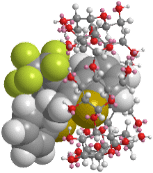
| Suganuma, M; Kitagawa, D; Hamatani, S; Sotome, H; Ito, S; Miyasaka, H; Kobatake, S | Suppression of Photocyclization of an Inverse Type Diarylethene Derivative by Inclusion into β-Cyclodextrin | CHEMPHOTOCHEM | Photochromism; Diarylethene; Inverse; Cyclodextrin; Photoreactivity | INTENSE COLORATION; PHOTOCHROMISM; PHOTOSWITCHES; FLUORESCENCE; FURYLFULGIDE; DEPENDENCE; SPIROPYRAN; MEMORIES; EMISSION | Diarylethene derivatives are one of the promising compounds for practical applications including optical memory, display, sensor, and photoactuator. In this work, we newly designed and synthesized an inverse type diarylethene derivative bearing sodium carbonate groups at the p-position of the lateral phenyl ring and investigated the photochromic behavior in the presence and absence of cyclodextrins (CDs) (alpha CD, beta CD, and gamma CD). Interestingly, only in the presence of beta CD, the photocyclization reactivity decreased. From the results of job-plots, NOESY spectra, and quantum chemical calculations, it was suggested that the distinctive interaction between the diarylethene and beta CD leads to the restriction of molecular geometrical change, resulting in the suppression of the photocyclization reactivity. These results provide information on the rational designing of inverse type diarylethenes with advanced properties. The photocyclization reactivity of an inverse type diarylethene derivative decreased by inclusion into beta-cyclodextrin. From the detailed investigation using job-plots, NOESY spectra and DFT calculations, it was elucidated that this is ascribed to the restriction of the rotational motion between thiophene and phenyl rings. These results would provide useful information for the photochromic reaction dynamics of inverse type diarylethenes. image | CHEMPHOTOCHEM | ChemPhotoChem | MAR | 2024 | 8 | 3 | 10.1002/cptc.202300244 | |||
| Hu, YY; Dai, XY; Dong, XY; Huo, M; Liu, Y | Generation of Tunable Ultrastrong White-Light Emission by Activation of a Solid Supramolecule through Bromonaphthylpyridinium Polymerization | ANGEWANDTE CHEMIE-INTERNATIONAL EDITION | Bromonaphthylpyridinium; Phosphorescence; Polymerization; Sulfobutylether-beta-Cyclodextrin; White-Light Emission | ROOM-TEMPERATURE PHOSPHORESCENCE; ENERGY-TRANSFER; HOST-GUEST; FLUORESCENCE; AFTERGLOW | Herein, we reported solid supramolecular bromonaphthylpyridinium polymers (P-BrNp), which exhibit tunable phosphorescence emission in the amorphous state enabled by sulfobutylether-beta-cyclodextrin (SBE-beta-CD) and diarylethene derivatives. The monomer BrNp gave single fluorescence emission at 490 nm, while an apparent room-temperature phosphorescence (RTP) at 550 nm emerged for P-BrNp copolymers with various feed ratios. Through fluorescence-phosphorescence dual emission, P-BrNp-0.1 displayed an ultrahigh white-light emission quantum yield of 83.9 %. Moreover, the subsequent assembly with SBE-beta-CD further enhanced the phosphorescent quantum yield of P-BrNp-0.1 from 64.1 % to 71.3 %, accompanied by the conversion of photoluminescence emission from white to yellow. Diarylethene monomers were introduced as photoswitches to realize reversible RTP emission, which can be used in switchable data encryption and multifunctional writing ink. | ANGEW CHEM INT EDIT | Angew. Chem.-Int. Edit. | NOV 2 | 2022 | 61 | 44 | e202213097 | 10.1002/anie.202213097 | ||
| Bianchini, G; Strukul, G; Wass, DF; Scarso, A | Photomodulable phosphines incorporating diarylethene moieties | RSC ADVANCES | NUCLEAR-MAGNETIC-RESONANCE; HETEROARYLPHOSPHORUS COMPOUNDS; CATALYTIC ACTIVITY; BETA-CYCLODEXTRIN; MOLECULAR SWITCH; LIGHT; CHEMISTRY; REACTIVITY; COMPLEX | Incorporation of the dithienylethene moiety as a substituent provides new 'switchable' phosphine ligands whose electronic properties are reversibly modulated by light. The presence of electron-withdrawing substituents in the photochromic unit increases the sigma-donation gap between the photo-modulated open and closed phosphine isomers. | RSC ADV | RSC Adv. | 2015 | 5 | 14 | 10795 | 10798 | 10.1039/c4ra16127k | |||
| Liu, SE; Zhang, Y; Li, JQ; Wang, CH; Chen, Y; Liu, Y | Water/Light Multiregulated Supramolecular Polypseudorotaxane Gel with Switchable Room-Temperature Phosphorescence | ACS APPLIED MATERIALS & INTERFACES | supramolecular polypseudorotaxane; room-temperaturephosphorescence; multistimulus response; cyclodextrin; multicolor materials | Water/light regulated room-temperature phosphorescence (RTP) of polypseudorotaxane supramolecular gel is constructed by threading the poly-(ethylene glycol)-block-poly-(propylene glycol)-block-poly-(ethylene glycol) (PEG-PPG-PEG) chain with the bromoaromatic aldehyde into mono-(6-ethylenediamine-6-deoxygenated)-beta-cyclodextrin (ECD) cavities and further assembling with negatively charged Laponite XLG (CNS) and diarylethene derivative (DAE) through electrostatic interaction. This hydrogel exhibits significant blue fluorescence emission; instead, after lyophilization to xerogel, the system exhibits both blue fluorescence and yellow RTP based on the rigid network structure of the xerogel, which restricts the vibration of the phosphor and suppresses the nonradiative relaxation process. Interestingly, the addition of excess ECDs to the gel system can enhance the RTP emission. Furthermore, the reversible luminescence behavior can be adjusted by the photoresponsive isomerism of DAE and humidity. This polypseudorotaxane supramolecular gel system provides a novel strategy for constructing tunable RTP materials. | ACS APPL MATER INTER | ACS Appl. Mater. Interfaces | JAN 22 | 2024 | 16 | 4 | 5149 | 5157 | 10.1021/acsami.3c17214 | ||
| Fu, HG; Shi, XX; Liu, M; Wang, HJ; Zhang, FJ; Chen, Y; Liu, Y | Photo-Controlled Nano-Supramolecular Size and Reversible Luminescent Behaviors Based on Cucurbit[7]uril Cascaded Assembly | ACS APPLIED MATERIALS & INTERFACES | cucurbit[7]uril; supramolecular assembly; anti-counterfeiting; diarylethene (DAE) derivatives; photo-induced aggregationwith emission enhancement (PIAEE) | AGGREGATION-INDUCED EMISSION; CONSTRUCTION; ENHANCEMENT; HOST | Supramolecular luminescent material with switchable behavior and photo-induced aggregation with emission enhancement is a current research hot spot. Herein, a size-tunable nano-supramolecular assembly with reversible photoluminescent behavior was constructed by noncovalent polymerization of diarylethene-bridged bis(coumarin) derivative (DAE-CO), cucurbit[7]uril (CB[7]), and beta-cyclodextrin-grafted hyaluronic acid (HACD). Benefiting from the macrocyclic confinement effect, the guest molecule DAE-CO was included into the cavity of CB[7] to give enhanced fluorescence emission of the resulting DAE-CO subset of CB[7](2) with longer lifetime at 432 nm to 1.43 ns, thereby further enhancing fluorescence output and lifetime (1.46 ns) when further assembled with HACD, compared with the free DAE-CO (0.95 ns). In addition, DAE-CO, DAE-CO subset of CB[7](2), and DAE-CO subset of CB[7](2)&HACD all possessed characteristics of aggregation-induced emission and reversible photo-switched structural interconversion, exhibiting an obvious photophysical activation phenomenon of self-aggregation into larger nanoparticles with increase in fluorescence emission intensity, lifetime, and size after irradiation, which could be increased step by step with the alternating irradiation of 254 nm (5 min) or >600 nm (30 s) repeated 7 times. These supramolecular assemblies were successfully used in the tumor cells' targeted imaging and anti-counterfeiting because of the capability of HACD for recognizing specific receptors overexpressed on the surface of tumor cells and the excellent photo-regulated switch ability of DAE-CO, providing an approach of constructing photo-induced emission-enhanced luminescent materials. | ACS APPL MATER INTER | ACS Appl. Mater. Interfaces | OCT 4 | 2023 | 15 | 41 | 48564 | 48573 | 10.1021/acsami.3c12242 | |
| Fu, HG; Chen, Y; Dai, XY; Liu, Y | Quaternary Supramolecular Nanoparticles as a Photoerasable Luminescent Ink and Photocontrolled Cell-Imaging Agent | ADVANCED OPTICAL MATERIALS | anticounterfeiting; cell imaging; cyclodextrin; diarylethene; photoerasable luminescent ink | CONVERSION; SYSTEMS | Photoswitchable luminescent supramolecular assemblies based on cyclodextrins have attracted considerable attention owing to their potential applications as smart materials, but most of the assemblies reported to date emit green or blue light with low contrast and high interference. In this study, novel photoluminescent red-luminescent quaternary supramolecular nanoparticles (2) are constructed from a dithienylethene derivative (1), a beta-cyclodextrin-functionalized ruthenium complex (Ru-HOP-CD), Pluronic F-127, and cetrimonium bromide. Compared with the binary assembly 1@Ru-HOP-CD, the quaternary nanoparticles exhibit high fluorescence resonance energy transfer efficiency, with Ru-HOP-CD acting as the donor and 1 as the acceptor. Owing to the reversible photoswitched interconversion of the two forms of the dithienylethene component, the fluorescence of the nanoparticles could be switched on/off by irradiation with UV or visible light, both in solution and in the solid state. As a result, the nanoparticles could be used as a photoerasable red-luminescent ink and as a photocontrolled cell-imaging agent. These functional nanoparticles can be expected to be useful in the fields of information security and biology. | ADV OPT MATER | Adv. Opt. Mater. | AUG | 2020 | 8 | 15 | 2000220 | 10.1002/adom.202000220 | ||
| Fan, XH; Fan, YH; Dang, YL; Xie, PH; Li, X; Cao, ZQ; Jiang, S; Liu, LJ; Zheng, X; Xie, LX; Niu, CY; Liu, GX; Chen, Y | Logically ordered control of organic room-temperature long-lived supramolecular luminophors | CHINESE CHEMICAL LETTERS | Supramolecular chemistry; Logically ordered control; Long-lived luminescent switch; TS-FRET; Stepwise assembly; RTP | Herein, a ternary supramolecular assembly (BPP-BQ subset of CB[8]-SCD) is successfully constructed by a bromophenylpyridine-tethered-bromoisoquinoline (BPP-BQ), cucurbit[8]uril (CB[8]) and sulfonated beta cyclodextrin (SCD) via successive assembling way, exhibiting progressively enhanced green roomtemperature phosphorescence (RTP). The self-aggregates of BPP-BQ subset of CB[8]-SCD accommodate an energy acceptor rhodamine B (RhB) to form a light-harvesting system (BPP-BQ subset of CB[8]-SCD@RhB) with further enhanced yellow long-lifetime luminescence with large Stokes shift based on triplet-singlet F & ouml;rster resonance energy transfer (TS-FRET). Crucially, the introduction of a photoactive diarylethene achieves the long-lived photoluminescence of BPP-BQ subset of CB[8]-SCD@RhB to be switched with the efficiency of up to 98 % through logically ordered lowering/enhancing RTP performance of the energy donor and intercepting/restoring TS-FRET pathway, when stimulated by host-guest competition and light illumination in sequence. Moreover, BPP-BQ subset of CB[8]-SCD@RhB is evenly doped into polyvinyl alcohol or polyacrylamide to obtain high-performance luminescent films with long afterglow. The abovementioned logically ordered stimulus-switched long-lived emission enables the light-harvesting system in both solution and solid state to be applied in high-security-level information encryption and transformation, and anticounterfeiting. (c) 2025 Published by Elsevier B.V. on behalf of Chinese Chemical Society and Institute of Materia Medica, Chinese Academy of Medical Sciences. | CHINESE CHEM LETT | Chin. Chem. Lett. | AUG | 2025 | 36 | 8 | 110648 | 10.1016/j.cclet.2024.110648 | |||
| Yuan, YN; Yan, GJ; Wang, ZX; Song, YY; Wang, ZY; Wang, QL; Yang, C; Liao, Y | Inclusion Complexes of a Metastable-State Photoacid with High Acidity and Chemical Stability | CHEMPHOTOCHEM | photoacids; cyclodextrin; inclusion complexes; acidity; quantum chemical calculations | BETA-CYCLODEXTRIN; THERMAL-ISOMERIZATION; GAMMA-CYCLODEXTRIN; SPIROPYRAN; MEROCYANINE; POLYMER; PHOTOCHROMISM; BINDING; DIARYLETHENE; CRYSTAL | Metastable-state merocyanine photoacids (MCHs) have been widely applied to various chemical, material and biomedical areas to drive or control chemical processes with light. In this work, stoichiometry and association constants have been determined for inclusion complexes of a photoacid MCH1 ((E)3-(2-(2-hydroxystyryl)-3,3-dimethyl-3H-indol-1-ium-1-yl)- propane-1-sulfonate) with ss-cyclodextrin (ss-CD), 2-hydroxypropyl-ss-CD (HP-ss-CD),gamma-CD and HP-gamma-CD by means of UV-Vis absorption spectroscopic titrations. The inclusion complexes were studied to enhance acidity and chemical stability. Kinetic study showed that CDs stabilized the acidic metastable state and slowed its thermal relaxation. The acidity of the ground and metastable state (pK(a)(GS) and pK(a)(MS)) increased upon addition of CDs. The pKaMS of [MCH1 center dot (.-CD)2] is as low as 0.92 in comparison with 2.24 for MCH1, which is close to the lowest pKaMS values (1.20 and 1.03) reported previously, in which case the MCH1 was structurally modified with alkylammonium side chains. Addition of CDs also significantly enhanced the chemical stability of MCH1 against hydrolysis, which is one of the major concerns for the application of MCHs. In particular, the addition of HP-ss-CD increased the half-life of MCH1 in aqueous solution more than four-fold. Moreover, the quantum chemical calculations confirmed the stoichiometry and analyzed the binding sites and hydrogen bonds of the inclusion complexes. | CHEMPHOTOCHEM | ChemPhotoChem | DEC | 2023 | 7 | 12 | 10.1002/cptc.202300141 | |||
| Dai, XY; Dong, XY; Liu, ZX; Liu, GX; Liu, Y | Controllable Singlet Oxygen Generation in Water Based on Cyclodextrin Secondary Assembly for Targeted Photodynamic Therapy | BIOMACROMOLECULES | PHOTOSENSITIZERS; CONSTRUCTION; CONVERSION; CELLS | The construction of supramolecular assembly whose singlet oxygen (O-1(2)) generation capability can be controllably regulated in water still remains challenging. Herein, a novel cyclodextrin secondary assembly was fabricated from the photochromic-switch moiety diarylethene-bridged dicyclodextrin, the adamantane-polypyridyl ruthenium photosensitizer, and the cancer-cell-targeting ligand beta-cyclodextrin-grafted hyaluronic acid, which not only possessed cancer-cell-targeting ability but also served as cell imaging and photodynamic therapy agents with noninvasive controllability. In virtue of the multivalent interactions between the three components, they could self-assemble in two stages to form uniform spherical nanoparticles (OF-NPs) with average diameters of about 80 nm, as indicated by scanning electron microscopy, high-resolution transmission electron microscopy, atomic force microscopy, and dynamic light scattering. Significantly, the prepared OF-NPs exhibited excellent photochromic performance and can transform into their ring-closed form (CF-NPs), accompanied by the efficient energy transfer from donor 2 to CF-1 and gradual quenching of O-1(2) generation. Cellular imaging experiments showed that OF-NPs could specifically target the mitochondria of A549 cancer cells, while CF-NPs displayed a negligible red fluorescence signal in A549 cells due to the energy-transfer process. Furthermore, in vitro cytotoxicity tests revealed that upon irradiation with 450 nm light, OF-NPs with 10 mu M concentration displayed a remarkable higher cytotoxicity with the cell death rate of up to 88% toward A549 cancer cells, which was approximately 4.4 times higher than that of CF-NPs. Additionally, the apoptosis rate of A549 cells induced by OF-NPs under light irradiation was 4.68 times higher than that of CF-NPs. These well-designed cyclodextrin secondary assemblies successfully achieve noninvasive control over the generation of O-1(2) both in water and in cancer cells by irradiation at distinct wavelengths and are further applied in targeted PDT, which avoid the inadvertent photosensitizer activation and provide a new approach for cancer therapy with more safety and high efficiency. | BIOMACROMOLECULES | Biomacromolecules | DEC | 2020 | 21 | 12 | 5369 | 5379 | 10.1021/acs.biomac.0c01547 |
β-シクロデキストリン × ジアリールエテンで拓く光応答スマート材料
概要
β-シクロデキストリン(β-CD)とジアリールエテン(DAE)を核に、発光・りん光・サイズ変化・酸性度制御まで“光で書き換え”可能な超分子材料が多数報告されています。β-CDの包接・架橋(SBE-β-CD, HP-β-CD, HA-CD など)により、DAEや関連発光体の配向や分子運動が制御され、室温りん光(RTP)の強化、TS-FRETを介した長寿命発光、光で消せるインク/データ暗号化、腫瘍指向型PDT(光線力学療法)のオン/オフが実現しました。CB[7]/CB[8]等の他マクロ環と組み合わせた“段階的”包接も有効で、光誘起会合(PIAEE)や粒径の可逆制御が可能です。
ここがポイント
- β-CD包接により逆型DAEの回転自由度を拘束し、光環化を選択的に抑制(スイッチ設計指針)。
- SBE-β-CDとDAE導入でRTP/蛍光のデュアル発光、白色〜黄色の高量子収率化、光書込み/消去。
- HA-CDやHP-β-CDにより水中安定化・標的指向性・酸性度や半減期の向上を両立。
- CB[7]→HA-CDの“段階包接”で光誘導のサイズ増大と発光強化(PIAEE)、抗偽造・細胞標識へ展開。
- DAEを導入したポリロタキサン/ゲルでRTPを水分・光で可逆制御、耐久性のある書込み媒体に。
論文別ハイライト
- β-CD包接で逆型DAEの光環化抑制:β-CDのみが回転自由度を拘束→環化量子収率が低下。NOESY/DFTで機構を裏付け。用途像:選択的スイッチ設計。
- SBE-β-CD活性化による白色〜黄RTP:BrNp系高分子にDAEを組込み、RTP/蛍光の二重発光で高QYを実現。用途像:書いて消せるインク・暗号化。
- フォスフィン×DAE:光で電子供与性が可逆変化する“スイッチャブル”配位子。用途像:光で触媒活性を微調整。
- 水/光多重制御ポリロタキサンRTPゲル:ECD(β-CD派生)で鎖貫入+DAEで発光/湿度応答、乾燥後はRTP顕在化。用途像:再書込み媒体・センサー。
- CB[7]→HA-CDの段階包接:DAE-CO×CB[7]×HA-CDでPIAEEと可逆発光、粒径と寿命が光で段階的に増大。用途像:抗偽造・腫瘍標識。
- 赤色フォトイレイザブルインク:Ru-HOP-β-CD×DAE×界面活性剤でFRET強化、溶液/固体の双方でオン/オフ。用途像:高コントラストの消せる赤色インク・細胞イメージング。
- “論理順序”で長寿命発光制御:S-β-CD/CB[8]/RhB系にDAEを導入し、RTPとTS-FRET経路を論理的に遮断/回復(高効率)。用途像:高セキュリティ暗号。
- メタステーブル光酸のβ-/HP-β-CD包接:pKa,MSを低下させ、加水分解耐性・半減期を向上。用途像:光でpH駆動する材料。
- β-CD二次集合体で1O2オン/オフPDT:DAE-CD×Ru-アダマンタン×HA-CDで粒子化、波長選択で一重項酸素生成を可逆制御。用途像:狙った場でのみ作動するPDT。
用語ミニ解説
- DAE(ジアリールエテン):光で開閉環し、色や発光・FRETを切替。
- β-CD:疎水空洞をもつ環状オリゴ糖。包接で運動/配向を拘束し発光や反応性を調整。
- HA-CD / SBE-β-CD / HP-β-CD:標的化・溶解性・安定性の付与に有効なβ-CD誘導体。
- RTP(室温りん光):長寿命の発光。拘束環境やエネルギー移動で強化。
- TS-FRET:三重項→一重項のエネルギー移動。長寿命・大ストークスシフトを実現。
- PIAEE:光誘起会合に伴う発光増強現象。
想定アプリケーション
- 消去可能な発光インク/再書込み媒体・データ暗号化
- 生細胞イメージング(ミトコンドリア標識など)
- 波長選択で作動する腫瘍指向型PDT
- 光で特性を変える触媒・材料評価プローブ
- 偽造防止タグ・長残光フィルム・多刺激応答センサー
関連キーワード
#Cyclodextrin #βCD #Diarylethene #Dithienylethene #RTP #TSFRET #HACD #Photoerasable #AntiCounterfeiting #PhotodynamicTherapy #HostGuest #PIAEE
β-Cyclodextrin × Diarylethene for Light-Programmable Smart Materials
Overview
Focusing on β-cyclodextrin (β-CD) and diarylethene (DAE), recent studies demonstrate light-rewritable supramolecular systems that switch phosphorescence/fluorescence, particle size, and even acidity. β-CD inclusion (SBE-β-CD, HP-β-CD, HA-CD) constrains motion and orientation, boosting RTP, enabling TS-FRET-based long-lived emission, photoerasable inks, secure data storage, and wavelength-gated PDT. Stepwise confinement with CB[7]/CB[8] further triggers photo-induced aggregation (PIAEE) and reversible nano-size control.
Why it matters / Key points
- β-CD selectively suppresses photocyclization of inverse-type DAE by restricting rotation—useful for switch design.
- SBE-β-CD + DAE deliver high-QY dual emission (RTP/FL) and erasable writing under light.
- HA-CD / HP-β-CD improve aqueous stability, targeting, acidity, and lifetime.
- Cascaded CB[7]→HA-CD assemblies add PIAEE and reversible photo-expansion for anti-counterfeiting and imaging.
- DAE-integrated polyrotaxane/gels enable humidity-/light-tunable RTP for durable rewritable media.
Highlights by study
- Inverse-DAE + β-CD: β-CD uniquely suppresses ring-closure; mechanism validated by NOESY/DFT → a design rule for selective switching.
- Ultrastrong white/yellow RTP via SBE-β-CD: BrNp polymers + DAE achieve high-QY dual emission; erasable inks & encryption.
- DAE-phosphines: Light-modulated σ-donation in phosphines; a concept for photo-tunable catalysis.
- Water/light-regulated RTP polyrotaxane gel: ECD (β-CD) threading + DAE affords reversible RTP controlled by humidity and light.
- CB[7]-cascaded nano-assemblies with HA-CD: DAE-CO + CB[7] + HA-CD show reversible PL and size growth (PIAEE); applied to targeting and anti-counterfeiting.
- Quaternary nanoparticles (Ru-HOP-β-CD + DAE): High FRET efficiency, on/off in solution and solid; red photoerasable ink & photocontrolled cell imaging.
- Logically ordered long-lived emission: S-β-CD/CB[8]/RhB system where DAE switches RTP and TS-FRET with high efficiency—fit for secure encryption.
- Photoacid + β-/HP-β-CD: Inclusion lowers pKa,MS and increases half-life—non-synthetic route to stronger/safer photoacids.
- β-CD secondary assemblies for on/off 1O2 (PDT): DAE-CD × Ru-adamantane × HA-CD nanoparticles target mitochondria and switch singlet oxygen by wavelength.
Mini-glossary
- DAE (diarylethene): Photochromic switch toggling color/emission/FRET.
- β-CD: Host cavity that restrains motion, tuning reactivity and emission.
- HA-CD / SBE-β-CD / HP-β-CD: β-CD derivatives for targeting, solubilization, stability.
- RTP: Room-temperature phosphorescence; long-lived emission.
- TS-FRET: Triplet-to-singlet FRET enabling long-lived, large-shift emission.
- PIAEE: Photo-induced aggregation with emission enhancement.
Potential applications
- Rewritable photonic inks and secure data storage
- Live-cell imaging (mitochondrial targeting)
- Wavelength-gated, tumor-targeted PDT
- Light-tunable catalysis and probes
- Anti-counterfeiting tags, long-afterglow films, multi-stimuli sensors
Suggested tags
#Cyclodextrin #βCD #Diarylethene #Dithienylethene #RTP #TSFRET #HACD #Photoerasable #AntiCounterfeiting #PhotodynamicTherapy #HostGuest #PIAEE
参考文献 / References
- Suganuma, M.; Kitagawa, D.; Hamatani, S.; Sotome, H.; Ito, S.; Miyasaka, H.; et al. Suppression of Photocyclization of an Inverse Type Diarylethene Derivative by Inclusion into β-Cyclodextrin. ChemPhotoChem 2023, 7, e202300244. DOI: https://doi.org/10.1002/cptc.202300244
- Hu, Y.-Y.; Dai, X.-Y.; Dong, X.; Huo, M.; Liu, Y. Generation of Tunable Ultrastrong White-Light Emission by Activation of a Solid Supramolecule through Bromonaphthylpyridinium Polymerization. Angewandte Chemie International Edition 2022, 61, e202209747. DOI: https://doi.org/10.1002/anie.202209747
- Bianchini, G.; Strukul, G.; Wass, D. F.; Scarso, A. Photomodulable Phosphines Incorporating Diarylethene Moieties. RSC Advances 2015, 5(14), 10795–10798. DOI: https://doi.org/10.1039/C4RA16127K
- Liu, S.; Zhang, Y.; Li, J.; Wang, C.; Chen, Y.; Liu, Y. Water/Light Multiregulated Supramolecular Polypseudorotaxane Gel with Switchable Room-Temperature Phosphorescence. ACS Applied Materials & Interfaces 2024, 16(4), 5149–5157. DOI: https://doi.org/10.1021/acsami.3c17214
- Fu, H.-G.; Shi, X.-X.; Liu, M.; Wang, H.-J.; Zhang, F.; Chen, Y.; et al. Photo-Controlled Nano-Supramolecular Size and Reversible Luminescent Behaviors Based on Cucurbit[7]uril Cascaded Assembly. ACS Applied Materials & Interfaces 2023, 15(41), 48564–48573. DOI: https://doi.org/10.1021/acsami.3c12242
- Fu, C.; Chen, G.; Dai, X.; Liu, Y. Quaternary Supramolecular Nanoparticles as a Photoerasable Luminescent Ink and Photocontrolled Cell-Imaging Agent. Advanced Optical Materials 2020, 8(15), 2000220. DOI: https://doi.org/10.1002/adom.202000220
- Fan, X.; Fan, Y.; Dang, Y.; Xie, P.; Li, X.; Cao, Z.; et al. Logically Ordered Control of Organic Room-Temperature Long-Lived Supramolecular Luminophors. Chinese Chemical Letters 2025, 36(8), 110648. DOI: https://doi.org/10.1016/j.cclet.2024.110648
- Yuan, Y.-N.; Yan, G.-J.; Wang, Z.-X.; Song, Y.-Y.; Wang, Z.-Y.; Wang, Q.-L.; et al. Inclusion Complexes of a Metastable-State Photoacid with High Acidity and Chemical Stability. ChemPhotoChem 2023, 7(12), e202300141. DOI: https://doi.org/10.1002/cptc.202300141
- Dai, X.; Dong, X.; Liu, Z.; Liu, G.; Liu, Y. Controllable Singlet Oxygen Generation in Water Based on Cyclodextrin Secondary Assembly for Targeted Photodynamic Therapy. Biomacromolecules 2020, 21, 5369–5379. DOI: https://doi.org/10.1021/acs.biomac.0c01547
powered by ChatGPT