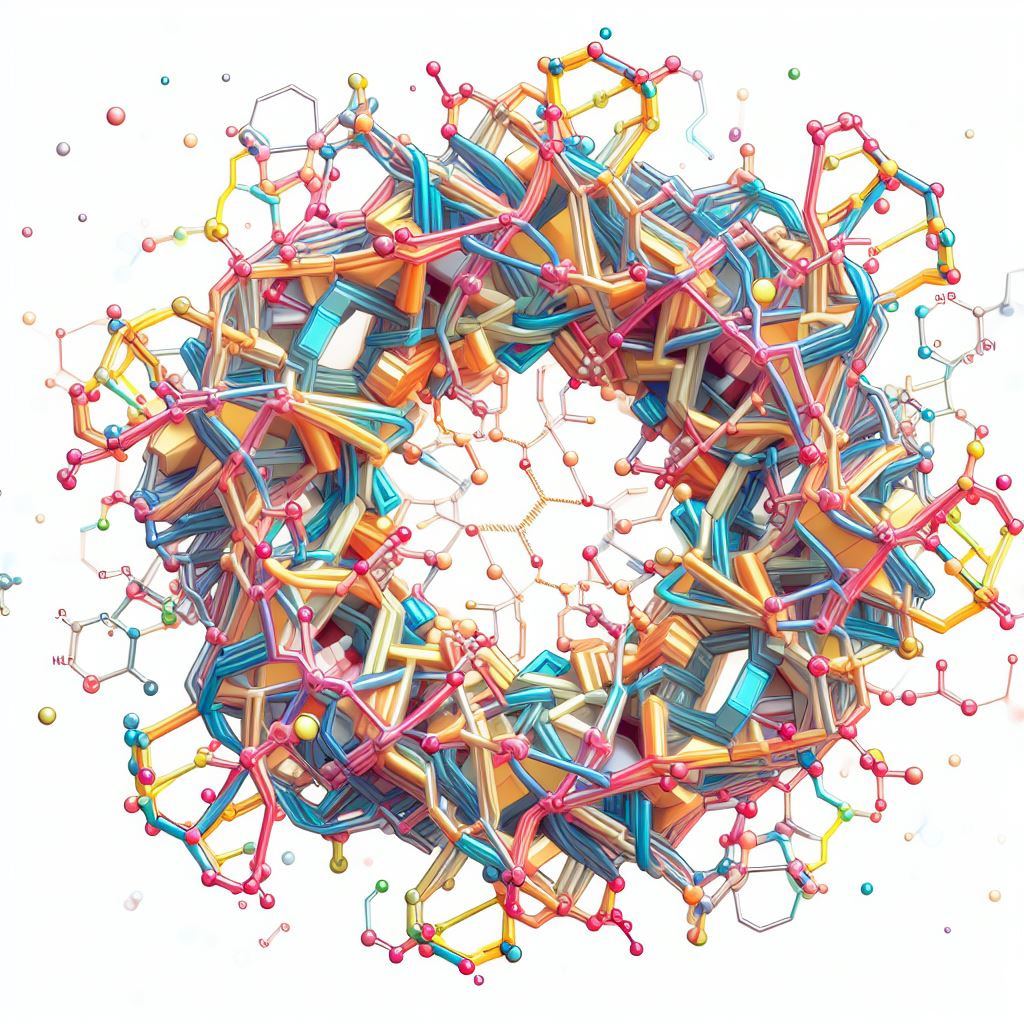
title: “γ-シクロデキストリン(γCD)レビュー3選:分子を包む“カップ”の科学”
date: 2026-01-11
tags: [γCD, Cyclodextrin, Host-Guest, Supramolecular, Review]
γ-シクロデキストリン(γCD)レビュー3選:分子を包む“カップ”の科学
γ-シクロデキストリン(γCD)は、分子を“中に入れて”性質を変えられる超分子ホスト(包接ホスト)の代表格です。
ここでは、添付データ(Web of Science抽出)に含まれるレビュー論文3本だけを使い、一般の方にも読みやすい形でポイントをまとめます。
γCDってなに?
シクロデキストリン(CD)は、ブドウ糖が輪になった“ドーナツ”のような分子。
その内側は疎水的(油になじみやすい)で、外側は親水的(水になじみやすい)という特徴があり、「水の中で、別の分子を包み込む」ことができます。
- γCD:ブドウ糖が8個のリング(α=6、β=7、γ=8)
- 目安として、βCDより“内側の空間”が大きく、少し大きめの分子も取り込みやすい
今回扱うレビュー論文(3本)
- 自己集合の“駆動力”を理解する(カオトロピック効果)
- CD全体像と応用地図をつかむ(分子→応用の俯瞰)
- 無機クラスター×有機×超分子(階層構造・ナノ材料)
1) 自己集合の“駆動力”を理解する:カオトロピック効果
文献:Assaf KI, Nau WM (2018). Angewandte Chemie-International Edition 57(43) 13968-13981. DOI: 10.1002/anie.201804597
ざっくり何が書いてある?
水の中で分子が集まって構造を作るとき、単に「疎水性だから集まる」だけでは説明しきれない現象があります。
本レビューは、“カオトロピック(chaotropic)”なイオンや分子が、自己集合を後押しするという視点を整理しています。
γCDとの関係(読み方のヒント)
γCDの包接(ホスト–ゲスト)は水中で起こるため、水和(みずわ)や溶媒和の理解が重要です。
この論文は「なぜ水の中で、ある組み合わせが安定化するのか?」という考え方の道具箱になります。
2) CDの全体像と応用地図:分子から社会実装へ
文献:Crini G, Fourmentin S, Fenyvesi É et al. (2018). Environmental Chemistry Letters 16(4) 1361-1375. DOI: 10.1007/s10311-018-0763-2
ざっくり何が書いてある?
CDの基本(構造、誘導体化、包接)から、材料・環境・医薬などへの応用までを広く見渡す総説です。
「CDで何ができるの?」を最短で把握したい人に向きます。
γCDとの関係(読み方のヒント)
γCDは“空間が大きい”という特徴を活かして、比較的大きな分子の取り込みや、溶解性・安定性の改善に使われます。
本総説を読むと、γCDを含むCD研究がどんな分野に接続しているかが掴めます。
3) 無機クラスター×有機×超分子:階層構造をつくる設計論
文献:Cameron JM, Guillemot G, Galambos T et al. (2022). Chemical Society Reviews 51(1) 293-328. DOI: 10.1039/d1cs00832c
ざっくり何が書いてある?
多核金属酸化物クラスター(ポリオキソメタレート等)に有機機能を付けた“ハイブリッド”分子が、
さらに超分子相互作用で集まり、ナノ材料や階層構造へ展開する流れを整理したレビューです。
γCDとの関係(読み方のヒント)
γCDのようなホスト分子は、ゲストのサイズ選択・溶解性付与・集合体の秩序化に役立つことがあります。
「分子→集合体→材料」というスケールアップの考え方を学ぶのに有用です。
研究・応用のヒント(γCDを使うときの見取り図)
- “何を包むか”:分子サイズ・形・疎水性のバランスを見る
- “どこで使うか”:水中(生体・環境)か、固体(材料・デバイス)か
- “どう組ませるか”:単独包接か、自己集合・多成分集合体か
- “評価法”:溶解性、吸収・蛍光、NMR、熱分析、散乱、顕微鏡など(目的に合わせて)
用語ミニ解説
- ホスト–ゲスト(Host–Guest):包み込む側(ホスト)と、包まれる側(ゲスト)の関係
- 包接(Inclusion):ホストの空間にゲストが入ること
- カオトロピック効果(Chaotropic effect):水の構造や水和の性質に関わり、自己集合を左右する“溶媒由来”の効果
- 階層構造(Hierarchical structure):分子が集まって、さらに大きな構造(ナノ〜マクロ)へつながる設計概念
参考文献(添付ファイル内の3本のみ)
- Assaf KI, Nau WM. The Chaotropic Effect as an Assembly Motif in Chemistry. Angewandte Chemie-International Edition (2018), 57(43), 13968-13981. https://doi.org/10.1002/anie.201804597
- Crini G, Fourmentin S, Fenyvesi É et al.. Cyclodextrins, from molecules to applications. Environmental Chemistry Letters (2018), 16(4), 1361-1375. https://doi.org/10.1007/s10311-018-0763-2
- Cameron JM, Guillemot G, Galambos T et al.. Supramolecular assemblies of organo-functionalised hybrid polyoxometalates: from functional building blocks to hierarchical nanomaterials. Chemical Society Reviews (2022), 51(1), 293-328. https://doi.org/10.1039/d1cs00832c
title: “γ-Cyclodextrin (γCD): 3 Review Articles for a Quick Start”
date: 2026-01-11
tags: [gamma-cyclodextrin, cyclodextrin, host-guest, supramolecular, review]
γ-Cyclodextrin (γCD): 3 Review Articles for a Quick Start
γ-Cyclodextrin (γCD) is a classic “molecular cup” in supramolecular chemistry: it can encapsulate other molecules and thereby tune their properties.
Below is an HP-ready overview based only on the three review papers contained in the attached Web of Science export.
What is γCD?
Cyclodextrins (CDs) are ring-shaped molecules made of glucose units.
They have a relatively hydrophobic inner cavity and a hydrophilic outer surface, so they can host a guest molecule in water (host–guest inclusion).
- γCD: 8 glucose units (α=6, β=7, γ=8)
- Compared with βCD, γCD offers a larger cavity, which can accommodate relatively larger guests
The 3 review papers covered here
- Understanding the “driving forces” of assembly (chaotropic effect)
- Seeing the big picture of cyclodextrins (from molecules to applications)
- From functional building blocks to hierarchical nanomaterials (hybrid POM assemblies)
1) Driving forces of self-assembly: the chaotropic effect
Reference: Assaf KI, Nau WM (2018). Angewandte Chemie-International Edition 57(43) 13968-13981. DOI: 10.1002/anie.201804597
What is this review about?
Not all assembly phenomena in water can be explained by “hydrophobicity” alone.
This minireview organizes the idea that chaotropic ions/molecules can promote or modulate supramolecular assembly via solvation-related effects.
Why it matters for γCD (how to read it)
γCD inclusion complexes form in aqueous media, so hydration/solvation concepts are essential.
This review helps you build intuition for why a particular host–guest pair becomes stable in water.
2) Cyclodextrins: from molecules to applications
Reference: Crini G, Fourmentin S, Fenyvesi É et al. (2018). Environmental Chemistry Letters 16(4) 1361-1375. DOI: 10.1007/s10311-018-0763-2
What is this review about?
A broad overview of cyclodextrins: fundamentals (structure, derivatization, inclusion) and a wide range of applications (materials, environment, pharma, etc.).
If you want a fast map of “what CDs can do,” this is a good starting point.
Why it matters for γCD
γCD’s larger cavity is often leveraged for hosting larger guests and improving solubility/stability.
This review places γCD-related work within the broader CD landscape.
3) Hybrid polyoxometalate assemblies: toward hierarchical nanomaterials
Reference: Cameron JM, Guillemot G, Galambos T et al. (2022). Chemical Society Reviews 51(1) 293-328. DOI: 10.1039/d1cs00832c
What is this review about?
A comprehensive review of organo-functionalized hybrid polyoxometalates (and related clusters) that further assemble into hierarchical nanostructures via supramolecular interactions.
Why it matters for γCD
Host molecules such as cyclodextrins can be useful for size selectivity, solubilization, and ordering of multi-component assemblies.
This paper is helpful for learning design thinking from molecules → assemblies → materials.
Practical takeaways for using γCD
- Pick the guest: size/shape and hydrophobicity balance matters
- Pick the environment: aqueous (bio/environment) vs. solid-state (materials/devices)
- Pick the architecture: single inclusion vs. multi-component self-assembly
- Pick the readout: spectroscopy, NMR, thermal analysis, scattering/microscopy, etc.
Mini glossary
- Host–guest: a host molecule binds/encapsulates a guest molecule
- Inclusion complex: a guest resides in the host cavity
- Chaotropic effect: solvation-driven effects that influence binding/assembly in water
- Hierarchical structure: structures built stepwise from molecular to nano/micro scales
References (only the 3 papers in the attached file)
- Assaf KI, Nau WM. The Chaotropic Effect as an Assembly Motif in Chemistry. Angewandte Chemie-International Edition (2018), 57(43), 13968-13981. https://doi.org/10.1002/anie.201804597
- Crini G, Fourmentin S, Fenyvesi É et al.. Cyclodextrins, from molecules to applications. Environmental Chemistry Letters (2018), 16(4), 1361-1375. https://doi.org/10.1007/s10311-018-0763-2
- Cameron JM, Guillemot G, Galambos T et al.. Supramolecular assemblies of organo-functionalised hybrid polyoxometalates: from functional building blocks to hierarchical nanomaterials. Chemical Society Reviews (2022), 51(1), 293-328. https://doi.org/10.1039/d1cs00832c