[γCD, Cyclodextrin, Host-Guest, Inclusion, MOF, SmartPackaging, OilWaterSeparation, SeparationScience]
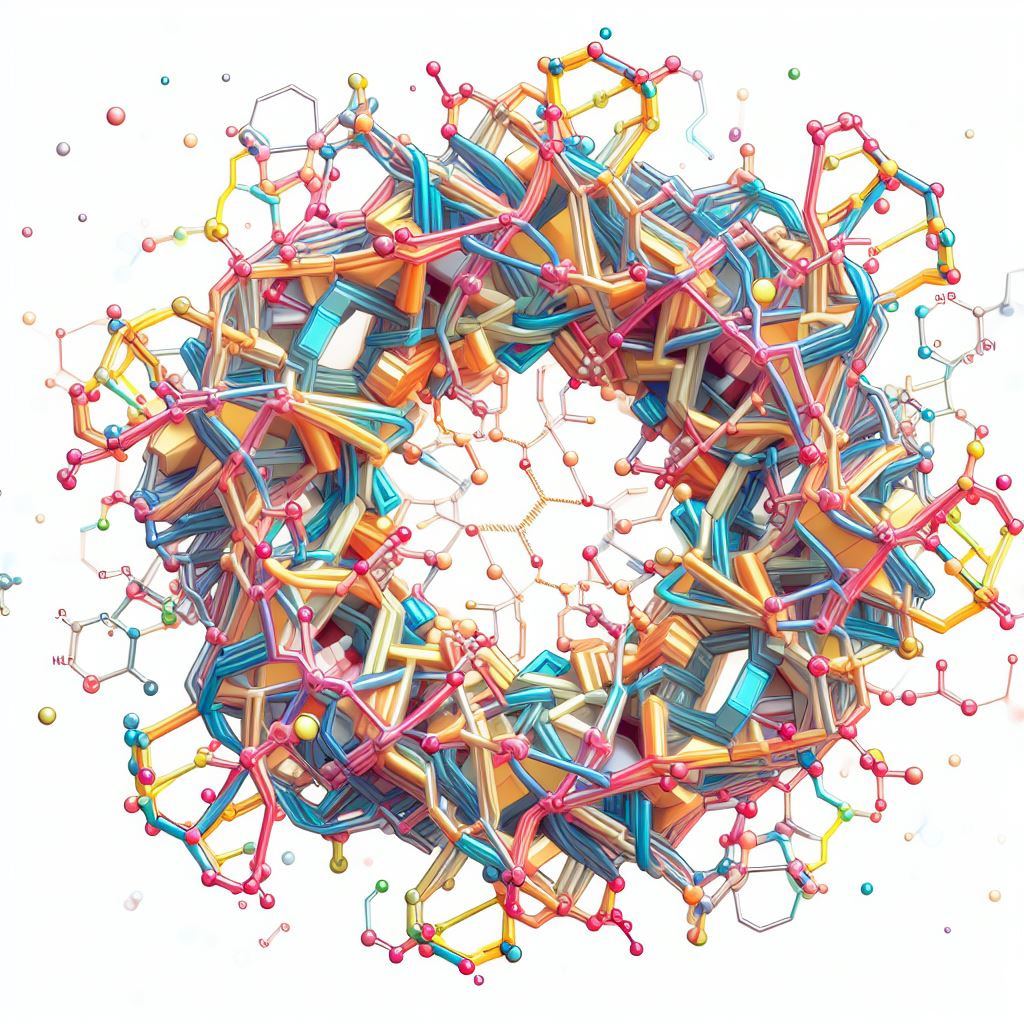
γ-シクロデキストリン(γCD)は、ブドウ糖が8個つながって輪になった“ドーナツ状”の分子で、内側の空間に別の分子を取り込む 「包接(ホスト–ゲスト)」 ができます。
この“分子を包む力”は、色素の安定化、機能性材料づくり、分析・分離など幅広い分野で活躍します。
ここでは、添付ファイル(Web of Science抽出)に含まれる論文から、最新・代表的な3報を選び、一般の方向けにポイントを解説します。
1) γCD-MOFで色素を守る:鮭の鮮度を“色で見える化”するフィルム
何をした研究?
天然色素(シコニン)をそのままフィルムに混ぜると、分散しにくい/劣化しやすいという課題があります。
そこで研究チームは、γCD由来の多孔質材料(γCD-MOF)に色素を“入れて守り”、その複合体をフィルム材料に混ぜ込みました。
ここがポイント
– γCD-MOFの“孔(あな)”に色素を取り込み、安定性・分散性を改善
– フィルムの色が pHやアンモニアに反応 → 魚の鮮度変化に対応
– さらに、色変化と鮮度指標(TVB-N)を結びつける深層学習モデルも構築
なぜ重要?
「食べられる/安全な素材」×「見た目で分かる鮮度表示」は、食品ロス削減にもつながる技術です。
2) γCD-MOF × PDMSで“水をはじく紙”をつくり、油水分離へ
何をした研究?
麦わら由来のセルロース紙に、γCD-MOFをその場で成長させて表面に凹凸を作り、さらにPDMS(シリコーン系樹脂)で表面エネルギーを調整することで、超はっ水(スーパー撥水)紙を作製しました。
ここがポイント
– 「紙」という再生可能資源をベースにしたサステナブル材料
– 重力だけで油と水を分けられる(ポンプ不要)という設計
– 繰り返し使っても高い分離性能を維持(再利用性)
なぜ重要?
油混じり排水の処理など、環境負荷の大きい分離工程を、より省エネ・簡便にする方向性を示します。
3) 超臨界流体クロマトグラフィー(SFC)で不純物解析:キラル分離の“選択性”を理解する
何をした研究?
医薬品(ダポキセチン)の不純物管理に向けて、キラル/アキラルを同時に扱えるSFC-UV法を短時間で実現し、添加剤による選択性の変化や、保持挙動の熱力学的解析(Van’t Hoff解析)を行いました。
本論文のトピックには γCD(シクロデキストリン) を含むキラル認識・分離化学が関連づけられています。
ここがポイント
– “どうして分離できるのか”を、経験だけでなく エネルギー・エントロピーの視点で説明
– 添加剤(酸/塩基)で選択性が変わる仕組みを整理
– 分離法の高度化は、医薬品の品質保証に直結
なぜ重要?
γCDを含むCD系分子は、分子の形の違い(鏡像異性体)を見分ける材料としても重要で、分析技術の発展と相性が良い分野です。
まとめ:γCD研究の“今”は「包接」→「材料」→「実装」へ
- 包接で分子を守る/機能を引き出す(色素、香り、薬など)
- 多孔質化(MOFなど)で材料として使いやすくする
- 食品・環境・分析へ社会実装が進む
参考文献(添付ファイル内の3報)
- Sun YD, Xu HB, Ma Y et al.. Films for salmon freshness monitor, prepared with lipophilic soy protein, hydroxypropyl methylcellulose, and octadecenylsuccinic anhydride-modified γ-cyclodextrin-MOF loaded with shikonin. Food Hydrocolloids (2026), 170, Article 111752. https://doi.org/10.1016/j.foodhyd.2025.111752
- Chen JC, Fan JM, Liu KF et al.. A sustainable superhydrophobic paper enabled by CD-MOF/PDMS synergistic engineering for highly efficient oil/water separation. Industrial Crops And Products (2026), 239, Article 122447. https://doi.org/10.1016/j.indcrop.2025.122447
- Schmidt L, Lemke J, Schmiady P et al.. Combined chiral-achiral supercritical fluid chromatography method for the impurity analysis of dapoxetine reveals insights in entropy-driven retention and acid-modulated selectivity. Journal Of Chromatography A (2026), 1765, Article 466489. https://doi.org/10.1016/j.chroma.2025.466489
English
γ-Cyclodextrin (γCD) at the Frontier: 3 Recent Papers on Inclusion and Materials
γ-Cyclodextrin (γCD) is a ring-shaped molecule made of eight glucose units.
Its key feature is host–guest inclusion: a guest molecule can be “held” inside the cavity, which can improve stability, dispersibility, and functionality.
Below is an HP-ready overview of three recent papers selected from the attached Web of Science export (this page cites only those papers).
1) Stabilizing a natural pigment with γCD-MOF: color-changing films for salmon freshness monitoring
What did they do?
Natural pigments can be unstable and hard to disperse in film-forming solutions.
This study encapsulated shikonin (a natural pigment) in a porous material based on γCD (γCD-MOF), and incorporated the pigment-loaded MOF into edible/biopolymer films.
Key points
– Encapsulation in γCD-MOF improved pigment stability and dispersion
– The film responded to pH and ammonia, enabling freshness monitoring
– A deep-learning model linked color changes to a freshness indicator (TVB-N)
Why it matters
“Visible” freshness indicators can support food safety and reduce food waste.
2) γCD-MOF + PDMS on cellulose paper: a sustainable superhydrophobic material for oil/water separation
What did they do?
Using cellulose paper sourced from wheat straw, the authors grew γCD-MOF in situ to create surface roughness, then tuned surface energy with a PDMS coating. The result was a superhydrophobic (water-repellent) paper.
Key points
– Paper-based, renewable substrate (sustainability-oriented)
– Gravity-driven oil/water separation (no pumping)
– High separation efficiency and good reusability
Why it matters
This direction can reduce energy and complexity in wastewater treatment processes.
3) Supercritical fluid chromatography (SFC) for impurity analysis: understanding selectivity in chiral separations
What did they do?
This paper developed a rapid SFC-UV method for impurity control of S-dapoxetine, combining chiral and achiral analysis and investigating additive-driven selectivity. γCD (cyclodextrin chemistry) is included in the paper’s topic/keywords, reflecting the broader role of cyclodextrins in chiral recognition and separation science.
Key points
– Thermodynamic interpretation (enthalpy/entropy) of retention behavior
– Additive systems (acids/bases) modulate selectivity in the supercritical environment
– Better analytical methods directly support pharmaceutical quality control
Why it matters
Cyclodextrins (including γCD) are important tools for molecular recognition, which aligns naturally with advanced separation/analysis techniques.
Take-home message: from “inclusion” to “materials” to real-world applications
- Use inclusion to protect molecules and tune properties
- Build porous/hybrid structures (e.g., MOFs) for materialization
- Translate to applications in food, environment, and analytics
References (only the 3 papers from the attached file)
- Sun YD, Xu HB, Ma Y et al.. Films for salmon freshness monitor, prepared with lipophilic soy protein, hydroxypropyl methylcellulose, and octadecenylsuccinic anhydride-modified γ-cyclodextrin-MOF loaded with shikonin. Food Hydrocolloids (2026), 170, Article 111752. https://doi.org/10.1016/j.foodhyd.2025.111752
- Chen JC, Fan JM, Liu KF et al.. A sustainable superhydrophobic paper enabled by CD-MOF/PDMS synergistic engineering for highly efficient oil/water separation. Industrial Crops And Products (2026), 239, Article 122447. https://doi.org/10.1016/j.indcrop.2025.122447
- Schmidt L, Lemke J, Schmiady P et al.. Combined chiral-achiral supercritical fluid chromatography method for the impurity analysis of dapoxetine reveals insights in entropy-driven retention and acid-modulated selectivity. Journal Of Chromatography A (2026), 1765, Article 466489. https://doi.org/10.1016/j.chroma.2025.466489