ジアリールエテン(Diarylethene)と「光スイッチ材料」最前線:レビュー3報でわかること
本ページは、文献(レビュー論文)3報のみを根拠に、一般の方向けにまとめた解説です。
1. そもそも「ジアリールエテン」とは?
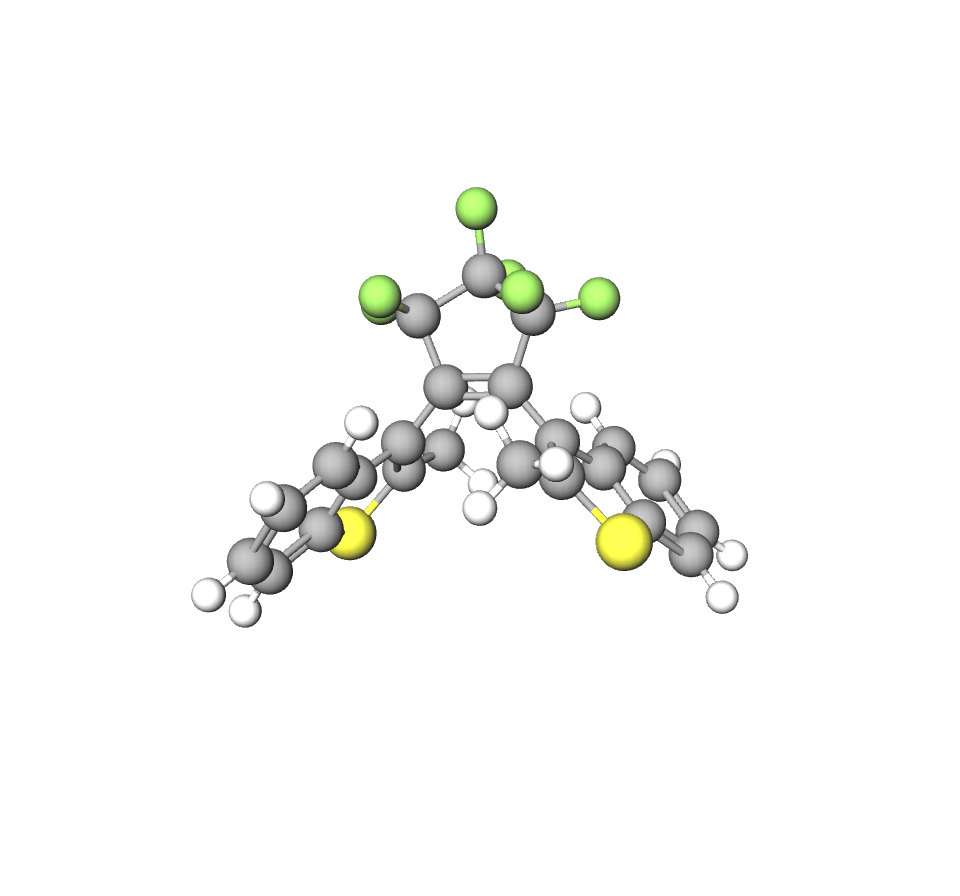
ジアリールエテン(Diarylethene, DAE/DAE系)は、光を当てると分子の形(結合のつながり方)が変わり、色や性質が切り替わる「フォトスイッチ(photoswitch)」の代表格の一つです。
ポイントは、分子レベルの変化を 材料・デバイスの機能(色、光学特性、電気特性、形状変化など)につなげられること。
この「分子のON/OFF」をどうやって“材料のON/OFF”へ拡張するかが、近年の研究の中心テーマになっています。
2. レビュー3報から見える「3つの広がり」
A) 分子スイッチを“材料”に組み込む設計図(材料科学の視点)
Goulet-Hanssens らのレビューは、フォトスイッチ(ジアリールエテン等)を さまざまな材料へ組み込み、光で性質を制御する研究の流れを整理しています。
特に「分子が変形・電子状態変化したとき、その効果をどうやって“バルク材料の性質”として取り出すか」という課題に対し、材料の階層(アモルファス → 表面/界面 → 超分子集合体 → 液晶 → 結晶)に沿って議論されています。
一般向けに言うと:
– 分子スイッチを「ただ混ぜる」だけでは、材料としての変化が小さいことがある
– “並び方”や“固定のされ方”を工夫すると、光で材料の性質が大きく変わる
– 光で書き換えられる(プログラム可能な)材料やデバイスが現実味を帯びてきた
B) DNA/RNAを光で制御する(バイオ×分子スイッチの視点)
Lubbe らのレビューは、光でDNA/RNA(オリゴヌクレオチド)の構造や機能を可逆に制御する研究をまとめています。
フォトスイッチ分子(ジアリールエテンを含む)がDNA/RNAに組み込まれることで、二重らせんの安定性や折りたたみ構造などを、光で“その場で”操作できるようになります。
一般向けに言うと:
– 薬や分子ツールを「必要な場所・必要な時間だけ」働かせたい
– 光は、非侵襲で、外から精密にスイッチを入れられる
– 遺伝子制御、ドラッグデリバリー、ナノテク材料設計などへ応用が広がる
C) “キラル”を光で切り替える(円偏光・CDスペクトルの視点)
Isla & Crassous のレビューは、ヘリセン(らせん状にねじれた芳香族分子)を使ったキラル(右/左のねじれ)応答=「キロプティカル(chiroptical)スイッチ」を解説しています。
光だけでなく、酸化還元やpHなど複数刺激で切り替え、円二色性(CD)や円偏光発光(CPL)といった光学信号で読み出す“多入力・多出力”設計が特徴です(レビュー中で、ジアリールエテンを含む分子スイッチが話題として位置づけられます)。
一般向けに言うと:
– 「色が変わる」だけでなく、「光のねじれ方(偏光)」まで切り替えられる
– 量子・光学デバイス、センサー、情報記録などに発展しうる
3. 3報をまとめると:ジアリールエテン研究は何を目指している?
- 分子のスイッチを、材料のスイッチへ(A)
- 分子のスイッチを、生命分子のスイッチへ(B)
- 分子のスイッチを、“光学情報”のスイッチへ(C)
同じ「光で切り替える」という発想が、材料・生命・光学の3方向へ伸びているのが、レビュー3報からはっきり見えてきます。
参考文献(添付ファイル内の3報)
- Goulet-Hanssens, A.; Eisenreich, F.; Hecht, S. Enlightening Materials with Photoswitches. Advanced Materials (2020). DOI: 10.1002/adma.201905966
- Lubbe, A. S.; Szymanski, W.; Feringa, B. L. Recent developments in reversible photoregulation of oligonucleotide structure and function. Chemical Society Reviews (2017). DOI: 10.1039/c6cs00461j
- Isla, H.; Crassous, J. Helicene-based chiroptical switches. Comptes Rendus Chimie (2016). DOI: 10.1016/j.crci.2015.06.014
Diarylethenes and Light‑Switchable Materials: What Three Reviews Teach Us
This page is a plain‑language overview based only on three review articles contained in the attached diarylethene_Reviews.txt.
1. What is a “diarylethene” in simple terms?
Diarylethenes (DAEs) are a representative class of molecular photoswitches: when you shine light, the molecule can reversibly change its bonding/shape, which can switch color and other properties.
The big idea is to convert a molecular‑scale ON/OFF change into a functional ON/OFF at the level of materials and devices (optical, electrical, mechanical, etc.).
2. Three directions highlighted by the three reviews
A) Embedding photoswitches into materials (materials science)
Goulet-Hanssens and co‑workers summarize progress in photoswitchable materials, discussing how molecular switches (including diarylethenes) can be integrated into materials to control properties with light.
They emphasize a key challenge: translating molecular geometric/electronic changes into macroscopic responses, across increasing structural order (amorphous → interfaces → supramolecular ensembles → liquid crystals → crystals).
Takeaway for non‑specialists:
– Simply mixing a switch into a material may not be enough
– Controlling how switches are arranged/immobilized can amplify the effect
– “Optically programmable” materials and devices are becoming realistic
B) Photoregulating DNA/RNA (bio + photoswitches)
Lubbe and co‑workers review strategies to incorporate photoswitches (including diarylethenes) into oligonucleotides and to reversibly control structure and function with light.
Light offers high spatiotemporal precision and is non‑invasive, enabling emerging applications in gene regulation, drug delivery, nanotechnology, and materials design.
Takeaway:
– Control biomolecular behavior when and where you want
– Use light as a clean external trigger
– Bridge fundamental photochemistry to practical bio‑functions
C) Switching chirality‑related optical signals (chiroptical switches)
Isla & Crassous review helicene‑based chiroptical switches, where light (and sometimes redox or pH) can switch chiral/optical responses measurable by circular dichroism (CD) or circularly polarized luminescence (CPL).
Diarylethene‑type switching chemistry appears as part of the broader molecular‑switch toolbox discussed in this context.
Takeaway:
– Not only “color switching,” but switching polarization‑related optical information
– Potential routes toward sensing, information storage, and photonic/optical materials
3. One message from all three reviews
- From molecular switches to material switches (A)
- From molecular switches to biomolecular switches (B)
- From molecular switches to optical‑information switches (C)
A single concept—reversible light‑driven switching—is expanding across materials, biology, and photonics.
References (only the three papers in the attached file)
- Goulet-Hanssens, A.; Eisenreich, F.; Hecht, S. Advanced Materials (2020). Enlightening Materials with Photoswitches. DOI: 10.1002/adma.201905966
- Lubbe, A. S.; Szymanski, W.; Feringa, B. L. Chemical Society Reviews (2017). Recent developments in reversible photoregulation of oligonucleotide structure and function. DOI: 10.1039/c6cs00461j
- Isla, H.; Crassous, J. Comptes Rendus Chimie (2016). Helicene-based chiroptical switches. DOI: 10.1016/j.crci.2015.06.014