ジアリールエテン(Diarylethene)研究の「定番3本」超わかりやすい解説(HP用)
作成日: 2026-01-05|出典: 添付 diarylethene_classics.txt 内の文献のみ
まず結論:ジアリールエテンって何がすごい?(一般向け)
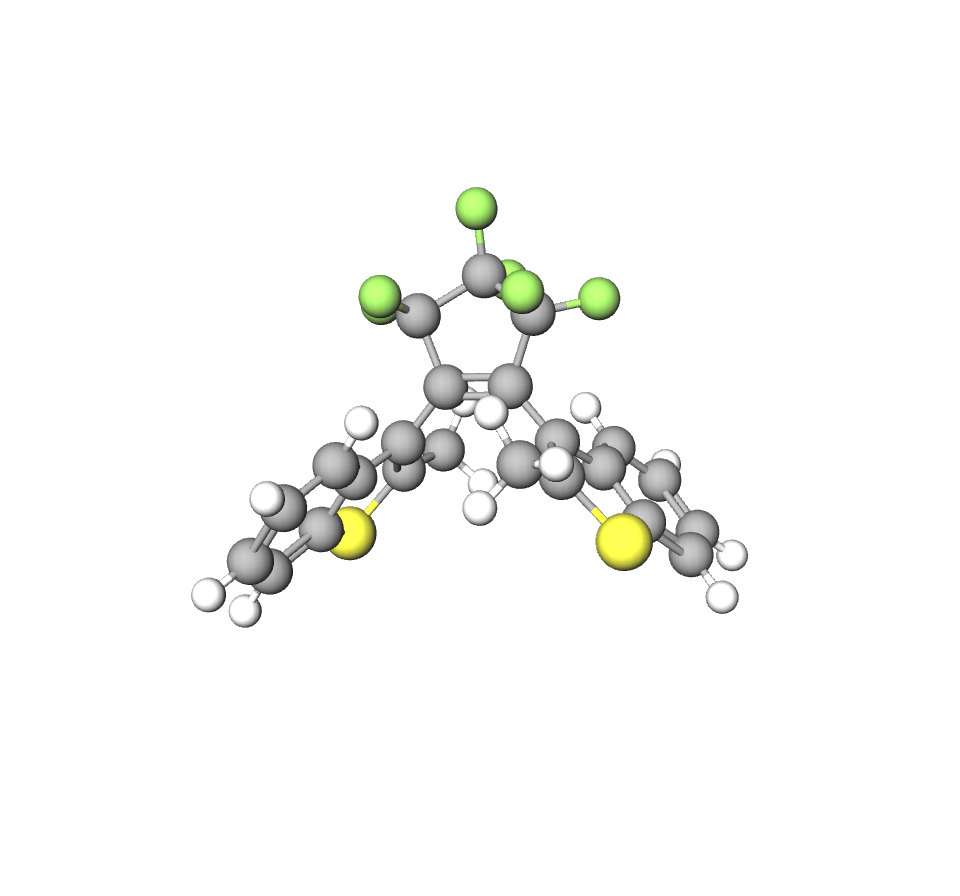
ジアリールエテン(Diarylethene)は、光(UV/可視光)で分子の形が切り替わる「光スイッチ」の代表格です。分子の“開いた形(open form)”と“閉じた形(closed form)”を行き来し、その結果として 色・吸収・蛍光・導電性・材料の性質が変わります。
- 見える変化:色が変わる、光り方が変わる
- 使い道:情報の表示/消去、スマート材料、光で操作するデバイス
ここでは、研究の流れをつかみやすいように、 3本だけを使って、
1) 材料にどう組み込むか(設計原理)
2) 光と物質を強く結合させると化学がどう変わるか(新しい反応場)
3) 実際に「暗号化→消去→復元」を作った例(応用)
という順で解説します。
3本の論文を“つながり”で読む(全体地図)
- 材料化の教科書(レビュー):光スイッチ分子(ジアリールエテン等)を材料に入れるときの考え方を整理(Goulet‑Hanssens et al.)。
- 新しい反応場(理論の枠組み):光共振器などで“光と分子”を強く結合させると、分子のエネルギーや反応が変わり得る(Feist et al.)。
- 応用の見本(実験):ジアリールエテンの開閉を使って、光る/消えるを切り替え、情報の暗号化・復号を実演(Li et al.)。
Paper 1(レビュー):光スイッチを“材料”にする設計図
Enlightening Materials with Photoswitches(Advanced Materials 2020)
何をまとめた論文?
光で形が変わる分子(photoswitch)を、高分子、表面、自己組織化、液晶、結晶などの材料へ組み込んで、材料の機能を光で制御する研究を、設計原理から整理したレビューです。分子スイッチの“変化”を、材料の“性質変化”へきちんとつなぐのが難しい、という課題意識が核にあります。
一般向けポイント(ここが読みどころ)
- 分子の小さな変化を、材料の大きな変化に増幅するには、スイッチ分子の入れ方(分散/配列/密度)が重要。
- 材料の秩序(ランダム→表面→自己集合→液晶→結晶)が増えるほど、光刺激が“まとまった動き”になりやすい。
- 逆に、秩序が高いほど、スイッチが動きにくくなるなど、設計トレードオフもある。
HP向け一言まとめ
「光で材料を動かす」ための設計思想を、分子レベルから材料レベルまでつなげて整理した“地図”。
Paper 2:光と分子を“強く結合”させると化学が変わる?
Polaritonic Chemistry with Organic Molecules(ACS Photonics 2018)
何を扱う論文?
光が閉じ込められた空間(例:共振器)で、分子の励起と光モードが強く相互作用し、ポラリトン(光と物質が混ざった状態)ができると、エネルギー準位が変化し、それが化学構造や反応に影響し得る——という「ポラリトン化学」を概説します。ジアリールエテンのような光反応(フォト異性化)も、関連する題材として扱われます。
一般向けポイント
- ふだんは「分子に光を当てる」と分子が反応します。
- ここでは逆に、光の“場”そのものを設計して、分子のふるまいを変えるという発想が中心です。
- たくさんの分子が同時に結合すると、集団効果が現れる可能性があり、そこが面白いところです。
HP向け一言まとめ
「光=照らす道具」から「光=反応場をデザインする道具」へという、次世代の光化学の見取り図。
Paper 3:ジアリールエテンで“暗号化→消去→復元”を作る
Photoresponsive Luminescent Polymeric Hydrogels for Reversible Information Encryption and Decryption(Advanced Science 2019)
何をした研究?
ジアリールエテンの開閉を UV光/可視光で切り替えられる性質を利用し、発光材料(ランタノイド錯体)と組み合わせて、
– ある光では“読める(発光)”
– 別の光では“読めない(消光)”
– さらに可視光で“戻る(復元)”
という 可逆な情報暗号化・復号を、ハイドロゲル(柔らかい高分子材料)で実現した研究です。
一般向けポイント
- 情報が見える/見えないを、光だけで切り替えられる。
- 「消える」だけでなく、何度も戻せる(可逆)ことが重要。
- 分子のスイッチ(ジアリールエテン)と、発光体のやり取り(エネルギー移動)が鍵になります。
HP向け一言まとめ
“光で読めて、光で消して、光で戻す”を材料で実演した、応用イメージがつかみやすい代表例。
3本から学べること(初心者向けまとめ)
- 材料化(Paper 1):分子スイッチは“材料の中でどう配置するか”が勝負。
- 反応場の設計(Paper 2):光の当て方だけでなく、光が存在する“場”を設計する発想。
- 社会実装の形(Paper 3):暗号化や表示のように、一般の人が直感で理解できる応用が作れる。
用語ミニ辞典
- 光スイッチ(photoswitch):光で形や状態が変わる分子。
- ジアリールエテン(diarylethene):光で開閉する代表的な光スイッチ分子。
- ポラリトン(polariton):光と分子励起が混ざったハイブリッド状態。
- 可逆(reversible):何度も行ったり来たりできること。
参考文献(添付ファイル内のみ)
- Goulet-Hanssens, A.; Eisenreich, F.; Hecht, S.. Enlightening Materials with Photoswitches. Advanced Materials 32(20), Article 1905966, 2020. DOI: 10.1002/adma.201905966.
- Feist, J.; Galego, J.; Garcia-Vidal, F. J.. Polaritonic Chemistry with Organic Molecules. ACS Photonics 5(1), 205–216, 2018. DOI: 10.1021/acsphotonics.7b00680.
- Li, Z.; Chen, H.; Li, B.; Xie, Y.; Gong, X.; Liu, X.; Li, H.; Zhao, Y.. Photoresponsive Luminescent Polymeric Hydrogels for Reversible Information Encryption and Decryption. Advanced Science 6(21), Article 1901529, 2019. DOI: 10.1002/advs.201901529.
Diarylethene (DAE) “Classics in 3 Papers” — Plain-Language Guide for a Lab Website
Date: 2026-01-05 | Sources: Only the references contained in diarylethene_classics.txt**
The big idea: why diarylethene is a big deal
Diarylethene (DAE) is a flagship molecular photoswitch: light (UV/visible) toggles the molecule between an “open” and a “closed” form. That molecular-level change can translate into macroscopic changes such as color, absorption, emission, conductivity, and material functions.
In this page, we use exactly three papers in the attached file to build an intuitive storyline:
1) How to integrate photoswitches into materials (design principles)
2) How the light environment itself can reshape chemistry (polaritonic chemistry)
3) A concrete demonstration of reversible information encryption/decryption using a DAE unit
Paper 1 (Review): A roadmap for photoswitchable materials
Enlightening Materials with Photoswitches (Advanced Materials, 2020)
What is it about?
This review summarizes a decade of progress in embedding molecular photoswitches (including diarylethenes among broader photoswitch families) into materials across different levels of order—amorphous matrices, surfaces/interfaces, supramolecular assemblies, liquid crystals, and crystals—and discusses the fundamental challenge: translating a small molecular change into a reliable bulk-material response.
Take-home messages for non-specialists
- The same switch can behave very differently depending on how it is arranged in a material (density, alignment, confinement).
- More ordered systems can amplify collective responses—but may also restrict switching, so design trade-offs matter.
Paper 2: Changing chemistry by designing the light–matter environment
Polaritonic Chemistry with Organic Molecules (ACS Photonics, 2018)
What is it about?
This perspective introduces polaritonic chemistry, where molecules strongly couple to confined light modes (e.g., inside optical cavities), creating hybrid light–matter states called polaritons. Such coupling can shift energies substantially and may influence molecular structure and reactions. Photoisomerization topics—including systems relevant to photoswitches—are discussed as part of the broader framework.
Take-home messages
- Not only “shine light on molecules”, but also engineer the light field itself.
- When many molecules participate, collective effects may emerge.
Paper 3: Reversible information encryption/decryption in a soft hydrogel
Photoresponsive Luminescent Polymeric Hydrogels for Reversible Information Encryption and Decryption (Advanced Science, 2019)
What did they demonstrate?
They built a luminescent polymer hydrogel incorporating a diarylethene photochromic unit and a lanthanide complex. By switching the DAE unit with UV and visible light, they could toggle the luminescence ON/OFF (via energy-transfer interactions) and use hydrogel blocks as 3D information codes that can be encrypted, erased, and restored repeatedly using light.
Why it matters
- A clear, visual example of what photoswitches can do in real materials.
- The key feature is reversibility: not just “erase”, but “recover” on demand.
What you learn by reading these three together
- Materials design (Paper 1): integration strategy is everything.
- New reaction environments (Paper 2): the light field can be part of the “chemistry”.
- Application template (Paper 3): a straightforward demonstration of programmable visibility/invisibility.
Mini glossary
- Photoswitch: a molecule whose state changes by light.
- Diarylethene (DAE): a prominent photoswitch that toggles between open/closed forms.
- Polariton: a hybrid light–matter excitation under strong coupling.
- Reversible: can be cycled back and forth many times.
References (only from the attached file)
- Goulet-Hanssens, A.; Eisenreich, F.; Hecht, S.. Enlightening Materials with Photoswitches. Advanced Materials 32(20), Article 1905966, 2020. DOI: 10.1002/adma.201905966.
- Feist, J.; Galego, J.; Garcia-Vidal, F. J.. Polaritonic Chemistry with Organic Molecules. ACS Photonics 5(1), 205–216, 2018. DOI: 10.1021/acsphotonics.7b00680.
- Li, Z.; Chen, H.; Li, B.; Xie, Y.; Gong, X.; Liu, X.; Li, H.; Zhao, Y.. Photoresponsive Luminescent Polymeric Hydrogels for Reversible Information Encryption and Decryption. Advanced Science 6(21), Article 1901529, 2019. DOI: 10.1002/advs.201901529.