DEs20260308
🇯🇵 日本語版
選定基準(JCR 2024 IF の高い順)
① 量子ドットの“光る/消える”を分子で操る(Nano Letters, 2026)
論文:Zhang et al.「Modulation of Semiconductor Quantum Dot Photoluminescence by Photochromic Molecules」
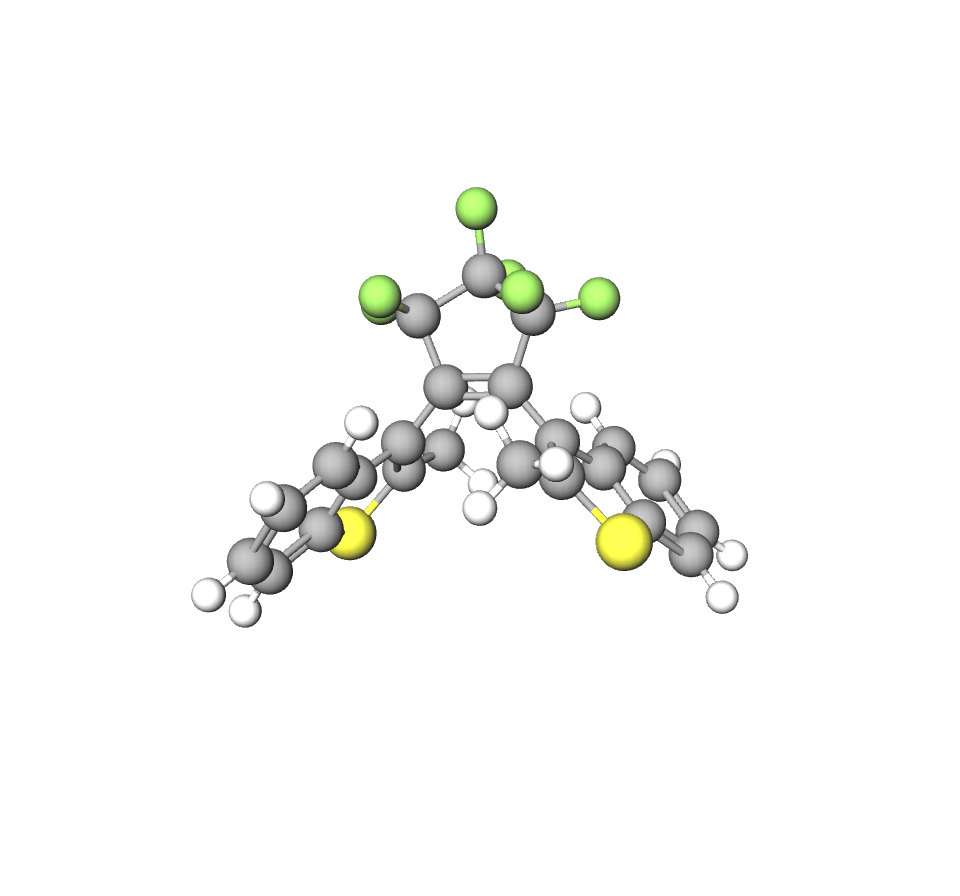
– 何の話? 半導体量子ドット(QD)の表面にフォトクロミック分子を結合し、光で色や明るさを切り替える“ハイブリッド材料”を作製。
– 仕組みのカギ:分子が開閉異性化で形を変えると、QDと分子の励起状態エネルギーのマッチングが変化し、エネルギー移動の有無を光で制御できる。
– スピード:フォトルミネッセンス(発光)のオン/オフ切替は数十ミリ秒、条件によっては10 ms未満。
– 応用イメージ:ポリマー薄膜に固定化でき、RGB全域をカバーできるため、超高速表示素子や光メモリーへの展開が期待。
② 可視〜近赤外光で「副作用を減らす」光薬理(Journal of Medicinal Chemistry, 2026, 総説)
論文:Wang et al.「Visible and Near-Infrared Photopharmacology: Wavelength-Redshift Strategies for Spatiotemporally Precise Therapeutics」(総説, 2026)
– 背景:従来の光スイッチはUV光依存で、組織ダメージや到達深さに課題。可視〜近赤外(NIR)へ“赤方偏移”した光スイッチ/光ケージが求められている。
– この総説の要点:分子設計原理(吸収波長を赤方へ動かす仕組み)、光物性、作動機構を体系整理し、in vivo 応用の展望と課題を総括。
– 一般的な利点:狙った場所と時間だけ薬効を“オン”、健常部位への作用を減らし、精密医療に貢献する可能性。
③ 「マロリー反応」を“ひねる”:光で起こす酸化的環化と還元(J. Photochem. Photobiol. A: Chem., 2026)
論文:Sergeeva et al.「A trick of the Mallory reaction of 2,3-diaryl-substituted naphthoquinones: a primary photoproduct as a reductant」(2026)
– 何が新しい? 光でスチルベン等がフェナントレン骨格へ環化するマロリー反応を、2,3-ジアリール置換ナフトキノンで初めて体系的に検証。チオフェン誘導体が酸素存在下でマロリー生成物を与えることを見出した。
– ユニークな点:不活性雰囲気では、一次光生成物自体が還元剤として働き、ナフタレン-1,4-ジオールがマロリー生成物と対で生成する“酸化+還元”の同時進行を観測。
– 広がり:新しい光合成経路の手がかりとなり、機能性色素や光応答材料設計への応用が期待。
🇬🇧 English Version
1) Switching quantum‑dot light with molecules (Nano Letters, 2026)
- Idea: Semiconductor quantum dots (QDs) are ligated with photochromic molecules to build a hybrid that optically toggles emission—bright vs. quenched—on demand.
- Mechanism: The chromophore’s open/closed isomers tune excited‑state matching between QDs and ligands, thereby switching energy transfer on/off with light.
- Speed & deviceability: Tens of milliseconds (down to <10 ms) switching; the hybrid can be immobilized in polymer films, and RGB coverage is achieved by combining three QD types with one photochromic species.
2) Photopharmacology with visible–NIR light to reduce off‑targets (J. Med. Chem., 2026, Review)
- Why now: Classic photoswitches rely on UV light (poor tissue penetration; potential phototoxicity). The field is shifting to red‑shifted photoswitches/photocages that operate under visible–near‑infrared light.
- What this review covers: Design principles, photophysics, and mechanistic insights for red‑shift strategies, plus in vivo opportunities and challenges toward precision medicine.
3) Twisting the Mallory reaction: oxidative cyclization and reduction (J. Photochem. Photobiol. A: Chem., 2026)
- New finding: The Mallory reaction was examined for 2,3‑diaryl‑substituted naphthoquinones. Thiophene derivatives are photoactive and deliver Mallory products under oxygen.
- Surprise: Under inert atmosphere, the primary photoproduct itself acts as a reductant, forming naphthalene‑1,4‑diol together with the Mallory product—an unusual oxidation + reduction tandem.
- Why it matters: Offers a new photochemical entry to functional aromatics and inspires photoresponsive material design.
文献 / References
- Zhang, H.; et al. Modulation of Semiconductor Quantum Dot Photoluminescence by Photochromic Molecules. Nano Letters (2026, Early Access).
- Wang, L.; et al. Visible and Near-Infrared Photopharmacology: Wavelength-Redshift Strategies for Spatiotemporally Precise Therapeutics. Journal of Medicinal Chemistry 69 (2026) 1878–1915.
- Sergeeva, E. S.; et al. A trick of the Mallory reaction of 2,3-diaryl-substituted naphthoquinones: a primary photoproduct as a reductant. Journal of Photochemistry and Photobiology A: Chemistry 477 (2026) 117113.
免責 / Disclaimer:本資料は一般向け解説です。医療・安全等の専門判断は原著論文をご参照のうえ、専門家の指導の下で行ってください。Abstract本文の直接引用はしていません。