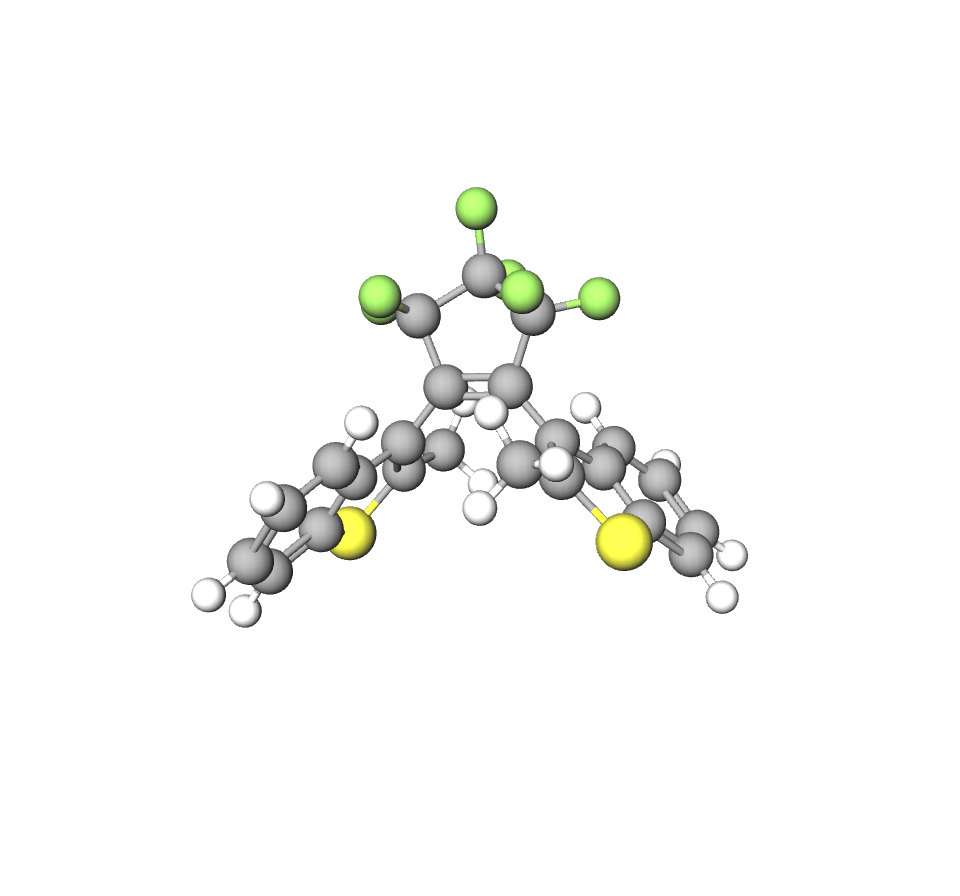
- Photoswitching Lewis Acid Catalysis with Highly Fatigue Resistant Photochromic Boronates(Journal of the American Chemical Society, 2026)
わかりやすい解説(一般向け)
● どんな研究?
- 光(特定の色の光)を当てると “オン・オフ切り替え”ができる新しいルイス酸 を作った研究。
- ルイス酸とは化学反応を進める触媒の一種で、接着剤や医薬品原料づくりにも使われる重要な物質。
- 今回のルイス酸は 光によって形が変わるフォトクロミック分子(ジアリールエテン) を利用している。
● なぜすごいの?(一般向けポイント)
- 通常の光反応性触媒は「疲労」(繰り返すと壊れる)しやすいが、この新素材は非常に 疲労に強い(耐久性が高い)。
- 光のオン・オフで 反応の開始・停止をコントロールできる。
- 反応中の化学種を一時的に安定化し、通常は得られない特別な状態を作ることも可能。
- 次世代の高精度化学プロセス(スマート材料、光制御反応、ナノマシンなど)に応用が期待される。
● 研究のポイント(技術的内容を噛み砕いて)
- 光を当てると分子構造が変化して、ルイス酸性(反応を引き起こす力)が変わる。
- 「どの置換基をつけるか」で光応答の度合いを細かく調整可能。
- グローバル Lewis acidity (gLA) と effective Lewis acidity (eLA) という新しい評価方法を使い、触媒の状態変化を論理的に解析。
- 光で可逆的に切り替えられるため、従来の“使い捨て型”光触媒と違い 繰り返し使用できる。
English Version
Paper Included
- Photoswitching Lewis Acid Catalysis with Highly Fatigue Resistant Photochromic Boronates (J. Am. Chem. Soc., 2026)
Easy-to-Understand Summary
● What is the study about?
- The researchers developed a light‑responsive Lewis acid that can be switched on and off using specific wavelengths of light.
- Lewis acids are key catalysts used in polymer synthesis, fine chemicals, pharmaceuticals, and materials science.
- The new catalyst uses photochromic diarylethene units, which change shape when exposed to light.
● Why is it important?
- Conventional photo‑catalysts often degrade after repeated switching (“fatigue”), but this system shows exceptionally high fatigue resistance.
- Light allows precise control over catalytic activity—start or stop reactions on demand.
- Enables access to out‑of‑equilibrium states not achievable with traditional catalysts.
- Promising for smart materials, controlled polymerization, and advanced photochemical systems.
● Key Scientific Points
- Photoisomerization alters the molecular structure, changing Lewis acidity. citeturn8search1
- The acidity amplitude can be tuned through substituent patterns.
- Uses gLA and eLA frameworks to understand and quantify acidity changes.
- Fully reversible switching—unlike one‑way photo Lewis acid generators.
文献 / References
- Stoess L., Davis J.A., Greb L., Journal of the American Chemical Society, 2026.