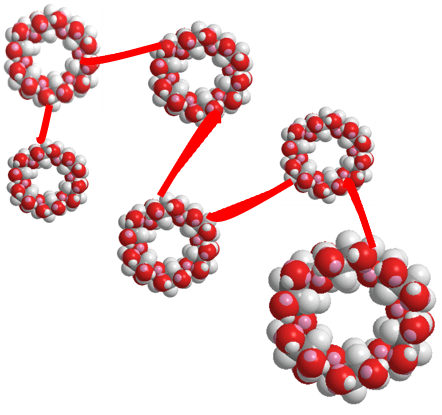
- Polymer modified cyclodextrin-based polyrotaxanes (Progress in Materials Science, 2026)
- Multidimensional design of silicon anode binders (Coordination Chemistry Reviews, 2026)
- Fully recyclable and regeneratable plant-based adhesives (Materials Chemistry Frontiers, 2026)
要点(箇条書き)
1. CDポリロタキサン材料(Niu et al., 2026)
- CDが高分子に通った構造により、柔軟性と強度が両立。
- ポリマー修飾で加工性を改善。
- 医療、柔軟デバイス、自己修復材料に応用可能。
2. シリコン負極バインダー(Zhu et al., 2026)
- Si負極は膨張による劣化が課題。
- バインダー分子設計で膨張を抑制し、長寿命化。
- 自己修復・耐炎性など多機能化が進む。
3. 植物由来リサイクル接着剤(Wang et al., 2026)
- β-CDとタンニン酸、水のみで構成。
- 水で完全分離し再利用できる。
- 100回再利用しても70–80%強度保持。
English Version
Selected Papers (Top 3 by Impact Factor)
- Polymer modified cyclodextrin-based polyrotaxanes
- Multidimensional design of silicon anode binders
- Fully recyclable plant-based adhesives
Key Points
1. CD-based Polyrotaxanes (Niu et al., 2026)
- Mobile CD rings enhance mechanics.
- Polymer modifications add processability and functions.
- Used in soft robotics, biomedical devices, self-healing.
2. Silicon Anode Binder Design (Zhu et al., 2026)
- Si anodes expand heavily and crack.
- Binder–Si interactions improve durability.
- Future: multifunctional, conductive, self-healing binders.
3. Recyclable Plant-Based Adhesives (Wang et al., 2026)
- Made from β-CD, tannic acid, and water.
- Fully recyclable via water dissolution.
- Retains 70–80% strength after 100 cycles.
文献 Reference
- Niu et al., Progress in Materials Science, 2026.
- Zhu et al., Coordination Chemistry Reviews, 2026.
- Wang et al., Materials Chemistry Frontiers, 2026.