作成日: 2026-02-21
どんなテーマ?
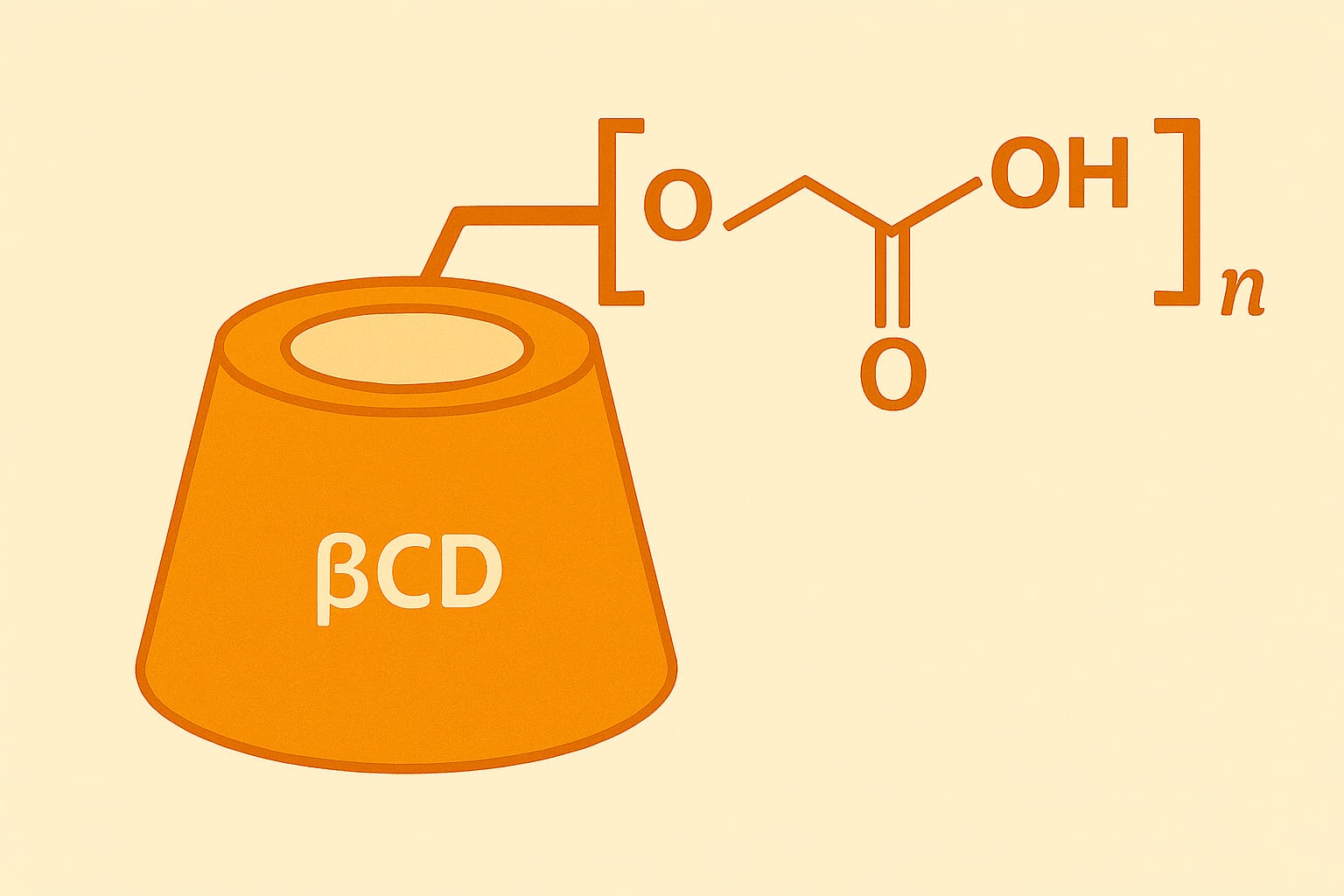
シクロデキストリン(CD)は分子を“包み込む空洞”を持ち、左右の形が違う分子(鏡像異性体)を見分ける能力を示すことがあります。
この性質を分析に利用したのが CDをキラル選択剤に用いる電気泳動(キラルCE) です。
対象論文
Capillary Electrophoretic Chiral Separation of Antihistamines: Enantiomers Recognition Mechanism by Isothermal Titration Calorimetry and Simulation Studies
- 掲載誌:CHIRALITY(2026 / FEB 4)
- 著者:Ali, I, Gogolashvili, A, Chankvetadze, L, Messali, M
- DOI:10.1002/chir.70082
やさしい解説
– 抗ヒスタミン薬のように鏡像異性体(エナンチオマー)をもつ医薬品では、左右で薬効や副作用が変わることがあるため、左右を分けて測る(キラル分離)技術が重要です。
– 本研究は、キャピラリー電気泳動(CE)で、クロルフェニラミン/ブロムフェニラミン/ジメチンデンのエナンチオマー分離を行い、シクロデキストリン系(β‑CD、DM‑β‑CD、TM‑β‑CD)をキラル選択剤として比較しています。
– 泳動条件(リン酸緩衝液 pH 3.0、電圧、温度など)を揃えた上で、移動時間・理論段数・分離係数・分離度を評価し、CDの種類によって“分けやすさ”が変わることを示しました。
– 特に分離度(Rs)の結果から、条件次第で部分分離〜完全分離まで到達できることを示しています。
– さらに、等温滴定カロリメトリー(ITC)と分子ドッキングにより、鏡像異性体を見分ける鍵として 水素結合 と π–アルキル相互作用 が重要であることを示唆しています。
– 医薬品製剤のエナンチオマー純度評価に使える分析法として位置づけられます。
English version (for website)
What is this topic about?
Cyclodextrins (CDs) are host molecules with a cavity that can recognize subtle stereochemical differences.
In analytical chemistry, CDs are widely used as chiral selectors in capillary electrophoresis (CE) to separate enantiomers.
Paper in the attached file
{title}
- Journal: {journal} ({year} / {pub})
- Authors: {authors}
- DOI: {doi}
Plain-language bullets (paraphrased; no verbatim abstract text)
– For chiral drugs such as antihistamines, enantiomers can differ in efficacy or side effects, so chiral separation is essential for quality control.
– This study performs capillary electrophoresis (CE) enantioseparations of chlorpheniramine, brompheniramine, and dimetindene using cyclodextrin selectors (β‑CD, DM‑β‑CD, TM‑β‑CD) and compares their performance.
– Under a consistent CE setup (phosphate buffer at pH 3.0, fixed voltage/temperature, UV detection), it evaluates migration times, theoretical plate numbers, separation factors, and resolution values.
– The results show that the choice of cyclodextrin strongly affects enantioresolution, ranging from partial to near‑complete/baseline separation depending on the selector.
– Isothermal titration calorimetry (ITC) and molecular docking indicate that hydrogen bonding and π‑alkyl interactions play key roles in enantiomer recognition.
– The method is positioned as a practical tool to assess enantiomeric purity in antihistamine formulations.