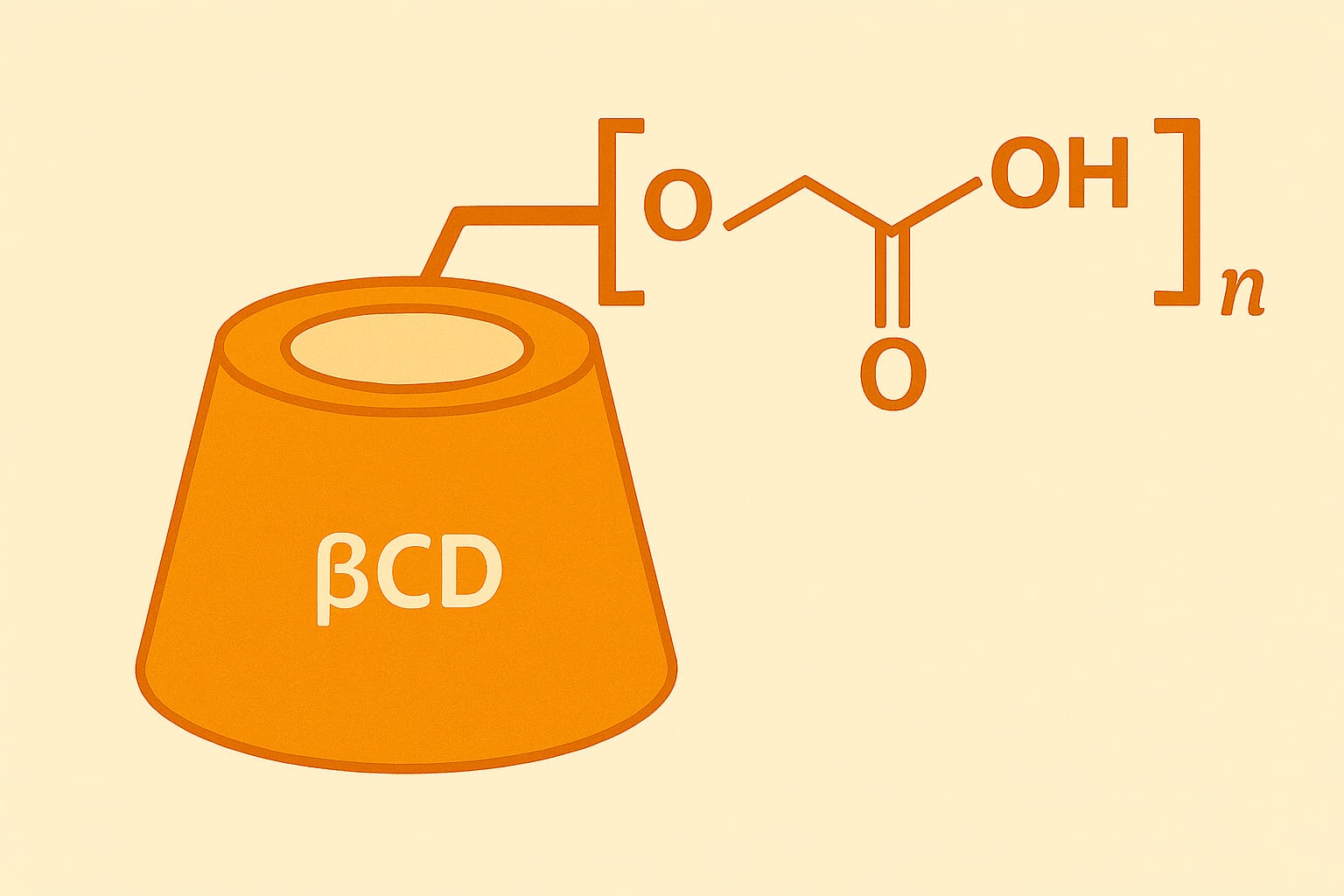
1. A carboxymethyl cellulose-based hydrogel sensor … (Food Control, 2026)
わかりやすい解説(箇条書き)
カルボキシメチルセルロース(CMC)× β-シクロデキストリン(β-CD)ハイドロゲルセンサーとは?
- CMC を主材料に、銀ナノワイヤ(AgNW)、CUR-β-CD 包接体を組み合わせた「スマート食品保存材料」。
- 圧力センサー機能を持ち、外から加わる力を電気信号として検出できる。
- 青色光を当てると CUR-β-CD が光触媒的に働き、細菌を 92–95% 殺菌できる。
- ビワ(loquat)の保存に利用すると、通常より 6 日長く鮮度を保持。
研究のポイント(一般向け)
- 「押された力がわかる」+「光で除菌できる」食品用ジェルシート。
- β-シクロデキストリンは、成分(今回ではクルクミン)を包み込んで安定させる天然素材。
- このジェルを食品の表面にのせることで、傷みを防ぎながら、表面にかかる力も監視可能。
- 食品ロス削減や高付加価値包装への応用が期待される。
English Version
Paper Included in the File
- A carboxymethyl cellulose-based hydrogel sensor … (Food Control, 2026)
Easy-to-understand Summary (Bullet Points)
What is the CMC–β-CD hydrogel sensor?
- A smart food-preservation hydrogel made from CMC combined with silver nanowires and CUR–β-CD inclusion complexes.
- It can sense external pressure in real time through a piezoresistive mechanism.
- When exposed to blue light, CUR–β-CD activates strong antibacterial activity (92–95%).
- It extends the shelf-life of loquats by six additional days.
Why this research matters
- It represents a dual-function packaging material: sensing + antibacterial action.
- β-cyclodextrin helps stabilize curcumin inside the hydrogel, enabling controlled activation by light.
- Could reduce food waste and enable intelligent monitoring during transport.
文献 / References
- Zheng, Y. et al., Food Control, 2026.