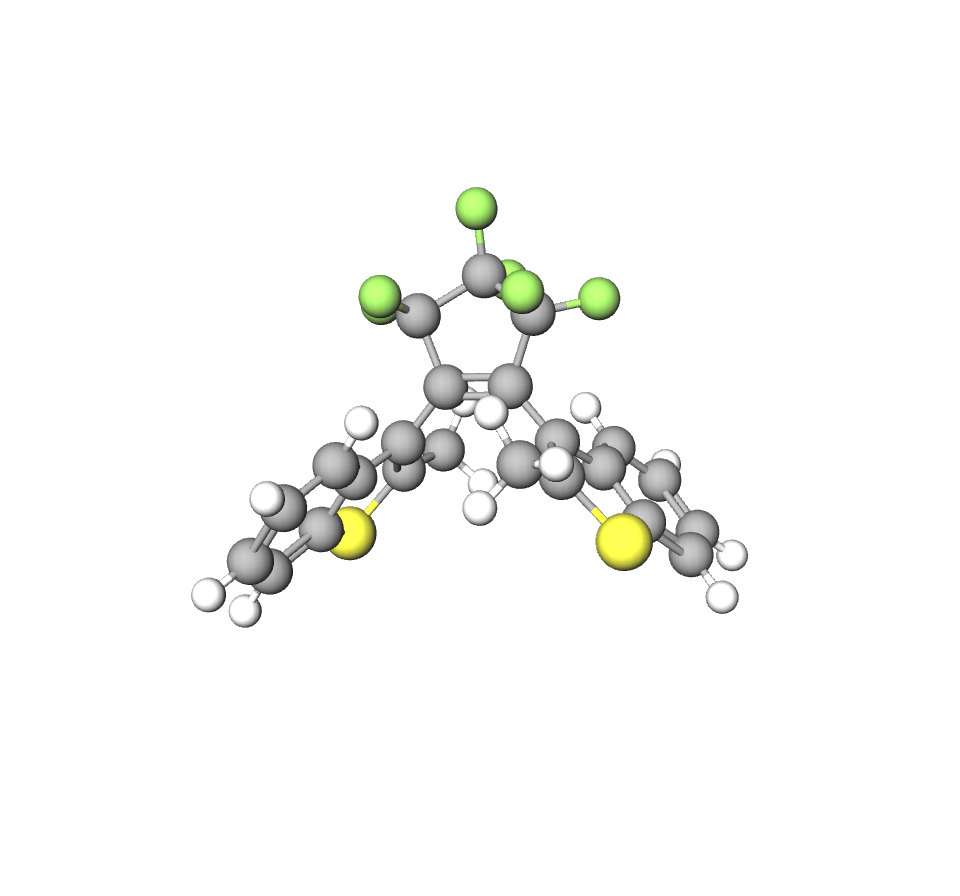
DE_20260523: A Plain-Language Guide to Diarylethene (DE)-Related Research
キーワード / Keywords
- Diarylethene(DE)
光を当てると分子の形や性質が切り替わる代表的な光応答分子です。色や電気特性、蛍光などを変えられるため、センサーや記録材料で注目されています。
EN: A representative photoresponsive molecule whose structure and properties can switch under light, useful in sensors, recording media, and smart materials. - 光スイッチング(Photoswitching)
光を使って分子の状態を可逆的に切り替える現象です。外部配線や機械的操作がなくても、機能をオン・オフできる点が大きな特長です。
EN: A reversible light-driven switching process that allows functions to be turned on and off without electrodes or mechanical control. - 表面電位(Surface potential)
材料表面に生じる電気的な偏りです。液滴の移動や分子のふるまいに影響し、微小な流体制御や新しいデバイス設計に役立つ可能性があります。
EN: An electrical bias appearing on a material surface that can influence droplets and molecules, opening possibilities in microfluidics and devices. - 蛍光センサー(Fluorescent sensor)
光ったり色調が変わったりすることで対象物を検出する仕組みです。目で見て確認しやすく、医療・分析・診断への応用が期待されています。
EN: A sensing method based on fluorescence or color change, making detection visually accessible for diagnostics and analytical applications. - ホスト–ゲスト相互作用(Host–guest interaction)
分子どうしが選択的に結びつく超分子化学の考え方です。タンパク質や有機分子との組み合わせで、選択性や感度の高い材料設計につながります。
EN: A supramolecular interaction in which one molecule selectively hosts another, enabling more selective and sensitive material design.
採用した論文 / Papers Used
- N-Alkyl Extension in Ionic Molecular Rotors: Facile Tuning of Sensing Modes for Albumin-Based Host-Guest Fluorescent Sensors
Angewandte Chemie International Edition(2026) - Giant surface potentials in organic films enable electrode-free self-driven water droplets
Materials Horizons(2026)
参考:ジャーナル指標 / Journal Metric Reference
- Angewandte Chemie International Edition:IF 16.9
- Materials Horizons:IF 10.7
1. DE骨格を少し変えるだけで、蛍光センサーの見え方を調整できる
N-Alkyl Extension in Ionic Molecular Rotors: Facile Tuning of Sensing Modes for Albumin-Based Host-Guest Fluorescent Sensors
Journal: Angewandte Chemie International Edition
Year: 2026
Type: Article
DOI: 10.1002/anie.1330357
日本語でのやさしい解説
- この研究では、triphenylamine diarylethene(TPA-P) というDE系分子の一部を少し変えるだけで、蛍光センサーの「光り方」を調整できることが示されました。
- 対象はヒト血清アルブミン(HSA)で、分子とタンパク質が組み合わさることで、off→on型、比率型(ratiometric)、色と蛍光の両方で読む型など、異なる検出モードを実現しています。
- つまり、センサーの材料を大きく作り直さなくても、分子の細かな設計変更だけで用途に合った見え方へ調整できる、というのが大きなポイントです。
- 尿中アルブミンの分析、第三成分の検出、蛍光イメージング、センサーアレイの構築などにも応用できることが示されています。
- 一般向けには、「光る分子のちょっとした設計変更で、病気の検査や分析に合った見やすいセンサーを作れる研究」と理解できます。
Plain-Language English Explanation
- This paper shows that small structural changes in a triphenylamine diarylethene (TPA-P) molecule can tune how a fluorescent sensor responds.
- The target is human serum albumin (HSA), and the molecule–protein combination can produce different sensing modes, including off-to-on, ratiometric, and fluorocolorimetric responses.
- A key message is that the sensing style can be adjusted by fine molecular design, without rebuilding the whole sensing platform.
- The strategy was demonstrated for urinary albumin analysis, third-analyte detection, fluorescence imaging, and sensor-array construction.
- For general readers, this means that a small redesign of a light-responsive molecule can produce easier-to-read sensors for medical and analytical use.
2. DEの光パターンで、水滴を電極なしに動かす
Giant surface potentials in organic films enable electrode-free self-driven water droplets
Journal: Materials Horizons
Year: 2026
Type: Article
DOI: 10.1039/d6mh00527f
日本語でのやさしい解説
- この研究では、有機分子薄膜に生じる巨大表面電位(GSP)を利用して、電極なしで水滴を自律的に動かすことに成功しています。
- 水滴は最大で約15 cm/sという高速で移動し、その原動力は表面電位の差によって生じる電場勾配です。
- さらに重要なのは、photochromic diarylethene(光で性質が変わるDE) を使った光パターニングによって、水滴の進む道筋を空間的に設計できる点です。
- これは、DEが単なる色変化材料ではなく、「水滴の動きを光で制御するための設計要素」として使えることを示しています。
- 一般向けには、「光を当てて道を作り、その道に沿って水滴を勝手に走らせる新しい仕組み」と考えるとわかりやすいです。
Plain-Language English Explanation
- This study demonstrated autonomous droplet motion on organic films using giant surface potentials (GSPs), without any electrodes.
- Water droplets moved at speeds of up to about 15 cm/s, driven by electric-field gradients on the film surface.
- Importantly, photochromic diarylethene was used in photopatterning, allowing the droplet path to be spatially programmed with light.
- This shows that diarylethene is not just a color-switching molecule, but also a design element for guiding droplet motion.
- For general readers, this can be imagined as making “light-written roads” that droplets can follow on their own.
全体の見どころ / Overall Takeaway
日本語
今回は、Diarylethene(DE)が「光で色を変える分子」から、「センサーや流体制御を設計する分子」へ広がっているという流れです。1本は蛍光センサーの見え方を細かく調整する研究、もう1本は光で水滴の動きを導く研究で、どちらもDEの光応答性を実用技術へつなげています。
English
Although only two DE-related papers were included in the uploaded file, together they reveal an important trend: diarylethene is evolving from a simple photochromic molecule into a design tool for sensors and fluid control. One paper tunes sensing modes in fluorescent systems, and the other uses light-patterned diarylethene to guide droplet motion, both highlighting practical uses of DE photoresponsiveness.
文献 / References
- Liao, C.; Du, X.; Lin, Z.; Luo, Y.; Yu, Y.; Wang, Z.; Peng, J.; Xu, Z.; Liang, X.; Wu, Z.; Wang, Y.; Qin, T.; Liu, B.; Zhu, M.-Q. N-Alkyl Extension in Ionic Molecular Rotors: Facile Tuning of Sensing Modes for Albumin-Based Host-Guest Fluorescent Sensors. Angewandte Chemie International Edition (2026). DOI: 10.1002/anie.1330357.
- Tsujioka, T.; Kawashima, H.; Koike, K.; Matsumoto, N.; Shen, J.; Nakamura, S. Giant surface potentials in organic films enable electrode-free self-driven water droplets. Materials Horizons (2026). DOI: 10.1039/d6mh00527f.