generated_date: 2026-02-01
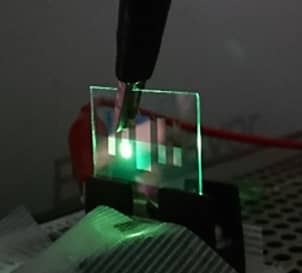
1) プラズマ × 光(bio-OLED)を1枚に統合した“電気治療パッチ”
論文: Synergistic All-in-One Electroceutical Platform Utilizing a Plasma-Photodynamic Hybrid Approach for Enhanced Wound Healing
雑誌: Advanced Functional Materials(2026)
DOI: 10.1002/adfm.202531941
研究のポイント
- 冷大気圧プラズマ(CAP)と、bio-OLEDを用いた光線力学療法(PDT)を、1枚の柔らかいパッチに統合。
- CAP部は、Agメッシュ電極をポリマー中に埋め込む構造で、曲げても壊れにくく耐久性を確保。
- bio-OLEDは厚さ約10 µmの薄型で、封止(保護)構造を工夫し、7 Vで35 mW/cm²超の光出力を実現。
- 空気中で115時間動作し、さらに水に14日浸しても機能維持(実用環境を意識した安定性)。
- マウス皮膚欠損モデルで、CAPとPDTを併用すると、単独治療よりも
- 傷の閉鎖(治癒)
- 血管新生
- 細胞増殖
- コラーゲン形成が進むことを確認。
- 仕組み(メカニズム)として、CAPが皮膚の透過性を高め、PDTで使う光感受性物質の浸透を助ける → 光治療の効きが上がる、という流れを提案。
どんな社会実装につながる?
- 体に貼って使える、多機能の創傷ケア・再生医療パッチ(在宅医療・高齢者ケア・スポーツ外傷など)。
2) “ハイドロコロイド”で滲出液に強い、貼れるOLED光治療デバイス
論文: Hydrocolloid-based OLED patch for enhanced wound-care photobiomodulation with wet-dressing
雑誌: Nano Research 19(2)(2026)
DOI: 10.26599/NR.2025.94908138
研究のポイント
- 従来のレーザー/LED光治療は、硬い・大きい・熱くなりやすいなどの課題があり、傷口に貼って使う用途では制約がある。
- そこで、柔らかいOLEDを、創傷被覆材として使われるハイドロコロイド(湿潤を保ち滲出液を吸う素材)と組み合わせ。
- 傷に必要な
- 滲出液の吸収
- 湿潤環境の維持
- 皮膚への密着を満たしながら、光を届ける“プラットフォーム”を提案。
- 表面を平坦にする独自プロセスで、表面粗さ Rq = 0.844 nmまで低減し、ガラス基板に近い発光性能を確保。
- 細胞実験では、5 mW/cm²の条件で増殖が最大160%になる効果を確認(光による生体応答=フォトバイオモジュレーション)。
- ハイドロコロイドの保湿・水分保持も実験的に示し、“濡れた創傷環境”での使用を意識。
どんな社会実装につながる?
- “貼る光治療”の現実味が増え、創傷ケアや在宅医療、看護・介護現場で使えるウェアラブル医療機器の土台に。
3) OLED照明の弱点「高輝度=寿命が短い」を構造でひっくり返す
論文: High aspect ratio organic light-emitting diodes
雑誌: Nature Communications 17, 703(2025)
DOI: 10.1038/s41467-025-67312-4
研究のポイント(Abstractをそのまま貼らずに要約)
- 照明用途のOLEDは明るさ(高輝度)が必要だが、一般に明るくするほど寿命が短くなるというトレードオフがある。
- そこで、基板表面をサブmmスケールの凹凸(高アスペクト比テクスチャ)にして、その上にOLEDを作る方法を提案。
- “パネル面積あたりの発光できる実効面積”を増やすことで、同じパネル輝度でも素子に必要な電流密度を下げられる。
- 標準的な真空蒸着装置で、面積増加(エリア増強)最大1.4倍の基板でも膜厚の均一性が取れることを示した。
- 平面基板と比べ、寿命が2.7倍、さらに外部への光取り出し効率が最大40%向上。
- つまり、構造設計により「明るさ」と「長寿命」を同時に改善できる可能性を示した。
どんな社会実装につながる?
- 高効率・長寿命のOLED照明パネル(建築照明、次世代の面発光照明、低消費電力化など)。
参考文献(ファイル内の文献から)
- Song, J.-Y.; Bang, H.-C.; Son, Y.-H.; et al. Synergistic All-in-One Electroceutical Platform Utilizing a Plasma-Photodynamic Hybrid Approach for Enhanced Wound Healing. Advanced Functional Materials (2026). DOI: 10.1002/adfm.202531941
- Kim, Y.-W.; Kim, S.-H.; Jeong, J.-Y.; et al. Hydrocolloid-based OLED patch for enhanced wound-care photobiomodulation with wet-dressing. Nano Research 19(2) (2026), Article 94908138. DOI: 10.26599/NR.2025.94908138
- Wang, B.; Kotadiya, N. B.; Kim, T.; et al. High aspect ratio organic light-emitting diodes. Nature Communications 17 (2025), 703. DOI: 10.1038/s41467-025-67312-4
English (EN)
1) An “all-in-one” flexible electroceutical patch combining plasma and bio-OLED light therapy
Paper: Synergistic All-in-One Electroceutical Platform Utilizing a Plasma-Photodynamic Hybrid Approach for Enhanced Wound Healing
Journal: Advanced Functional Materials (2026)
DOI: 10.1002/adfm.202531941
Key takeaways (bullet summary)
- Integrates cold atmospheric plasma (CAP) and bio-OLED–based photodynamic therapy (PDT) into a single soft, wearable patch.
- Uses an Ag-mesh electrode embedded in polymer to achieve a CAP device that is flexible and durable.
- Demonstrates a ~10 µm-thick bio-OLED with robust encapsulation, delivering >35 mW/cm² at 7 V.
- Shows practical stability: 115 h operation in air and full functionality after 14 days in water.
- In a mouse skin-defect model, the combined CAP+PDT treatment outperforms either therapy alone, accelerating:
- wound closure,
- new blood vessel formation,
- cell proliferation,
- and collagen deposition.
- Proposes a mechanism where CAP increases skin permeability, improving photosensitizer delivery and boosting PDT efficacy.
Why it matters
- A promising path toward multifunctional wound-care patches suitable for real-world, wearable medical applications.
2) A hydrocolloid-integrated OLED patch designed for wet wound environments
Paper: Hydrocolloid-based OLED patch for enhanced wound-care photobiomodulation with wet-dressing
Journal: Nano Research 19(2) (2026)
DOI: 10.26599/NR.2025.94908138
Key takeaways (bullet summary)
- Conventional laser/LED phototherapy devices can be rigid, bulky, and prone to heating—limitations for direct use on wounds.
- Combines a flexible OLED with a hydrocolloid dressing, which is widely used to absorb exudate and maintain a moist healing environment.
- Uses a proprietary planarization process to reach Rq = 0.844 nm, enabling OLED performance comparable to glass-based devices.
- Reports up to 160% cell proliferation at 5 mW/cm² in vitro, supporting photobiomodulation benefits.
- Demonstrates moisture-retention behavior of the hydrocolloid layer for “wet dressing” conditions.
Why it matters
- Advances realistic “stick-on light therapy” for wound care, including home healthcare and clinical settings.
3) Tackling the “brightness vs lifetime” tradeoff in OLED lighting via textured substrates
Paper: High aspect ratio organic light-emitting diodes
Journal: Nature Communications 17 (2025), 703
DOI: 10.1038/s41467-025-67312-4
Key takeaways (bullet summary)
- OLED lifetime typically decreases as luminance increases, creating a major challenge for lighting applications.
- Builds OLEDs on sub-millimeter, high-aspect-ratio textured (corrugated) substrates.
- Increases the active emitting area per panel area, allowing the same panel luminance at lower device current density.
- Achieves good thickness uniformity using a standard thermal evaporator, with area enhancement up to 1.4×.
- Compared to planar controls, demonstrates 2.7× longer operating lifetime and up to 40% higher external light extraction efficiency.
Why it matters
- A practical design route to brighter, longer-lasting OLED lighting panels.
References (from the attached file)
- Song, J.-Y.; Bang, H.-C.; Son, Y.-H.; et al. “Synergistic All-in-One Electroceutical Platform Utilizing a Plasma-Photodynamic Hybrid Approach for Enhanced Wound Healing.” Advanced Functional Materials (2026). DOI: 10.1002/adfm.202531941
- Kim, Y.-W.; Kim, S.-H.; Jeong, J.-Y.; et al. “Hydrocolloid-based OLED patch for enhanced wound-care photobiomodulation with wet-dressing.” Nano Research 19(2) (2026), Article 94908138. DOI: 10.26599/NR.2025.94908138
- Wang, B.; Kotadiya, N. B.; Kim, T.; et al. “High aspect ratio organic light-emitting diodes.” Nature Communications 17 (2025), 703. DOI: 10.1038/s41467-025-67312-4
Impact Factor sources (JIF 2024)
- Advanced Functional Materials JIF 2024: 19.0
- Nano Research JIF 2024: 17.1
- Nature Communications JIF 2024: 15.7
(See citations in the ChatGPT response for the web sources used.)