0) まずは超ざっくり / Quick primer
日本語
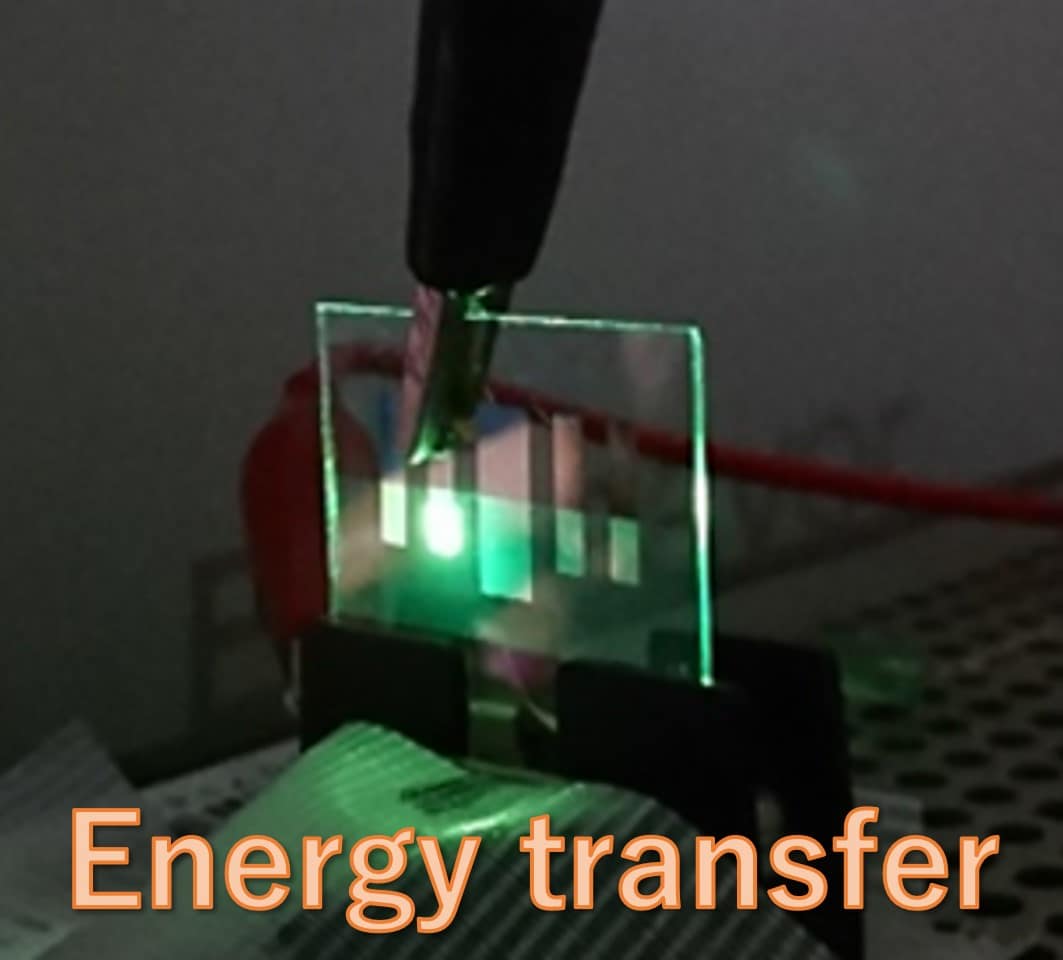
- OLED(有機EL)は、有機材料に電流を流して光らせる発光デバイスで、スマホ・TV・照明などに使われます。
- 性能を決める要素の一つが、電子と正孔が出会ってできる 励起子(exciton) と、その“使い切り方”です。
- 本ページでは、(1) 電荷移動(CT) の見取り図、(2) 硫黄・セレン(S/Se) を使う分子設計、(3) MR‑TADF による“狭い青”設計、の3本で全体像をつかみます。
English
- OLEDs emit light from organic materials under electrical excitation and are used in displays and lighting.
- A key determinant is how excitons (electron–hole pairs) are formed and utilized.
- This page highlights three angles: (1) charge transfer (CT) as a unifying framework, (2) S/Se chalcogen design, and (3) MR‑TADF strategies for narrowband blue emission.
1) 選定した上位3本
- ADVANCED MATERIALS(JIF 26.8)— Heavy Chalcogen Elements in OLEDs: Advances of Sulfur and Selenium for Organic Light-Emitting Materials — DOI: 10.1002/adma.202521581
- ADVANCED MATERIALS(JIF 26.8)— Multi-Scale Charge Transfer in Organic Electroluminescence — DOI: 10.1002/adma.202519387
- MATERIALS HORIZONS(JIF 10.7)— Next-generation blue OLED emitters: efficiency, color purity, and the road to BT.2020 — DOI: 10.1039/d5mh02390d
2) 解説(日本語)
1. Heavy Chalcogen Elements in OLEDs: Advances of Sulfur and Selenium for Organic Light-Emitting Materials
- 掲載誌:ADVANCED MATERIALS(JIF 26.8)
- 年:2026
- DOI:10.1002/adma.202521581
ポイント(わかりやすい箇条書き) - テーマ:硫黄(S)・セレン(Se)などの「重いカルコゲン元素」を分子に組み込むことで、励起状態のふるまい(スピン状態の変換など)を制御し、OLED性能を底上げする流れを整理した総説。
- 要点:重原子効果によりスピン軌道相互作用が強まり、TADFや室温りん光(RTP)での励起子利用を助けうる、という設計思想が中心。
- 対象:D–A型TADF、MR‑TADF、純有機RTPなど、さまざまな発光枠組みでのS/Se活用例を俯瞰。
- 応用:発光体だけでなく、硫黄含有ユニットをホスト材料へ展開する方向性も扱い、材料設計の選択肢を広げる。
HP向け一文(例) - 「硫黄・セレンで励起子を操る——カルコゲン設計がOLED材料を進化させる。」
2. Multi-Scale Charge Transfer in Organic Electroluminescence
- 掲載誌:ADVANCED MATERIALS(JIF 26.8)
- 年:2026
- DOI:10.1002/adma.202519387
ポイント(わかりやすい箇条書き) - テーマ:有機発光(OLED)で重要な「電荷移動(Charge Transfer, CT)」を、分子内・分子間、短距離・長距離といったスケールで整理し、発光効率を左右する仕組みを俯瞰する総説。
- ポイント:OLEDのエネルギー効率は、電子と正孔が結びついてできる「励起子(exciton)」の生成・利用に強く依存する。
- 焦点:CT過程で生じる三重項励起子(triplet)の扱いが、最先端OLEDの性能にとって鍵になる、という問題意識。
- 整理軸:相互作用モードの違いを比較し、励起子形成と発光挙動をどう支配するかの“見取り図”を提示。
- 設計への示唆:構造—物性相関を丁寧に議論し、次世代材料・デバイスの合理設計に役立つ視点を提供。
HP向け一文(例) - 「電荷移動を“スケールで整理”——OLED効率を決める励起子生成の地図。」
3. Next-generation blue OLED emitters: efficiency, color purity, and the road to BT.2020
- 掲載誌:MATERIALS HORIZONS(JIF 10.7)
- 年:2026
- DOI:10.1039/d5mh02390d
ポイント(わかりやすい箇条書き) - 背景:UHDディスプレイでは「深い青」かつ「色純度(BT.2020)」と「高効率・長寿命」の同時達成が難題。
- 論点:従来のD–A型TADFは長距離CT成分が強いと発光スペクトルが広がりやすく、色がにじみやすい。
- 鍵:MR‑TADFは短距離CTで“狭帯域発光”を狙い、分子設計(π拡張、周辺保護、スピロ固定、カルボニル導入、ヘテロ原子調整など)とデバイス設計(増感蛍光など)の組合せで課題を詰める。
- 目標感:狭帯域(例:帯域幅20 nm未満)と高い発光量子収率を両立しつつ、効率ロールオフや凝集消光を抑える設計指針をまとめている。
HP向け一文(例) - 「BT.2020を目指す“狭い青”——MR‑TADF設計の要点を俯瞰。」
3) English Version (Website-ready)
1. Heavy Chalcogen Elements in OLEDs: Advances of Sulfur and Selenium for Organic Light-Emitting Materials
- Journal: ADVANCED MATERIALS (JIF 26.8)
- Year: 2026
- DOI: 10.1002/adma.202521581
Key points (rephrased; no abstract text copied) - Topic: a review on incorporating heavy chalcogen elements (sulfur/selenium) into organic materials to tune excited‑state dynamics and improve OLED performance.
- Key idea: heavy‑atom effects can strengthen spin–orbit coupling, supporting exciton utilization in TADF and room‑temperature phosphorescence (RTP).
- Scope: summarizes progress across donor–acceptor TADF, multiple‑resonance TADF, and purely organic RTP frameworks.
- Relevance: also covers sulfur‑containing units used in host materials, broadening practical design options.
2. Multi-Scale Charge Transfer in Organic Electroluminescence
- Journal: ADVANCED MATERIALS (JIF 26.8)
- Year: 2026
- DOI: 10.1002/adma.202519387
Key points (rephrased; no abstract text copied) - Topic: a review that organizes charge‑transfer (CT) processes in OLED electroluminescence across scales (intra-/intermolecular; short-/long‑range) and relates them to emission efficiency.
- Key point: OLED energy efficiency is governed by how excitons (bound electron–hole pairs) are generated and utilized.
- Focus: triplet excitons produced via CT processes are highlighted as a decisive factor in state‑of‑the‑art device performance.
- Framework: compares different interaction modes to build a unified picture of how CT controls exciton formation and emission behavior.
- Design insight: analyzes structure–property relationships to guide rational design of next‑generation materials and devices.
3. Next-generation blue OLED emitters: efficiency, color purity, and the road to BT.2020
- Journal: MATERIALS HORIZONS (JIF 10.7)
- Year: 2026
- DOI: 10.1039/d5mh02390d
Key points (rephrased; no abstract text copied) - Background: next‑gen UHD displays demand deep‑blue OLEDs that are efficient, stable, and meet BT.2020‑level color purity.
- Issue: conventional donor–acceptor TADF can show broad emission due to long‑range charge‑transfer character, hurting color purity.
- Core: MR‑TADF targets intrinsically narrowband emission via short‑range charge transfer; the review maps molecular tactics (π‑extension, peripheral shielding, spiro‑locking, carbonyl/heteroatom tuning) and device strategies (sensitized fluorescence) to address losses and roll‑off.
- Design target: narrow bandwidth (e.g., <20 nm) with high photoluminescence quantum yield while mitigating aggregation quenching and efficiency roll‑off.
4) 参考文献 / References
- Li, MK; Chen, ZJ; Su, SJ. Heavy Chalcogen Elements in OLEDs: Advances of Sulfur and Selenium for Organic Light-Emitting Materials. ADVANCED MATERIALS (2026). DOI: 10.1002/adma.202521581.
- He, Q; Shi, YL; Feng, TT; Ji, SC; Chen, QY; Song, ZX; Shen, XY; Wu, XH; Li, S; Rosei, F; Zhang, JM; Yang, CS; Zhu, RD; Shan, QS; Xue, Q; Huang, W; Xie, GH. Multi-Scale Charge Transfer in Organic Electroluminescence. ADVANCED MATERIALS (2026). DOI: 10.1002/adma.202519387.
- Raju, TD; Tirupati, M; Kim, N; Muruganantham, S; Odugu, PK; Kesavan, AV; Kwon, JH; Kim, TG. Next-generation blue OLED emitters: efficiency, color purity, and the road to BT.2020. MATERIALS HORIZONS (2026). DOI: 10.1039/d5mh02390d.