作成日: 2026-02-15
日本語版(HP向け)
どんなテーマ?
同じ化学式でも、左右の“鏡写し”の関係にある分子(鏡像異性体/エナンチオマー)は、薬効や安全性が変わる場合があります。
そのため、分析や製造では「左右を分けて測る(キラル分離)」技術が重要です。
本研究は、キャピラリー電気泳動(CE)でのキラル分離に、環境負荷が小さく設計可能な深共晶溶媒(DES)を導入し、
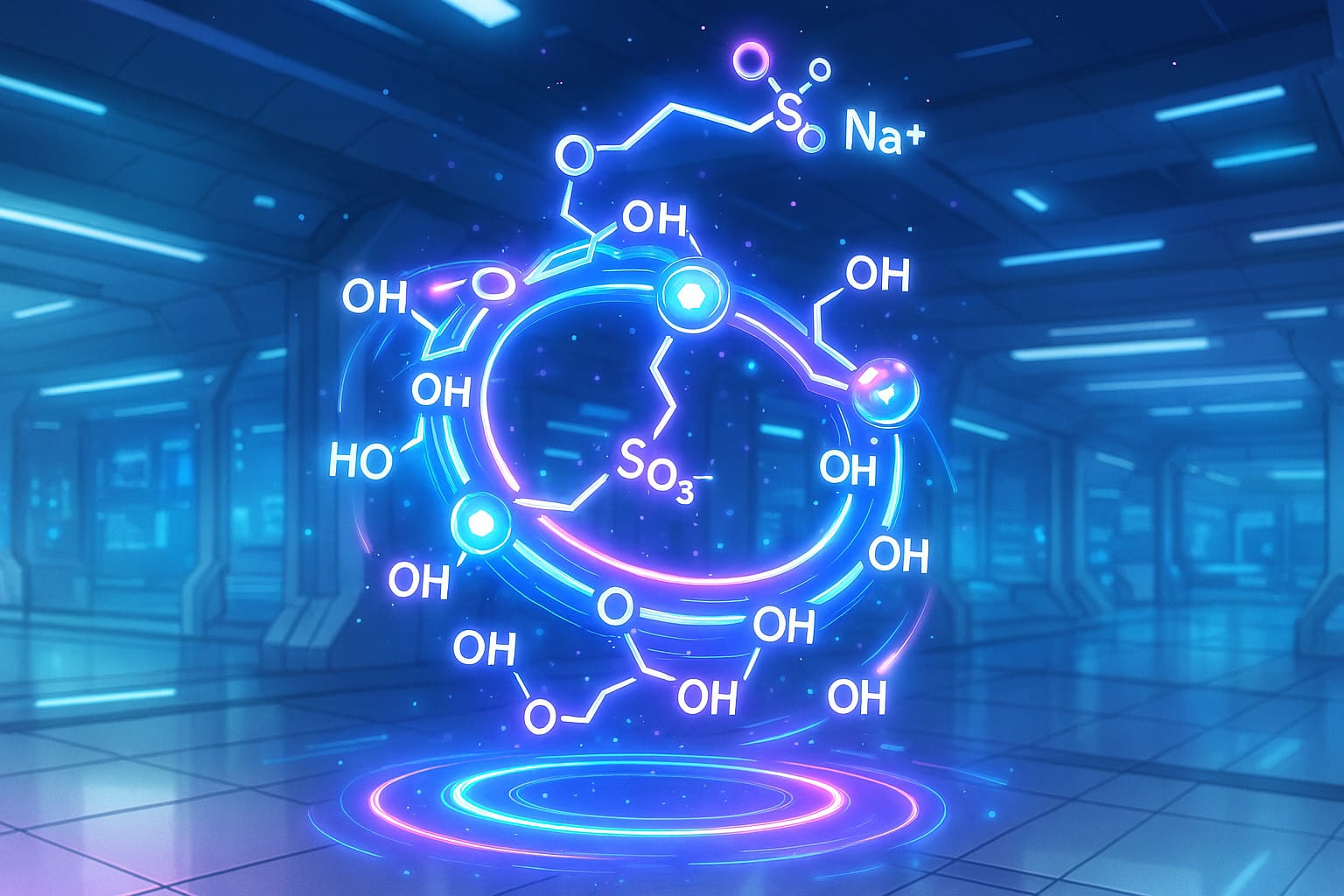
SBE‑β‑CD(シクロデキストリン誘導体)をキラル選択剤として用いた分離性能を検討したものです。
対象論文
Chiral separations in capillary electrophoresis with betaine:urea as a major component of a mixed aqueous-deep eutectic solvent
- 掲載誌:SEPARATION AND PURIFICATION TECHNOLOGY(2026)
- 著者:Wu, Q, Huang, ZH, Xue, S, Meng, HX, Liu, SM, Wang, XY, Zhang, Q
- 公開情報:MAY 21 / Volume 390 / Article 136933
- DOI:10.1016/j.seppur.2026.136933
やさしい解説(Abstractの要点を整理:本文の転載なし)
– キャピラリー電気泳動(CE)は、鏡像異性体(エナンチオマー)を分けるのに有用ですが、溶媒条件によって分離能が大きく変わります。
– 本研究は、背景電解質溶媒として深共晶溶媒(DES)を主成分にした系(DES/水 = 70/30)で、キラル分離を行う“初めての検討”を報告しています。
– キラル選択剤としてスルホブチルエーテル化β-シクロデキストリン(SBE‑β‑CD)を用い、濃度、見かけのpH、電圧などの条件が分離に与える影響を系統的に評価しました。
– 最適条件(例:NH₄OAc 25 mM, pH 8.9, SBE‑β‑CD 2.0–3.0% (m/v), 30 kV)で、構造の異なる6種類のキラル医薬品をベースライン分離できたと報告しています。
– 蛍光分光では、SBE‑β‑CD添加に対する鏡像異性体の応答が、DES中と水系で逆方向(消光 vs 増強)になる例が示され、結合様式が変わる可能性を示唆します。
– 分子ドッキング解析から、DES成分がSBE‑β‑CDとゲスト分子の相互作用(包接)を変えうることを示し、実験結果のエナンチオ選択性と整合すると述べています。
– さらに、ComplexMoGAPI と BAGI という指標で、環境負荷や実用性を“定量評価”し、DESをより持続可能な分離媒体として提案しています。
English version (for website)
What is this topic about?
Enantiomers (“mirror‑image” molecules) can show different biological effects, so chiral separation is important in pharmaceutical and analytical chemistry.
This paper explores chiral separations by capillary electrophoresis (CE) using a deep eutectic solvent (DES) system and SBE‑β‑CD as the chiral selector.
Paper in the attached file
{title}
- Journal: {journal} ({year})
- Authors: {authors}
- Publication info: {pd_} / Volume {vl} / Article {ar}
- DOI: {doi}
Plain-language bullets (paraphrased from the abstract; no verbatim text)
– Capillary electrophoresis (CE) is powerful for enantiomer separations, but performance strongly depends on the separation medium.
– This paper reports a first study using a deep eutectic solvent (DES) as the major component of the background electrolyte (DES/water = 70/30) for chiral CE separations.
– Sulfobutyl‑ether‑β‑cyclodextrin (SBE‑β‑CD) is used as the chiral selector, and key parameters (BGE type/concentration, apparent pH, selector concentration, and voltage) are systematically optimized.
– Under optimized conditions (e.g., 25 mM NH₄OAc at pH 8.9, 2.0–3.0% (m/v) SBE‑β‑CD, 30 kV), six structurally diverse chiral drugs are reported to be baseline‑resolved in the DES system.
– Fluorescence spectroscopy shows opposite responses of drug enantiomers to SBE‑β‑CD addition in DES vs. aqueous media (quenching vs. enhancement), suggesting different binding modes.
– Molecular docking indicates DES components can modify host–guest interactions between SBE‑β‑CD and enantiomers, consistent with the observed enantioselectivity.
– Environmental sustainability and practical applicability are quantitatively assessed using ComplexMoGAPI and BAGI, supporting DESs as efficient and greener separation media.