作成日: 2026-02-15
日本語版(HP向け)
どんなテーマ?
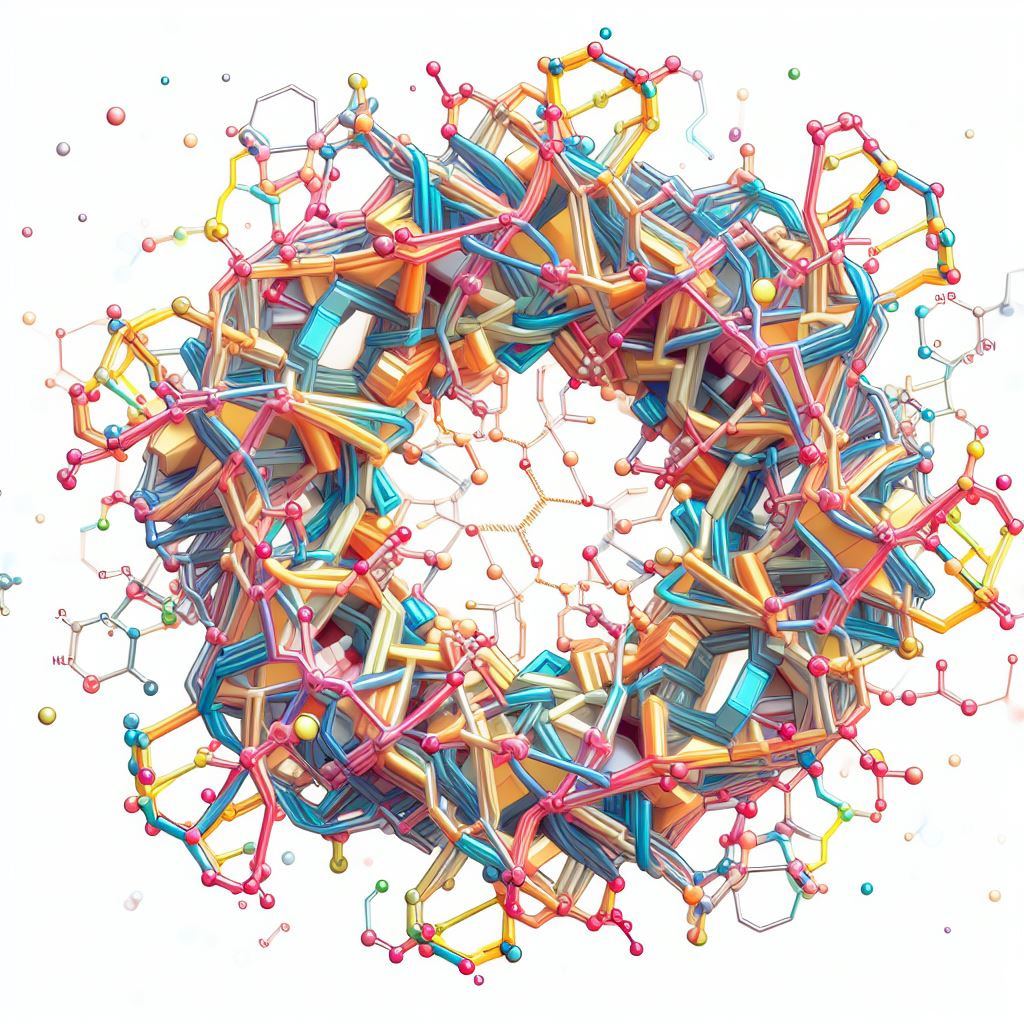
γ-シクロデキストリン(γCD)は“分子を包む空洞”をもつ糖由来材料で、
– 色・発光が変わるスマート材料
– 電池用ハイドロゲル電解質
– 食品機能性成分の徐放キャリア
など、幅広い分野で活躍します。
注目論文3選
A multi-stimuli-responsive supramolecular polymer from γ-Cyclodextrin and Viologen for dual-mode display and ammonia/amines sensing
- 掲載誌:Chemical Engineering Journal(参考JIF 2024: 13.2)
- 年:2026(FEB 15)
- 著者:Xia, DX, Xu, CY, Pan, DX, Ye, MF, et al.
- DOI:10.1016/j.cej.2026.173548
やさしい解説
– γ-シクロデキストリン(γ‑CD)とビオロゲン系分子の包接(ホスト–ゲスト)を利用して、鎖状につながる超分子ポリマーを構築。
– 光を当てると色が変わるフォトクロミズム、溶媒蒸気で色が変わるベイポクロミズム、発光色が変わる蛍光変調など、複数刺激に応答。
– NMR/UV‑vis/ESRと計算から、光・蒸気応答の主因が電子移動→ビオロゲンラジカル生成であることを示す。
– β‑CDを使う構造と比べ、γ‑CDの空洞が大きいことによる“閉じ込め効果”で、応答が速い/コントラストが高い/発光が強いと報告。
– 二重表示(デュアルモード表示)、高度な偽造防止、アンモニア/アミン検知などへ応用し、スマート材料としての実用性を示した。
Custom hydrogen-bond network grants hydrogel superior zinc-anode stability
- 掲載誌:Chemical Engineering Journal(参考JIF 2024: 13.2)
- 年:2026(FEB 15)
- 著者:Zheng, K, Zhang, Y, Wang, JL, Wang, L, et al.
- DOI:10.1016/j.cej.2026.173219
やさしい解説
– 水系亜鉛イオン電池(AZIB)では、亜鉛のデンドライト形成や電解質の乾燥が寿命を縮めます。
– γ‑CDと尿素を使ってポリアクリルアミド(PAM)の水素結合ネットワークを“設計”し、導電性と強度を両立したハイドロゲル電解質(PCU)を作製。
– γ‑CDはZn²⁺の析出面を誘導しつつ、ゲルの機械強度向上にも寄与。尿素は過剰な水酸基凝集を抑えてネットワークを最適化。
– 高いイオン伝導度とZn²⁺輸率を示し、対称セルで長時間安定動作したと報告。
– 空気暴露後も水分保持と柔軟性を保つなど、実用環境での扱いやすさも示し、電池用ハイドロゲル設計の新戦略を提案。
Dual-encapsulated γ-cyclodextrin liposomal hydrogel beads crosslinked with Ca2+-SHP for pH-responsive and targeted lutein delivery
- 掲載誌:Journal Of Food Engineering(参考JIF 2024: 5.8)
- 年:2026(JUN)
- 著者:Zhang, LX, Wang, SN, Tian, XJ, Wang, R, et al.
- DOI:10.1016/j.jfoodeng.2026.112995
やさしい解説
– ルテインは光や熱で劣化しやすい機能性成分で、体内での利用(バイオアクセシビリティ)を高める“運び屋”が重要です。
– γ‑CDでルテインを包接したリポソームを作り、さらに大豆殻多糖(SHP)をCa²⁺で架橋して、コア–シェル型のハイドロゲルビーズ(γ‑CD Lu‑lip@SHP)を作製。
– FTIR/XRD/DSCなどで包接・封入を確認し、封入効率は約84%と報告。
– 胃腸条件を模したpHで放出挙動が変わり、酸性側では拡散支配、より中性〜弱塩基性では非Fick拡散になるなど、pH応答型の徐放を示す。
– 結果として経口バイオアクセシビリティが向上し、環境に不安定な成分を“守って届ける”食品・栄養分野のデリバリー材料として有望と結論。
English version (for website)
What is this topic about?
γ‑Cyclodextrin (γCD) is a carbohydrate-based host molecule with a large cavity.
It enables designs for smart optical materials, hydrogel electrolytes for batteries, and controlled-release carriers for labile bioactives.
Top 3 papers (sorted by 2024 JIF)
A multi-stimuli-responsive supramolecular polymer from γ-Cyclodextrin and Viologen for dual-mode display and ammonia/amines sensing
- Journal: Chemical Engineering Journal (2024 JIF: 13.2)
- Year: 2026 (FEB 15)
- Authors: Xia, DX, Xu, CY, Pan, DX, Ye, MF, et al.
- DOI: 10.1016/j.cej.2026.173548
Plain-language bullets (paraphrased; no verbatim abstract text)
– A supramolecular polymer is built through host–guest complexation between γ‑cyclodextrin and a viologen‑based guest.
– The polymer responds to multiple stimuli: reversible photochromism, vapochromism (solvent vapor‑induced color change), and tunable fluorescence.
– NMR/UV‑vis/ESR plus calculations indicate the responses originate from electron transfer that generates viologen radicals.
– Compared with a β‑CD pseudorotaxane analogue, the γ‑CD system shows faster kinetics, higher color contrast, and stronger fluorescence due to the larger cavity confinement and inter‑guest interactions.
– Demonstrated uses include dual‑mode displays, advanced anti‑counterfeiting, and ammonia/amine sensing, highlighting smart‑material potential.
Custom hydrogen-bond network grants hydrogel superior zinc-anode stability
- Journal: Chemical Engineering Journal (2024 JIF: 13.2)
- Year: 2026 (FEB 15)
- Authors: Zheng, K, Zhang, Y, Wang, JL, Wang, L, et al.
- DOI: 10.1016/j.cej.2026.173219
Plain-language bullets (paraphrased; no verbatim abstract text)
– Aqueous zinc‑ion batteries suffer from dendrite growth and electrolyte instability, limiting lifetime.
– This work engineers a polyacrylamide hydrogel electrolyte by combining γ‑cyclodextrin and urea to customize the hydrogen‑bond network (PCU hydrogel).
– γ‑CD helps guide Zn²⁺ deposition and strengthens the gel, while urea tunes hydrogen bonding to prevent detrimental aggregation of excess γ‑CD hydroxyl groups with PAM chains.
– The hydrogel achieves high ionic conductivity and a high Zn²⁺ transference number, enabling long‑term stable cycling in Zn||Zn symmetric cells.
– Good water retention and flexibility after air exposure suggest practicality; the study offers a design strategy for high‑performance hydrogel electrolytes.
Dual-encapsulated γ-cyclodextrin liposomal hydrogel beads crosslinked with Ca2+-SHP for pH-responsive and targeted lutein delivery
- Journal: Journal Of Food Engineering (2024 JIF: 5.8)
- Year: 2026 (JUN)
- Authors: Zhang, LX, Wang, SN, Tian, XJ, Wang, R, et al.
- DOI: 10.1016/j.jfoodeng.2026.112995
Plain-language bullets (paraphrased; no verbatim abstract text)
– Lutein is environmentally labile (light/heat sensitive), so delivery systems are important to improve oral bioaccessibility.
– The study forms γ‑cyclodextrin–lutein liposomes and embeds them into Ca²⁺‑crosslinked soybean‑hull polysaccharide (SHP) hydrogel beads to create a core–shell carrier (γ‑CD Lu‑lip@SHP).
– Encapsulation is confirmed by FTIR/XRD/DSC analyses, with an encapsulation efficiency around 84%.
– Release behavior is pH‑dependent under simulated gastrointestinal conditions: Fickian diffusion at lower pH and non‑Fickian diffusion at pH 7.4, enabling controlled and sustained release.
– Oral bioaccessibility is improved, suggesting the bead system can protect and deliver labile bioactives in food/nutrition applications.
参考文献 / References(添付ファイル内)
- Xia, DX, Xu, CY, Pan, DX, Ye, MF, et al. (2026). A multi-stimuli-responsive supramolecular polymer from γ-Cyclodextrin and Viologen for dual-mode display and ammonia/amines sensing. Chemical Engineering Journal. doi:10.1016/j.cej.2026.173548
- Zheng, K, Zhang, Y, Wang, JL, Wang, L, et al. (2026). Custom hydrogen-bond network grants hydrogel superior zinc-anode stability. Chemical Engineering Journal. doi:10.1016/j.cej.2026.173219
- Zhang, LX, Wang, SN, Tian, XJ, Wang, R, et al. (2026). Dual-encapsulated γ-cyclodextrin liposomal hydrogel beads crosslinked with Ca2+-SHP for pH-responsive and targeted lutein delivery. Journal Of Food Engineering. doi:10.1016/j.jfoodeng.2026.112995