色素増感太陽電池(DSSC)と透明な近赤外太陽電池
Dye-Sensitized Solar Cells and Colorless NIR-Selective Photovoltaics
Grifoni et al., Advanced Energy Materials 2021,
「Toward Sustainable, Colorless, and Transparent Photovoltaics:
State of the Art and Perspectives for the Development of Selective Near-Infrared Dye-Sensitized Solar Cells」
日本語版(Japanese)
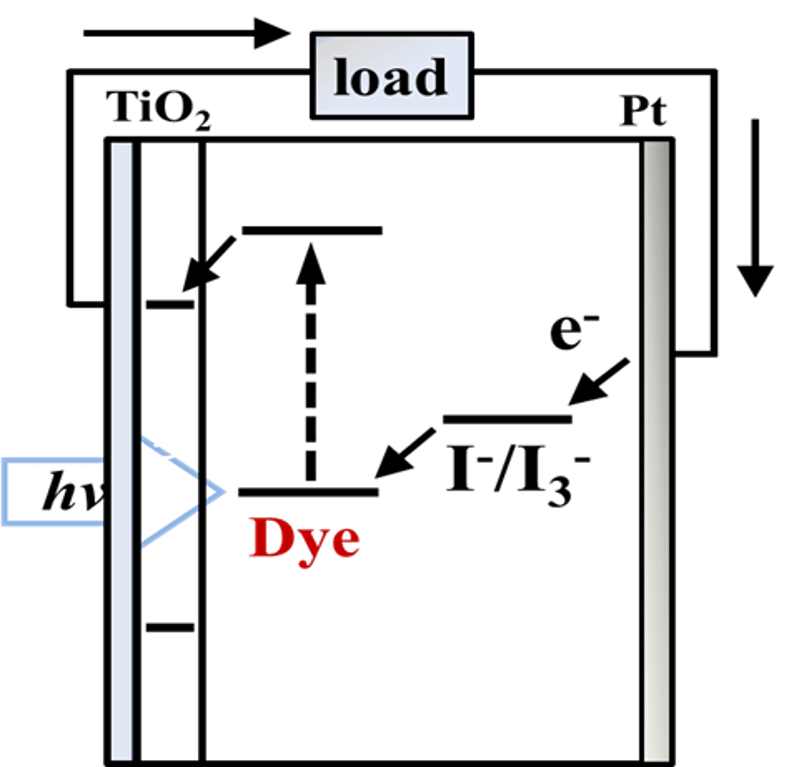
1. 色素増感太陽電池(DSSC)とは?
色素増感太陽電池(DSSC: Dye-Sensitized Solar Cell) は、
- 透明導電ガラス
- ナノ多孔質の酸化チタン(TiO₂)薄膜
- 光を吸収する「色素」
- 電解質(レドックスカップル)
- 対向電極
からできた 有機・無機ハイブリッド型の太陽電池です。
シリコン太陽電池と比べて、
- 色や透過率を自由にデザインできる
- 室内光や散乱光でも発電しやすい
- フレキシブル基板にも対応しやすい
といった特徴から、建物一体型太陽電池(BIPV: Building-Integrated PV) に適した技術として注目されています。fileciteturn14file0
2. レビュー論文のテーマ:
「無色透明でサステナブルなDSSCを目指して」
Grifoni らのレビュー論文は、DSSC 技術の中でも、
「人の目にはほぼ無色透明に見える太陽電池」 に焦点を当てています。fileciteturn14file0
キーワードは、
- colorless dye-sensitized solar cells(無色 DSSC)
- NIR-dyes(近赤外色素)
- colorless electrolytes(無色電解質)
- transparent counter electrodes(透明対向電極)
- sustainable transparent photovoltaics(持続可能な透明太陽電池)
です。
2-1. なぜ「近赤外」なのか?
レビューでは、次の点が強調されています。fileciteturn14file0
- 太陽光の約 45 % は、人間の目では見えない 近赤外(NIR)領域 にあります。
- この見えない光だけを色素で選択的に吸収し、
可視光はできるだけ透過させる ことで、 - 見た目はほぼ無色透明
- それでも発電できる
という太陽電池を実現できる。 - こうした素子は、ビルの窓・カーテンウォール・天窓など、
デザイン性を損なえない場所への BIPV に最適です。
3. 近赤外選択 DSSC を実現する「三位一体」
レビューでは、近赤外選択 DSSC を実現するための
3 つの重要なコンポーネントが整理されています。fileciteturn14file0
(1) フォトアノード(TiO₂ + 近赤外色素)
- ナノ結晶 TiO₂ 薄膜に、近赤外領域を中心に吸収する色素(NIR-dyes) を吸着。
- 可視光はほぼそのまま透過させつつ、NIR 光だけを効率的に電気に変換します。
- これまでの色素設計の歴史により、
panchromatic(可視全域を広く吸収する)色素に加え、
NIR に特化した色素も多数開発されてきました。
(2) 電解質(無色レドックスカップル)
- 従来のヨウ素系電解質などは、溶液自体に色がつきやすく、
セル全体の着色の原因 になります。 - そこでレビューでは、有機レドックスカップルなど、 無色~淡色で動作する電解質 が重要なテーマとして紹介されています。
- 「高い美観」と「十分な電気化学性能」の両立が課題です。
(3) 対向電極(透明カウンター電極)
- 白金や金属薄膜電極は、反射や色味が強く、透明性を損なうことがあります。
- レビューでは、透明導電性酸化物(TCO)や、 ナノ構造化された透明電極 を用いて、
- 触媒活性
- 電気伝導
- 光学的透明性
のバランスをとる研究がまとめられています。
この「フォトアノード」「電解質」「対向電極」の 三位一体の最適化 が、
近赤外選択・無色 DSSC の鍵であるとされています。fileciteturn14file0
4. BIPV(建材一体型太陽電池)との関わり
このレビュー論文は、DSSC を単なる高効率デバイスとしてではなく、
「建物に組み込まれる素材」 として捉えています。fileciteturn14file0
特に注目されている指標は、
- 変換効率(power conversion efficiency)
- 透過率や色度などの光学特性
- 長期安定性・耐候性
- 使用材料の環境負荷(サステナビリティ)
などです。
つまり、「どれだけ発電するか」だけでなく、 「どれだけ美しく、環境に優しく建物に溶け込むか」 が
評価軸として重視されていることが分かります。
5. 日本語まとめ
- DSSC は、色素で光を吸収して発電する太陽電池であり、
色や透過率の自由度の高さから BIPV に適しています。 - Grifoni らのレビュー論文は、近赤外光を選択的に利用する「無色透明 DSSC」 をテーマに、
近赤外色素、無色電解質、透明対向電極の設計指針を総合的にまとめています。fileciteturn14file0 - これにより、「エネルギーを生む窓」や「見た目に優しい太陽電池建材」に向けた
研究の現状と課題が、理論・材料・デバイスの観点から整理されています。
Dye-Sensitized Solar Cells and Colorless NIR-Selective PV
English Version
1. Basics of DSSCs
A dye-sensitized solar cell (DSSC) is a hybrid photovoltaic device consisting of
- a transparent conducting glass substrate,
- a nanocrystalline TiO₂ film,
- a light-absorbing dye,
- a redox electrolyte,
- and a counter electrode.
Because the spectral response is governed by the dye and other optical components,
DSSCs can be engineered to exhibit specific colors or controlled transparency,
which makes them attractive for building-integrated photovoltaics (BIPV).fileciteturn14file0
2. Scope of the review by Grifoni et al.
The uploaded record corresponds to a review article by Grifoni et al. in Advanced Energy Materials (2021) titled:
Toward Sustainable, Colorless, and Transparent Photovoltaics: State of the Art and Perspectives for the Development of Selective Near-Infrared Dye-Sensitized Solar Cellsfileciteturn14file0
According to the abstract and keywords, the review discusses:
- colorless DSSCs,
- NIR-dyes (near-infrared sensitizers),
- colorless electrolytes,
- transparent counter electrodes,
- and sustainable transparent photovoltaics,
all in the context of BIPV applications.
3. Why focus on the near-infrared (NIR) region?
The authors point out that nearly 45% of the solar irradiance lies in the near-infrared (NIR) region,
where human vision is not sensitive.fileciteturn14file0
Therefore:
- If dyes are designed to selectively absorb NIR light while
transmitting most of the visible spectrum, - DSSCs can generate electricity without significantly affecting the visual appearance of windows or façades.
Such colorless and transparent PV devices are particularly appealing for:
- glass curtain walls,
- skylights and atria,
- other architectural elements where aesthetics and daylighting are crucial.
4. The “triptych” of NIR-selective DSSCs
Grifoni et al. emphasize that NIR-selective DSSCs rely on the careful co-design of three main components:fileciteturn14file0
(1) Photoanode with NIR dyes
- Nanocrystalline TiO₂ films are sensitized with NIR-absorbing dyes.
- These dyes harvest photons in the NIR region while allowing visible light to pass.
- Molecular engineering has provided a wide library of sensitizers, from panchromatic dyes to NIR-specific ones.
(2) Colorless electrolyte (redox mediator)
- Traditional iodide/triiodide electrolytes are often colored, which degrades transparency.
- The review highlights the development of nearly colorless redox couples,
including organic mediators, as a key step towards high-aesthetic DSSCs.
(3) Transparent counter electrodes
- Metallic counter electrodes can introduce reflection and coloration.
- Alternatives such as transparent conductive oxides and nanostructured transparent catalysts
are being explored to combine: - high catalytic activity,
- good conductivity,
- and optical neutrality.
Together, these three elements define the balance between power conversion efficiency
and visual transparency in NIR-selective DSSCs.
5. DSSCs as building materials
Beyond device physics, the review places DSSCs within the broader framework of BIPV.fileciteturn14file0
Important evaluation metrics include:
- photovoltaic performance (efficiency),
- optical properties (transmittance, color rendering, etc.),
- long-term stability and durability,
- and the sustainability and environmental impact of the materials used.
In this perspective, DSSCs are viewed not only as high-performance solar cells,
but also as functional building materials that must:
- integrate visually into architecture,
- maintain comfortable indoor lighting,
- and contribute to low-carbon, sustainable construction.
6. Summary (English)
From the uploaded review record, we can summarize:
- DSSCs are inherently suited to spectral and optical tailoring thanks to dye and materials design.
- Grifoni et al. provide a comprehensive overview of colorless, NIR-selective DSSCs,
focusing on NIR dyes, colorless electrolytes, and transparent counter electrodes.fileciteturn14file0 - Their article connects these materials advances with the broader goals of
sustainable, transparent photovoltaics and building-integrated solar windows.
This positions DSSC technology as a promising route toward
“windows that generate electricity” without sacrificing aesthetics.
参考文献 / References
- Grifoni, F.; Bonomo, M.; Naim, W.; Barbero, N.; Alnasser, T.; Dzeba, I.; Giordano, M.; Tsaturyan, A.; Urbani, M.; Torres, T.; Barolo, C.; Sauvage, F.
“Toward Sustainable, Colorless, and Transparent Photovoltaics: State of the Art and Perspectives for the Development of Selective Near-Infrared Dye-Sensitized Solar Cells.”
Advanced Energy Materials 2021, 11 (43), 2101598.
DOI: 10.1002/aenm.202101598.fileciteturn14file0