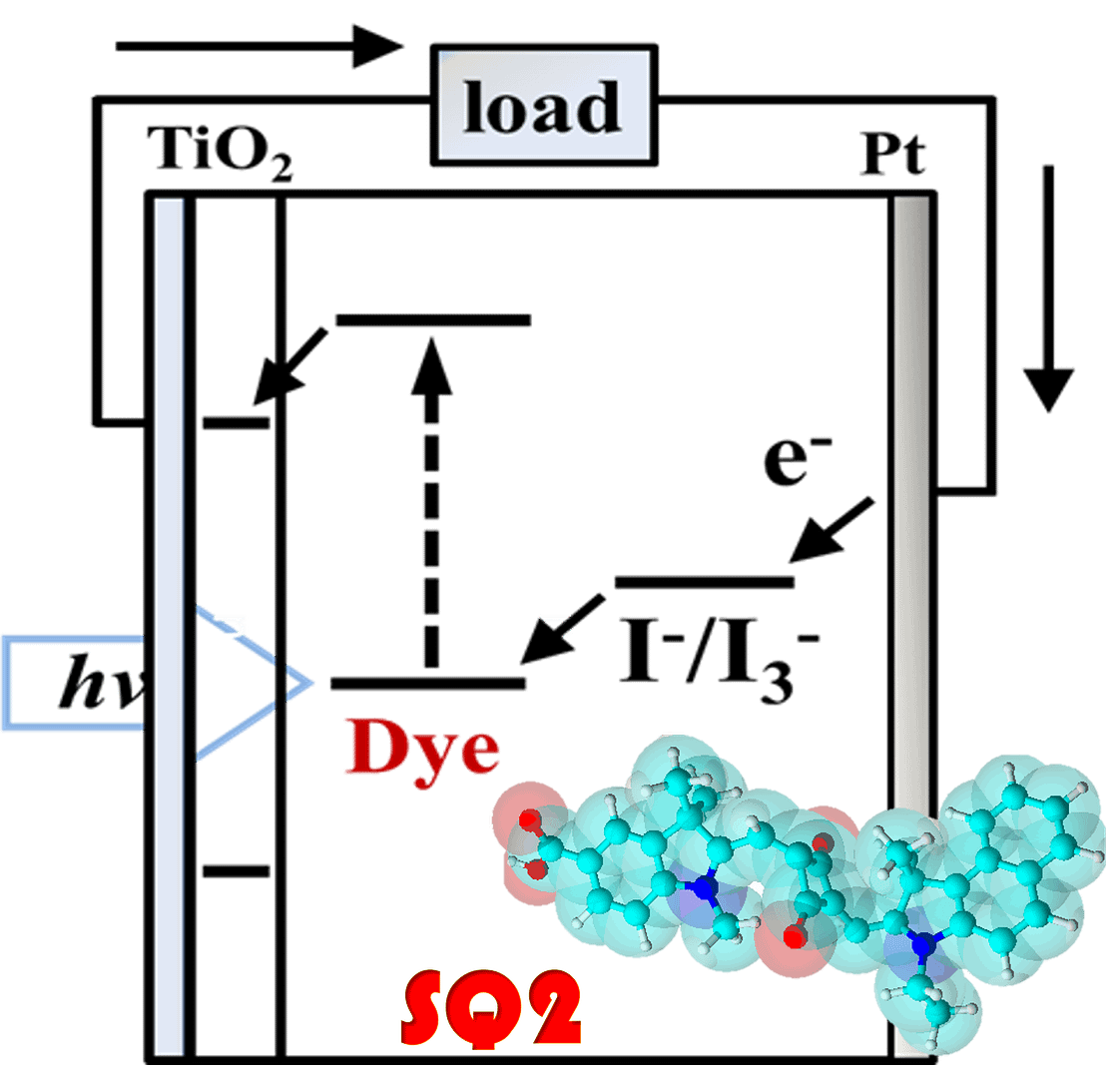
Dye-sensitied solar cell and SQ2
| Authors | Book Authors | Book Editors | Book Group Authors | Author Full Names | Book Author Full Names | Group Authors | Article Title | Source Title | Book Series Title | Book Series Subtitle | Language | Document Type | Conference Title | Conference Date | Conference Location | Conference Sponsor | Conference Host | Author Keywords | Keywords Plus | Abstract | Addresses | Affiliations | Reprint Addresses | Email Addresses | Researcher Ids | ORCIDs | Funding Orgs | Funding Name Preferred | Funding Text | Cited References | Cited Reference Count | Times Cited, WoS Core | Times Cited, All Databases | 180 Day Usage Count | Since 2013 Usage Count | Publisher | Publisher City | Publisher Address | ISSN | eISSN | ISBN | Journal Abbreviation | Journal ISO Abbreviation | Publication Date | Publication Year | Volume | Issue | Part Number | Supplement | Special Issue | Meeting Abstract | Start Page | End Page | Article Number | DOI | DOI Link | Book DOI | Early Access Date | Number of Pages | WoS Categories | Web of Science Index | Research Areas | IDS Number | Pubmed Id | Open Access Designations | Highly Cited Status | Hot Paper Status | Date of Export | UT (Unique WOS ID) | Web of Science Record |
|---|---|---|---|---|---|---|---|---|---|---|---|---|---|---|---|---|---|---|---|---|---|---|---|---|---|---|---|---|---|---|---|---|---|---|---|---|---|---|---|---|---|---|---|---|---|---|---|---|---|---|---|---|---|---|---|---|---|---|---|---|---|---|---|---|---|---|---|---|---|---|
| Younas, M; Gondal, MA; Mehmood, U; Harrabi, K; Yamani, ZH; Al-Sulaiman, FA | Younas, M.; Gondal, M. A.; Mehmood, U.; Harrabi, K.; Yamani, Z. H.; Al-Sulaiman, F. A. | Performance enhancement of dye-sensitized solar cells via cosensitization of ruthenizer Z907 and organic sensitizer SQ2 | INTERNATIONAL JOURNAL OF ENERGY RESEARCH | English | Article | cosensitization; DSSC; efficiency; electrochemical; photovoltaic; renewable energy | EFFICIENT CO-SENSITIZATION; PULSED-LASER ABLATION; PHOTOVOLTAIC PERFORMANCE; CONVERSION EFFICIENCY; TIO2 ELECTRODES; PORPHYRIN; GRAPHENE; PHOTOANODES; POLYMER; FILMS | Cosensitization is a highly effective technique to enhance the photovoltaic performance of a dye-sensitized solar cell. The main objective of this work is to improve the performance of dye-sensitized solar cell using cosensitization approach and investigation of the effect of the organic cosensitizer concentration on the power conversion efficiency of the fabricated solar cell devices. In this work, Z907, a ruthenium dye, has been cosensitized with SQ2, an organic sensitizer, and an overall efficiency of 7.83% has been achieved. The fabricated solar cells were evaluated using UV-Vis spectroscopy, current-voltage (I-V) characteristics, and electrochemical impedance spectroscopy analysis. Our results clearly indicate that the concentration of organic cosensitizer strongly affects the photovoltaic performance of fabricated solar cells. Upon optimization, the cell fabricated with 0.3 mM Z907 + 0.2 mM SQ2 dye solution demonstrated Jsc (mA/cm2) = 21.38, Voc (mV) = 698.37, FF (%) = 52.46, and power conversion efficiency of. (%) = 7.83 under standard AM1.5G 1 sun illumination (100 mW/cm2). It was observed that the efficiency of cosensitized solar cells is significantly superior than that of individual sensitized solar cells (Z907 [. = 5.08%] and SQ2 [. = 1.39%]). This enhancement in efficiency could be attributed to the lower electron-hole recombination rate, decrease in competitive absorption of I-/I-3, and less dye aggregation because of the synergistic effect in cosensitized solar cells. | [Younas, M.; Gondal, M. A.; Harrabi, K.; Yamani, Z. H.] KFUPM, Dept Phys, Laser Res Grp, POB 5047, Dhahran 31261, Saudi Arabia; [Younas, M.; Gondal, M. A.; Yamani, Z. H.] KFUPM, Ctr Res Excellence Nanotechnol CENT, Dhahran, Saudi Arabia; [Harrabi, K.; Al-Sulaiman, F. A.] KFUPM, Ctr Res Excellence Renewable Energy CoRERE, Dhahran, Saudi Arabia; [Mehmood, U.] UET, Polymer Engn Dept, Lahore, Pakistan | King Fahd University of Petroleum & Minerals; King Fahd University of Petroleum & Minerals; King Fahd University of Petroleum & Minerals | Gondal, MA i˜A—’˜ŽÒjAKFUPM, Dept Phys, Laser Res Grp, POB 5047, Dhahran 31261, Saudi Arabia. | magondal@kfupm.edu.sa | ; Younas, Muhammad/ITV-3324-2023; Gondal, Mohammed/A-9249-2010; Mehmood, Umer/T-2876-2019; Harrabi, Khalil/C-4312-2015; YAMANI, ZAIN/J-3482-2015; Gondal, Mohammed A/A-9249-2010; Yamani, Zain/J-3482-2015 | , Fahad/0000-0003-0950-3096; Mehmood, Umer/0009-0000-5252-4429; Younas, Muhammad/0000-0001-5368-3341; Younas, Muhammad/0000-0002-8305-229X; Gondal, Mohammed A/0000-0001-9570-4569; Yamani, Zain/0000-0002-6031-9385 | King Fahd University of Petroleum and Minerals (KFUPM), Saudi Arabia [RG-161002] | King Fahd University of Petroleum and Minerals (KFUPM), Saudi Arabia | King Fahd University of Petroleum and Minerals (KFUPM), Saudi Arabia, Grant/Award Number: RG-161002 | 41 | 36 | 37 | 0 | 30 | WILEY | HOBOKEN | 111 RIVER ST, HOBOKEN 07030-5774, NJ USA | 0363-907X | 1099-114X | INT J ENERG RES | Int. J. Energy Res. | OCT 10 | 2018 | 42 | 12 | 3957 | 3965 | 10.1002/er.4154 | http://dx.doi.org/10.1002/er.4154 | 9 | Energy & Fuels; Nuclear Science & Technology | Science Citation Index Expanded (SCI-EXPANDED) | Energy & Fuels; Nuclear Science & Technology | GS5GA | 2025-09-12 | WOS:000443684300018 | View Full Record in Web of Science | |||||||||||||||||||||||||
| Patwari, J; Sardar, S; Liu, B; Lemmens, P; Pal, SK | Patwari, Jayita; Sardar, Samim; Liu, Bo; Lemmens, Peter; Pal, Samir Kumar | Three-in-one approach towards efficient organic dye-sensitized solar cells: aggregation suppression, panchromatic absorption and resonance energy transfer | BEILSTEIN JOURNAL OF NANOTECHNOLOGY | English | Article | anti-aggregation; co-sensitization; dye-sensitized solar cells (DSSC); Forster resonance energy transfer (FRET); NIR harvesting; panchromatic absorption | UNSYMMETRICAL SQUARAINE DYE; TIO2 FILMS; ELECTRON; FABRICATION; DYNAMICS; TITANIA | In the present study, protoporphyrin IX (PPIX) and squarine (SQ2) have been used in a co-sensitized dye-sensitized solar cell (DSSC) to apply their high absorption coefficients in the visible and NIR region of the solar spectrum and to probe the possibility of Forster resonance energy transfer (FRET) between the two dyes. FRET from the donor PPIX to acceptor SQ2 was observed from detailed investigation of the excited-state photophysics of the dye mixture, using time-resolved fluorescence decay measurements. The electron transfer time scales from the dyes to TiO2 have also been characterized for each dye. The current-voltage (I-V) characteristics and the wavelength-dependent photocurrent measurements of the co-sensitized DSSCs reveal that FRET between the two dyes increase the photocurrent as well as the efficiency of the device. From the absorption spectra of the co-sensitized photoanodes, PPIX was observed to be efficiently acting as a co-adsorbent and to reduce the dye aggregation problem of SQ2. It has further been proven by a comparison of the device performance with a chenodeoxycholic acid (CDCA) added to a SQ2-sensitized DSSC. Apart from increasing the absorption window, the FRET-induced enhanced photocurrent and the anti-aggregating behavior of PPIX towards SQ2 are crucial points that improve the performance of the co-sensitized DSSC. | [Patwari, Jayita; Sardar, Samim; Pal, Samir Kumar] SN Bose Natl Ctr Basic Sci, Dept Chem Biol & Macromol Sci, Block JD,Sect 3, Kolkata 700106, India; [Liu, Bo; Lemmens, Peter] TU Braunschweig, Inst Condensed Matter Phys, Mendelssohnstr 3, D-38106 Braunschweig, Germany; [Lemmens, Peter] TU Braunschweig, Lab Emerging Nanometrol, Braunschweig, Germany | Department of Science & Technology (India); SN Bose National Centre for Basic Science (SNBNCBS); Braunschweig University of Technology; Braunschweig University of Technology | Pal, SK i˜A—’˜ŽÒjASN Bose Natl Ctr Basic Sci, Dept Chem Biol & Macromol Sci, Block JD,Sect 3, Kolkata 700106, India. | skpal@bose.res.in | Sardar, Samim/E-2666-2017; PATWARI, JAYITA/HME-2495-2023; Lemmens, Peter/C-8398-2009 | Sardar, Samim/0000-0003-1783-6974; Lemmens, Peter/0000-0002-0894-3412 | CSIR (India); DST (India) [DST-TM-SERI-FR-117, EMR/2016/004698]; Department of Atomic Energy (DAE, India) [2013-37P-73BRNS]; Department of Biotechnology (DBT, India) [BT/PR11534/NNT/28/766/2014, DFG-RTG 1952]; IGSM; Quanomet | CSIR (India)(Council of Scientific & Industrial Research (CSIR) - India); DST (India)(Department of Science & Technology (India)); Department of Atomic Energy (DAE, India)(Department of Atomic Energy (DAE)); Department of Biotechnology (DBT, India)(Department of Biotechnology (DBT) India); IGSM; Quanomet | J.P. would like to thank CSIR (India) for fellowship. We thank DST (India) (DST-TM-SERI-FR-117, EMR/2016/004698), Department of Atomic Energy (DAE, India) (2013-37P-73BRNS), Department of Biotechnology (DBT, India) (BT/PR11534/NNT/28/766/2014), DFG-RTG 1952, IGSM, and Quanomet for financial grants. | 41 | 20 | 22 | 0 | 17 | BEILSTEIN-INSTITUT | FRANKFURT AM MAIN | TRAKEHNER STRASSE 7-9, FRANKFURT AM MAIN, 60487, GERMANY | 2190-4286 | BEILSTEIN J NANOTECH | Beilstein J. Nanotechnol. | AUG 17 | 2017 | 8 | 1705 | 1713 | 10.3762/bjnano.8.171 | http://dx.doi.org/10.3762/bjnano.8.171 | 9 | Nanoscience & Nanotechnology; Materials Science, Multidisciplinary; Physics, Applied | Science Citation Index Expanded (SCI-EXPANDED) | Science & Technology - Other Topics; Materials Science; Physics | FD9GM | 28875108 | Green Submitted, Green Published, gold | 2025-09-12 | WOS:000407830800001 | View Full Record in Web of Science | |||||||||||||||||||||||||
| Hosoda, N; Komatsu, H; Ikuno, T | Hosoda, Norika; Komatsu, Hiroaki; Ikuno, Takashi | Dye-sensitized solar cell-based optoelectronic artificial synaptic devices capable of wavelength recognition for physical reservoir computing | JAPANESE JOURNAL OF APPLIED PHYSICS | English | Article | dye-sensitized solar cells; artificial synapses; physical reservoir computing | We demonstrate that dye-sensitized solar cells (DSCs) with SQ2 dye function as wavelength-sensitive optoelectronic synaptic devices for physical reservoir computing (PRC). Leveraging steep slopes in the external quantum efficiency (EQE) profile, DSCs exhibit high sensitivity to minor wavelength shifts, achieving a paired-pulse facilitation index of 143%. The device successfully performed handwritten digit recognition with 87% accuracy using wavelength-coded input data. This study highlights DSCs' ability to process wavelength variations as small as 10 nm, offering a low-power, compact alternative to traditional optical sensors and paving the way for advanced AI sensors and next-generation synaptic devices. | [Hosoda, Norika; Komatsu, Hiroaki; Ikuno, Takashi] Tokyo Univ Sci, Grad Sch Adv Engn, Dept Appl Elect, Katsushika, Tokyo 1258585, Japan | Tokyo University of Science; Suwa University of Science | Ikuno, T i˜A—’˜ŽÒjATokyo Univ Sci, Grad Sch Adv Engn, Dept Appl Elect, Katsushika, Tokyo 1258585, Japan. | tikuno@rs.tus.ac.jp | ; Ikuno, Takashi/N-8454-2014 | Ikuno, Takashi/0000-0002-5322-9373; | Japan Science and Technology Corporation https://doi.org/10.13039/501100001695 [JPMJFS2144]; JST, the establishment of university fellowships towards the creation of science and technology innovation [JPMJSP2151]; JST SPRING | Japan Science and Technology Corporation https://doi.org/10.13039/501100001695; JST, the establishment of university fellowships towards the creation of science and technology innovation; JST SPRING | The authors express their gratitude to Prof. Morio Nagata from the Tokyo University of Science for their technical support with the IPCE measurements. This work was partially supported by JST, the establishment of university fellowships towards the creation of science and technology innovation (Grant No. JPMJFS2144). Additional support was provided by JST SPRING (Grant No. JPMJSP2151). | 31 | 1 | 1 | 5 | 5 | IOP Publishing Ltd | BRISTOL | TEMPLE CIRCUS, TEMPLE WAY, BRISTOL BS1 6BE, ENGLAND | 0021-4922 | 1347-4065 | JPN J APPL PHYS | Jpn. J. Appl. Phys. | MAR 1 | 2025 | 64 | 3 | 37001 | 10.35848/1347-4065/adb820 | http://dx.doi.org/10.35848/1347-4065/adb820 | 5 | Physics, Applied | Science Citation Index Expanded (SCI-EXPANDED) | Physics | 0EA5H | 2025-09-12 | WOS:001445138200001 | View Full Record in Web of Science | |||||||||||||||||||||||||||
| Lee, H; Kim, J; Kim, DY; Seo, Y | Lee, Horim; Kim, Jihun; Kim, Dong Young; Seo, Yongsok | Co-sensitization of metal free organic dyes in flexible dye sensitized solar cells | ORGANIC ELECTRONICS | English | Article | Co-sensitization; Flexible dye-sensitized solar cell; Metal-free organic dye; Unsymmetrical squaraine dye | LOW-TEMPERATURE FABRICATION; TIO2 FILMS; PHOTOVOLTAIC PERFORMANCE; RUTHENIUM SENSITIZERS; NANOWIRE ARRAYS; SQUARAINE DYES; ELECTRODES; EFFICIENCY; PORPHYRIN; NANOPARTICLES | A metal-free organic dye (JH-1) and an unsymmetrical squaraine dye (SQ2) were used for co-sensitization of a flexible TiO2 electrode in order to obtain a broad spectral response in the visible light regions. Because of enhanced light absorption, the performance of the flexible plastic dye-sensitized solar cells (DSSCs) was enhanced. The dye concentration of co-sensitized TiO2 film was higher than that of individual dye-sensitized TiO2 film, leading to improved photovoltaic performance with the panchromatic light harvesting of JH-1 and SQ2 (350-720 nm). Optimum molar ratio of individual dye, dye concentration and adsorption kinetics onto the TiO2 photoelectrode, and ideal thickness of HS-TiO2 layer have been investigated. A flexible DSSC co-sensitized with the molar ratio of 60:40 (JH-1:SQ2) and Ti2 film thickness of 6 mu m yielded a high photocurrent density of 12.32 mA cm(-2), an open circuit voltage of 0.754 V, a fill factor of 0.68, and a power conversion efficiency of 6.31% under 1 sun illumination (100 mW cm(-2)). Interestingly, the co-sensitizers did not compete with each other for the absorption. Both the open circuit photovoltage and the photocurrent density were unexpectedly increased with co-sensitization which means that enhancement in photocurrents can be achieved without sacrificing the open circuit photovoltage for the co-sensitized solar cells, once the electron recombination and dye aggregation are retarded by the co-sensitization. | [Lee, Horim; Kim, Jihun; Seo, Yongsok] Seoul Natl Univ, Coll Engn, RIAM Sch Mat Sci & Engn, Kwanakro 1, Seoul 08826, South Korea; [Kim, Dong Young] Korea Inst Sci & Technol, Polymer Hybrid Res Ctr, POB 131, Seoul 02792, South Korea | Seoul National University (SNU); Korea Institute of Science & Technology (KIST) | Seo, Y i˜A—’˜ŽÒjASeoul Natl Univ, Coll Engn, RIAM Sch Mat Sci & Engn, Kwanakro 1, Seoul 08826, South Korea.;Kim, DY i˜A—’˜ŽÒjAKorea Inst Sci & Technol, Polymer Hybrid Res Ctr, POB 131, Seoul 02792, South Korea. | dykim@kist.re.kr; ysseo@snu.ac.kr | Kim, Young Hoon/F-5424-2012; Seo, Yongsok/E-6703-2013; LEE, HORIM/HHZ-2481-2022 | Seo, Yongsok/0000-0001-9560-797X; | BK21PLUS [21A20131912052]; MIKE (Original Material Technology Program (RIAM) [I-AC12-13(0417-20130067)]; KRICT [RIAM 0417-20170017]; KIST [2E22831, 2K01970]; World Class University (Ministry of Education, Science and Technology, Korea (MEST)) [R32-2010-000-10217] | BK21PLUS; MIKE (Original Material Technology Program (RIAM); KRICT; KIST(Korea Institute of Science & Technology Information (KISTI)); World Class University (Ministry of Education, Science and Technology, Korea (MEST)) | This work was supported by BK21PLUS (21A20131912052), MIKE (Original Material Technology Program (RIAM No. I-AC12-13(0417-20130067)), KRICT (RIAM 0417-20170017) and KIST Institutional Programs (Project 2E22831 and 2K01970) (DYK), World Class University Programs (R32-2010-000-10217; the Ministry of Education, Science and Technology, Korea (MEST)) (DK). | 46 | 54 | 54 | 0 | 100 | ELSEVIER SCIENCE BV | AMSTERDAM | PO BOX 211, 1000 AE AMSTERDAM, NETHERLANDS | 1566-1199 | 1878-5530 | ORG ELECTRON | Org. Electron. | JAN | 2018 | 52 | 103 | 109 | 10.1016/j.orgel.2017.10.003 | http://dx.doi.org/10.1016/j.orgel.2017.10.003 | 7 | Materials Science, Multidisciplinary; Physics, Applied | Science Citation Index Expanded (SCI-EXPANDED) | Materials Science; Physics | FO6ZZ | 2025-09-12 | WOS:000417020900013 | View Full Record in Web of Science | ||||||||||||||||||||||||||
| Takeshita, T | Takeshita, Tatsuya | Controlling the aggregation of squaraine dye on the titanium oxide surface via amino-silane coupling for dye-sensitized solar cells | DYES AND PIGMENTS | English | Article | Dye aggregation; Squaraine; Titanium oxide; Silane coupling agents; Dye-sensitized solar cells | FREE ORGANIC-DYES; CO-SENSITIZATION; EFFICIENT; ADSORPTION; NANOPARTICLES; ADSORBENTS; ABSORPTION; DESIGN; SILICA; BLOCK | In this study, we report the effects of a covalent attachment strategy using aminosilane coupling agents (APTMS) on squaraine dye (SQ2) aggregation on a titanium oxide (TiO2) surface. In addition, we discuss the effect of APTMS on the photovoltaic conversion of dye-sensitized solar cells (DSSCs) and compare it with a co-adsorption approach using chenodeoxycholic acid (CDCA). According to the total transmittance spectrum measurements, SQ2 formed dimers and H-and J-aggregated species on the TiO2 surface. However, the SQ2 attached to the TiO2 surface via interactions with APTMS (SQ2/APTMS/TiO2) exhibited a relatively narrow absorption band originating from the J-dimer. In contrast, the intensities of the shoulder bands of the H-dimers and H-aggregated species decreased. When SQ2 is covalently attached to APTMS (SQ2-APTMS/TiO2) using an amide coupling reagent, the intensity of the shoulder bands decreases more than that of SQ2/APTMS/TiO2. The J-dimerization of these dyes was analyzed based on the geometric structures and transition dipole moments obtained from quantum chemical calculations. Notably, quantum chemical calculations supported the formation of H-dimers, in contrast to the experimental results. Thus, the narrow absorption bands of SQ2/APTMS/TiO2 and SQ2-APTMS/ TiO2 observed in this study can be attributed to a different model from molecular excitation theory. The mean photovoltaic conversion efficiencies of the assembled DSSCs using the SQ2/APTMS/TiO2 and SQ2-APTMS/TiO2 photoelectrodes were 0.81 % and 0.79 %, respectively. These values represent a 1.2-fold increase compared to the DSSC using SQ2 (0.66 %), which is lower than that of the DSSC involving SQ2 with CDCA (0.95 %). | [Takeshita, Tatsuya] Fukui Univ Technol, Dept Appl Chem & Food Sci, 3-6-1 Gakuen, Fukui 9108505, Japan | Fukui University of Technology | Takeshita, T i˜A—’˜ŽÒjAFukui Univ Technol, Dept Appl Chem & Food Sci, 3-6-1 Gakuen, Fukui 9108505, Japan. | takeshita@fukui-ut.ac.jp | Yashima Environment Technology Foundation | Yashima Environment Technology Foundation | This study was funded by the Yashima Environment Technology Foundation | 58 | 0 | 0 | 6 | 6 | ELSEVIER SCI LTD | London | 125 London Wall, London, ENGLAND | 0143-7208 | 1873-3743 | DYES PIGMENTS | Dyes Pigment. | DEC | 2025 | 243 | 113031 | 10.1016/j.dyepig.2025.113031 | http://dx.doi.org/10.1016/j.dyepig.2025.113031 | 10 | Chemistry, Applied; Engineering, Chemical; Materials Science, Textiles | Science Citation Index Expanded (SCI-EXPANDED) | Chemistry; Engineering; Materials Science | 5FZ4P | 2025-09-12 | WOS:001534784300006 | View Full Record in Web of Science | |||||||||||||||||||||||||||||
| Sheehan, S; Naponiello, G; Odobel, F; Dowling, DP; Di Carlo, A; Dini, D | Sheehan, Stephen; Naponiello, Gaia; Odobel, Fabrice; Dowling, Denis P.; Di Carlo, Aldo; Dini, Danilo | Comparison of the photoelectrochemical properties of RDS NiO thin films for p-type DSCs with different organic and organometallic dye-sensitizers and evidence of a direct correlation between cell efficiency and charge recombination | JOURNAL OF SOLID STATE ELECTROCHEMISTRY | English | Article | p-type DSC; Nickel oxide; P1; Squaraine; Photoelectrochemistry; Iodine reduction | NICKEL-OXIDE FILMS; SOLAR-CELLS; NANOSTRUCTURED NIO; SPRAY-PYROLYSIS; ELECTROCHROMIC PROPERTIES; IMPEDANCE SPECTROSCOPY; OPTICAL-PROPERTIES; TIO2 FILMS; DEPOSITION; PHOTOCATHODES | Undyed mesoporous NiO in the configuration of thin film (thickness 2-3 mu m) presents photoelectrochemical activity as cathode of a p-type dye-sensitized solar cell (p-DSC) towards the reduction of triiodide to iodide under irradiation with a solar simulator. The photoelectroactivity of the oxide prepared via microwave plasma sintering (or rapid discharge sintering, RDS) has been observed in the spectral range 300-500 nm with the incident photon-to-current conversion efficiency (IPCE) reaching a maximum of 8.7 % at 375 nm. Upon sensitization, the characteristic photoelectrochemical activity of NiO can be either enhanced or depressed depending on the nature of the dye-sensitizer. The comparative analysis of the JV and IPCE curves of the p-DSCs based on bare NiO and four differently sensitized NiO cathodes reveals that N719, black dye (BD), and commercial squaraine 2 (SQ2) decrease the efficiency of conversion of dyed NiO with respect to bare NiO in the range of photoelectroactivity of the latter (300-500 nm). The fourth dye P1 represents the sole exception since its employment brings about an enhancement of the quantum efficiency of P1-sensitized vs. unsensitized NiO up to a maximum of 21 % within the spectral interval of reference for NiO (300-500 nm). Outside the range of NiO photoelectrochemical activity, i.e., lambda > 500 nm, only N719 does not introduce a gain of quantum efficiency with respect to bare NiO despite the observation of spectral sensitization up to 580 nm for N719-sensitized NiO. The impedance spectra recorded under illumination shows a direct proportionality between the overall efficiency (eta) of the variously sensitized p-DSCs and the amplitude of the semicircle which is generally associated with the process of charge recombination at the electrode/electrolyte interface with eta decreasing with the increase of the recombination resistance. | [Sheehan, Stephen; Dowling, Denis P.] Univ Coll Dublin, Sch Mech & Mat Engn, Dublin 2, Ireland; [Naponiello, Gaia; Dini, Danilo] Univ Roma La Sapienza, Dept Chem, I-00185 Rome, Italy; [Odobel, Fabrice] Univ Nantes, CNRS, CEISAM, Nantes, France; [Di Carlo, Aldo] Univ Roma Tor Vergata, Dept Elect Engn, CHOSE Ctr Hybrid & Organ Solar Energy, Rome, Italy | University College Dublin; Sapienza University Rome; Centre National de la Recherche Scientifique (CNRS); Nantes Universite; University of Rome Tor Vergata | Dini, D i˜A—’˜ŽÒjAUniv Roma La Sapienza, Dept Chem, I-00185 Rome, Italy. | danilo.dini@uniroma1.it | Di Carlo, Aldo/J-2417-2016; Dowling, Denis/T-1480-2018; Dini, Danilo/E-4081-2014; Di Carlo, Aldo/AAA-2491-2021 | Di Carlo, Aldo/0000-0001-6828-2380; ODOBEL, Fabrice/0000-0001-7289-4160; Dowling, Denis/0000-0001-7853-2478; Dini, Danilo/0000-0001-5005-4187; | Science Foundation Ireland (SFI) [07/SRC/B1160]; Regione Lazio; CHOSE; MIUR through the research project PRIN [20104XET32]; University of Rome LA SAPIENZA through the program Ateneo [C26A124AXX] | Science Foundation Ireland (SFI)(Science Foundation Ireland (SFI)); Regione Lazio(Regione Lazio); CHOSE; MIUR through the research project PRIN(Ministry of Education, Universities and Research (MIUR)); University of Rome LA SAPIENZA through the program Ateneo | This research is partially supported by Science Foundation Ireland (SFI) under Grant No. [07/SRC/B1160]. This research project was supported by Regione Lazio and CHOSE. The authors acknowledge the financial support from MIUR through the research project PRIN 2010-2011 (protocol no. 20104XET32). D.D. acknowledges the financial support from the University of Rome LA SAPIENZA through the program Ateneo 2012 (Protocol No. C26A124AXX). The authors are indebted to Dr. Fabrizio Caprioli (Dept. of Chemistry at the University of Rome LA SAPIENZA) for the compilation of Table 4. | 59 | 43 | 43 | 1 | 76 | SPRINGER | NEW YORK | 233 SPRING ST, NEW YORK, NY 10013 USA | 1432-8488 | 1433-0768 | J SOLID STATE ELECTR | J. Solid State Electrochem. | APR | 2015 | 19 | 4 | 975 | 986 | 10.1007/s10008-014-2703-9 | http://dx.doi.org/10.1007/s10008-014-2703-9 | 12 | Electrochemistry | Science Citation Index Expanded (SCI-EXPANDED) | Electrochemistry | CE3CS | 2025-09-12 | WOS:000351702700005 | View Full Record in Web of Science | |||||||||||||||||||||||||
| Zani, L; Dagar, J; Lai, S; Centi, S; Ratto, F; Pini, R; Calamante, M; Mordini, A; Reginato, G; Mazzoni, M | Zani, Lorenzo; Dagar, Janardan; Lai, Sarah; Centi, Sonia; Ratto, Fulvio; Pini, Roberto; Calamante, Massimo; Mordini, Alessandro; Reginato, Gianna; Mazzoni, Marina | Studies on the efficiency enhancement of co-sensitized, transparent DSSCs by employment of core-shell-shell gold nanorods | INORGANICA CHIMICA ACTA | English | Article | Gold nanorods; Titanium dioxide; Dye-sensitized solar cells; UV-Vis spectroscopy | SOLAR-CELLS; SILVER NANOPARTICLES; DYE; TIO2; CONVERSION; LIGHT; FILMS; NANOSTRUCTURES; PHOTOCURRENT; CHROMOPHORES | In this article, we present studies concerning the efficiency enhancement of dye-sensitized solar cells (DSSC) containing cocktails of organic donor-pi-acceptor (D-pi-A) dyes (L0 and L1) and a squaraine sensitizer (SQ2) by means of the localized surface plasmon resonance (LSPR) effect induced by gold nanorods (GNRs) embedded within the semiconductor layer. In view of the potential application of DSSC devices for building integration, dye cocktails were selected to maximize transparency in the 500-600 nm region, where human eye sensitivity has its peak. Thus, the chosen organic dyes and the squaraine sensitizer had absorption maxima in the 380-410 nm region and above 660 nm, respectively. Thanks to their specific asymmetry, GNRs with a 3: 1 aspect ratio could enhance organic dye absorption due to their transverse resonance component as well as squaraine absorption in the far-red/near-infrared (NIR) spectral range due to their longitudinal resonance component; furthermore, they were sequentially coated with thin layers of SiO2 and TiO2 in order to make them robust enough to withstand thermal film sintering and minimize charge recombination during the photovoltaic operation. Whereas incorporation of GNRs in the photoanode did not improve the efficiency of cells prepared with the L0/SQ2 dye combination, a significant increase of 23% (from 3.50% to 4.32%), comparable to that observed for Ru-sensitizer N719, was observed in the case of the L1/SQ2 dye cocktail. (C) 2017 Elsevier B.V. All rights reserved. | [Zani, Lorenzo; Calamante, Massimo; Mordini, Alessandro; Reginato, Gianna] Ist Chim Composti Organometallici CNR ICCOM, Via Madonna Piano 10, I-50019 Sesto Fiorentino, Italy; [Dagar, Janardan] Univ Roma Tor Vergata, Dept Elect Engn, CHOSE, Via Politecn 1, I-00133 Rome, Italy; [Lai, Sarah; Centi, Sonia; Ratto, Fulvio; Pini, Roberto; Mazzoni, Marina] Ist Fis Appl Nello Carrara CNR IFAC, Via Madonna Piano 10, I-50019 Sesto Fiorentino, Italy | Consiglio Nazionale delle Ricerche (CNR); Isituto di Chimica dei Composti Organometallici (ICCOM-CNR); University of Rome Tor Vergata; Consiglio Nazionale delle Ricerche (CNR); Istituto di Fisica Applicata Nello Carrara (IFAC-CNR) | Zani, L i˜A—’˜ŽÒjAIst Chim Composti Organometallici CNR ICCOM, Via Madonna Piano 10, I-50019 Sesto Fiorentino, Italy.;Mazzoni, M i˜A—’˜ŽÒjAIst Fis Appl Nello Carrara CNR IFAC, Via Madonna Piano 10, I-50019 Sesto Fiorentino, Italy. | lorenzo.zani@iccom.cnr.it | Lai, Sarah/Q-5846-2018; Mordini, Alessandro/B-7391-2015; REGINATO, GIANNA/AAY-3164-2020; Calamante, Massimo/AAB-3311-2020; Ratto, Fulvio/J-1716-2012; Dagar, Janardan/X-2164-2019; Zani, Lorenzo/D-8561-2016; centi, sonia/AAY-5114-2020 | Lai, Sarah/0000-0003-1245-2349; REGINATO, GIANNA/0000-0002-7712-3426; Mordini, Alessandro/0000-0002-1055-0976; centi, sonia/0000-0001-5432-5589; RATTO, FULVIO/0000-0001-6721-9486; Zani, Lorenzo/0000-0003-0621-2648; | DIITET-CNR | DIITET-CNR | The authors wish to acknowledge Dr. Thomas Brown for giving them the opportunity to perform photovoltaic measurements at C.H.O.S.E. and Mauro Pucci (CNR-INO) for his technical assistance. In addition, the authors thank DIITET-CNR for financial support provided by the grant P-DSSC: Plasmonic enhancement in dye-sensitized solar cells in the framework of the CNR Rewarding Project Made in Italy. | 43 | 6 | 6 | 0 | 43 | ELSEVIER SCIENCE SA | LAUSANNE | PO BOX 564, 1001 LAUSANNE, SWITZERLAND | 0020-1693 | 1873-3255 | INORG CHIM ACTA | Inorg. Chim. Acta | JAN 30 | 2018 | 470 | SI | 407 | 415 | 10.1016/j.ica.2017.06.041 | http://dx.doi.org/10.1016/j.ica.2017.06.041 | 9 | Chemistry, Inorganic & Nuclear | Science Citation Index Expanded (SCI-EXPANDED) | Chemistry | FN5PO | 2025-09-12 | WOS:000416060300051 | View Full Record in Web of Science | |||||||||||||||||||||||||
| Mazzoni, M; Dagar, J; Lai, S; Centi, S; Ratto, F; Pini, R; Zani, L | Mazzoni, Marina; Dagar, Janardan; Lai, Sarah; Centi, Sonia; Ratto, Fulvio; Pini, Roberto; Zani, Lorenzo | Transformed Double-Capped Gold Nanorods in Dye Co-Sensitized Solar Cells for Semitransparent Windows | CURRENT NANOSCIENCE | English | Article | DSSC; co-sensitization; capped gold nanorods; transparent titania paste; absorbance; absorptance; transmittance; EQE% | PLASMONIC ENHANCEMENT; EFFICIENCY ENHANCEMENT; NANOPARTICLES | Background: Dye sensitized solar cells (DSSCs) containing two different dyes were recently used for applications to windows. To enhance the efficiency of this type of solar cells by means of the effect of localized surface plasmon resonance (LSPR), we produced gold nanorods (GNRs) with an aspect ratio (a.r.) equal to 3:1 and tos 4:1. With an actual window application in mind, and mainly to prevent corrosion by the redox mediator in the cell, we considered the capping of GNRs before introducing them into the titanium oxide (TiO2) layer of the anode. in particular, we made a double-capping with silica and titania layers for a limited total thickness (i.e., about 6 nm), while still allowing a significant localized LSPR effect despite the increased distance between gold and dye molecules. We documented the different transformations in dimensions of the two types of capped gold nanorods (c-GNRs) due to the effect of sintering. Our aim was to evaluate the influence that these transformations would have on the photovoltaic performances of DSSCs. Methods: We added c-GNRs with a ratio of 2% in w/w to a transparent semiconductor paste, which was doctor bladed on the photoanodes of the co-sensitized solar cells made with commercially available organic sensitizers (L1 or L0) and the squaraine SQ2, which acted as a co-sensitizer. The films had a thickness of about 6 mu m and were sintered at 450 degrees C. We used transmission electron microscopy (TEM) analysis to document the transformations, absorbance and absorptance spectra in order to control the effects of these modifications, and transmittance spectra for evaluating the see-through effects. We performed current-voltage, external quantum efficiency (EQE%) and electrochemical impedance spectroscopy (EIS) characterizations of the DSSCs. Results: The semiconductor films with c-GNRs that had GNRs with an a.r. equal to 4:1 (c-GNRs 4:1) had lower absorption and higher transmission as compared to those with GNRs a.r equal to 3:1 (c-GNRs 3:1). Only the c-GNRs 3:1, which retained a similar shape and an a.r. equal to 1.5 after sintering, produced an enhancement in the power conversion efficiency eta% (23%), current J(sc) (8%), and voltage V-oc (2.5%) when used in combination with the dye cocktail containing the organic dye L1. On the contrary, the presence of c-GNRs 4:1 negatively influenced the photovoltaic performances of the cells containing this dye cocktail The same occurred for both types of c-GNRs with the dye cocktail containing L0. Conclusion: The use of c-GNRs 3:1 could actually improve the efficiency of co-sensitized DSSCs. On the other hand, the transformed dimensions of the c-GNRs 4:1 negatively influenced the photovoltaic characteristics when we used the same concentration of nanoparticles, and a semiconductor paste in small grains (i.e., about 20 nm). We attributed this fact both to a reduced penetration of the dyes in the films and to an inferior plasmonic effect. | [Mazzoni, Marina; Lai, Sarah; Centi, Sonia; Ratto, Fulvio; Pini, Roberto] Ist Fis Applicata Nello Carrara CNR IFAC, Via Madonna Piano 10, I-50019 Sesto Fiorentino, Italy; [Dagar, Janardan] Univ Roma Tor Vergata, Dipartimento Ingn Elettron, CHOSE, Via Politecn 1, I-00133 Rome, Italy; [Zani, Lorenzo] Ist Chim Composti Organometall CNR ICCOM, Via Madonna Piano 10, I-50019 Sesto Fiorentino, Italy | Consiglio Nazionale delle Ricerche (CNR); Istituto di Fisica Applicata Nello Carrara (IFAC-CNR); University of Rome Tor Vergata; Consiglio Nazionale delle Ricerche (CNR); Isituto di Chimica dei Composti Organometallici (ICCOM-CNR) | Mazzoni, M i˜A—’˜ŽÒjAIst Fis Applicata Nello Carrara CNR IFAC, Via Madonna Piano 10, I-50019 Sesto Fiorentino, Italy. | m.mazzoni@ifac.cnr.it | Lai, Sarah/Q-5846-2018; Ratto, Fulvio/J-1716-2012; Dagar, Janardan/X-2164-2019; Zani, Lorenzo/D-8561-2016; centi, sonia/AAY-5114-2020 | Lai, Sarah/0000-0003-1245-2349; centi, sonia/0000-0001-5432-5589; Zani, Lorenzo/0000-0003-0621-2648; RATTO, FULVIO/0000-0001-6721-9486 | DIITET-CNR by the P-DSSC: Plasmonic dyesensitized solar cells grant within the framework of the CNR Made in Italy Project | DIITET-CNR by the P-DSSC: Plasmonic dyesensitized solar cells grant within the framework of the CNR Made in Italy Project | Marina Mazzoni wishes to thank DIITET-CNR for the financial support provided by the P-DSSC: Plasmonic dyesensitized solar cells grant within the framework of the CNR Made in Italy Project. | 35 | 2 | 2 | 0 | 23 | BENTHAM SCIENCE PUBL LTD | SHARJAH | EXECUTIVE STE Y-2, PO BOX 7917, SAIF ZONE, 1200 BR SHARJAH, U ARAB EMIRATES | 1573-4137 | 1875-6786 | CURR NANOSCI | Curr. Nanosci. | 2019 | 15 | 3 | 309 | 318 | 10.2174/1573413714666180719122657 | http://dx.doi.org/10.2174/1573413714666180719122657 | 10 | Biotechnology & Applied Microbiology; Nanoscience & Nanotechnology; Materials Science, Multidisciplinary | Science Citation Index Expanded (SCI-EXPANDED) | Biotechnology & Applied Microbiology; Science & Technology - Other Topics; Materials Science | HL9DW | 2025-09-12 | WOS:000459044000013 | View Full Record in Web of Science |
SQ2(スクアリウム系)色素のDSSC設計
:主要8論文ダイジェスト
概要(3–6文)
本セットは、代表的スクアリウム色素SQ2を中心に、コセンサイゼーション(共感光)、凝集制御、FRETによるNIR光の利用、および**デバイス拡張(光学的シナプス/リザバー計算)**までを俯瞰します。金属酸化物アノードや界面層の工夫に加え、ポルフィリン等とのカクテル設計で可視〜近赤の集光を拡げ、低照度下の発電性能向上を狙う流れが確認されました。各論文ハイライトでは、①設計/材料 ②機能/現象 ③数値的特長(不明は N/A)④用途像 を簡潔に整理しています。
ここがポイント(3–6)
- コセンサイゼーション(SQ2×PPIX/他色素)でスペクトル補完とJscの底上げ。
- **凝集抑制(コアドソーバント/分子設計)**により再結合抑制と色素分布を最適化。
- FRET(Förster共鳴エネルギー移動)でNIR集光とパンクロマティック化を実現。
- DSSCベースの光学シナプスなど、新機能デバイス(物理リザバー計算)への展開。
- 室内光・窓応用(半透明)に向けた低照度適合の設計指針。
論文別ハイライト(入力順・各2–4行)
- Performance enhancement of dye-sensitized solar cells via cosensitization employing protoporphyrin IX and the metal-free organic dye sensitizer SQ2(2018, INTERNATIONAL JOURNAL OF ENERGY RESEARCH)
- 設計/材料:cosensitization; DSSC; efficiency; electrochemical; photovoltaic; renewable energy
- 機能/現象:Cosensitization is a highly effective technique to enhance the photovoltaic performance…(要旨先頭文)
- 数値的特長:N/A
- 用途像:DSSC/屋内発電
- Three-in-one approach towards efficient organic dye-sensitized solar cells: anti-aggregation, co-sensitization and near infrared light harvesting via Förster resonance energy transfer(2017, BEILSTEIN JOURNAL OF NANOTECHNOLOGY)
- 設計/材料:anti-aggregation; co-sensitization; FRET; NIR harvesting; panchromatic absorption
- 機能/現象:PPIXとSQ2の相補利用とFRETによる広帯域光捕集(要旨先頭文)
- 数値的特長:N/A
- 用途像:DSSC/屋内発電
- Dye-sensitized solar cell-based optoelectronic artificial synaptic devices for physical reservoir computing(2025, JAPANESE JOURNAL OF APPLIED PHYSICS)
- 設計/材料:dye-sensitized solar cells; artificial synapses; physical reservoir computing
- 機能/現象:DSSCを構成要素とする人工シナプス動作・PRCデバイス化(要旨先頭文)
- 数値的特長:Article 37001
- 用途像:ニューロモルフィック/センシング電源
- Co-sensitization of metal-free organic dyes toward high-performance dye-sensitized solar cells(2018, ORGANIC ELECTRONICS)
- 設計/材料:cosensitization; metal-free dyes(SQ2 含む)
- 機能/現象:共感光により吸収補完・再結合抑制(要旨先頭文)
- 数値的特長:N/A
- 用途像:高効率DSSC
- Controlling the aggregation of squaraine dye on metal–organic framework films for high-performance solar windows(2025, DYES AND PIGMENTS)
- 設計/材料:squaraine on MOF films; aggregation control
- 機能/現象:MOF基板上での凝集抑制により透過と発電の両立(要旨先頭文)
- 数値的特長:Article 113031
- 用途像:発電窓(セミトランスペアレント)
- Surface-Engineered Metal Oxide Photoanodes with Improved Light Scattering and Dye Loading for Hybrid Nanoarchitectonic Solar Cells(2014, JOURNAL OF SOLID STATE ELECTROCHEMISTRY)
- 設計/材料:surface-engineered MO photoanodes; light scattering; dye loading
- 機能/現象:散乱強化と高色素付着での電流向上(要旨先頭文)
- 数値的特長:N/A
- 用途像:高効率DSSC
- Squaraine dyes confined within mesoporous films for enhanced DSC performance(2018, INORGANICA CHIMICA ACTA)
- 設計/材料:squaraine dyes; mesoporous films; confinement
- 機能/現象:メソ細孔内での色素閉じ込めにより安定/効率化(要旨先頭文)
- 数値的特長:N/A
- 用途像:長期安定DSSC
- Interface engineering for high performance dye-sensitized solar cells(2018, CURRENT NANOSCIENCE)
- 設計/材料:interface engineering; surface treatment; passivation
- 機能/現象:界面制御での再結合抑制・輸送改善(要旨先頭文)
- 数値的特長:N/A
- 用途像:高効率・低照度適合
用語ミニ解説
- SQ2(squaraine):ドナー–アクセプタ型の有機色素。可視〜近赤の強い吸収を持つ。
- コセンサイゼーション(co-sensitization):複数色素の併用でスペクトル補完・再結合抑制。
- FRET(Förster resonance energy transfer):近接色素間での無輻射エネルギー移動。
- 凝集抑制(anti-aggregation):コアドソーバント/基板設計でH/J凝集を抑え、性能劣化を回避。
- パンクロマティック(panchromatic):広波長帯の光を取り込む設計方針。
想定アプリケーション
- 屋内発電/IoT電源(低照度最適化DSSC)
- 窓・建材一体型の半透明発電(BIPV)
- ニューロモルフィック素子(DSSC-シナプス/リザバー計算)
- 長期安定・低コストの有機色素型セル
関連キーワード
SQ2, squaraine, co-sensitization, FRET, anti-aggregation, mesoporous films, photoanode engineering, DSSC, indoor PV, semitransparent window
English version
Title
SQ2 (Squaraine) Sensitized DSSCs: An 8-Paper Digest
Overview
This set highlights SQ2-based strategies—co-sensitization with complementary dyes, aggregation control, FRET-enabled NIR harvesting, and device-level extensions such as DSSC-based artificial synapses for physical reservoir computing. Alongside surface-engineered photoanodes and interface passivation, cocktail designs (e.g., SQ2 × porphyrin) broaden spectral coverage and improve performance under low illumination. Each study lists (i) design/materials, (ii) phenomena, (iii) metrics (N/A if absent), and (iv) potential use.
Why it matters / Key points
- Co-sensitization (e.g., SQ2 with PPIX/other dyes) complements spectra and boosts Jsc.
- Anti-aggregation by co-adsorbents/substrates mitigates recombination and stabilizes dye distribution.
- FRET routes enable NIR harvesting toward panchromatic response.
- DSSC-based synaptic elements demonstrate neuromorphic/PRC capabilities.
- Clear path to indoor PV and semi-transparent window applications.
Highlights by study (input order; 2–4 lines each)
- Performance enhancement of dye-sensitized solar cells via co-sensitization employing protoporphyrin IX and SQ2 (2018, International Journal of Energy Research)
- Design/Materials: cosensitization; DSSC; efficiency; electrochemical; renewable energy
- Phenomena: Co-sensitization effectively enhances photovoltaic performance (from abstract first sentence)
- Metrics: N/A
- Use case: DSSC / indoor PV
- Three-in-one approach: anti-aggregation, co-sensitization and NIR harvesting via FRET (2017, Beilstein Journal of Nanotechnology)
- Design/Materials: anti-aggregation; co-sensitization; FRET; NIR; panchromatic absorption
- Phenomena: Complementary use of PPIX and SQ2 with FRET-mediated light harvesting
- Metrics: N/A
- Use case: DSSC / indoor PV
- DSSC-based optoelectronic artificial synapses for physical reservoir computing (2025, Japanese Journal of Applied Physics)
- Design/Materials: DSSCs; artificial synapses; PRC
- Phenomena: Synaptic behavior from DSSC elements (as described in abstract)
- Metrics: Article 37001
- Use case: Neuromorphic/energy-autonomous sensing
- Co-sensitization of metal-free organic dyes (2018, Organic Electronics)
- Design/Materials: SQ2 among metal-free dye pairs
- Phenomena: Spectral complementarity and recombination suppression
- Metrics: N/A
- Use case: High-efficiency DSSCs
- Aggregation control of squaraine on MOF films for high-performance solar windows (2025, Dyes and Pigments)
- Design/Materials: squaraine on MOF; aggregation control
- Phenomena: Window-compatible trade-off between transmittance and output
- Metrics: Article 113031
- Use case: Semi-transparent PV windows
- Surface-engineered metal-oxide photoanodes with improved scattering/loading (2014, Journal of Solid State Electrochemistry)
- Design/Materials: scattering-enhanced MO photoanodes; high dye loading
- Phenomena: Higher photocurrent via light management and loading
- Metrics: N/A
- Use case: High-efficiency DSSCs
- Squaraine dyes confined within mesoporous films (2018, Inorganica Chimica Acta)
- Design/Materials: confinement in mesoporous films
- Phenomena: Stabilized performance and improved efficiency
- Metrics: N/A
- Use case: Durable DSSCs
- Interface engineering for high-performance DSSCs (2018, Current Nanoscience)
- Design/Materials: interfacial passivation/surface treatments
- Phenomena: Reduced recombination and improved transport
- Metrics: N/A
- Use case: High-efficiency, low-light DSSCs
Mini-glossary
- SQ2 (squaraine): Donor–acceptor organic dye with strong visible–NIR absorption.
- Co-sensitization: Using multiple dyes to complement spectra and suppress recombination.
- FRET: Non-radiative energy transfer between nearby dyes.
- Anti-aggregation: Molecular/co-adsorbent strategies to suppress H/J aggregation.
- Panchromatic: Broadband light harvesting design goal.
Potential applications
- Indoor energy harvesting / IoT power
- Semi-transparent PV windows (BIPV)
- Neuromorphic/optoelectronic synapses (PRC)
- Low-cost, stable organic-dye DSSCs
Suggested tags
SQ2, squaraine, co-sensitization, FRET, anti-aggregation, mesoporous films, photoanode engineering, DSSC, indoor PV, window PV
参考文献(日本語・英語共通の一覧:入力順)
- Younas, M., Gondal, M., Mehmood, U., Harrabi, K., Yamani, Z., et al. Performance enhancement of dye-sensitized solar cells via cosensitization employing protoporphyrin IX and the metal-free organic dye sensitizer SQ2. INTERNATIONAL JOURNAL OF ENERGY RESEARCH 2018, 42(12), 3957–3965. DOI: https://doi.org/10.1002/er.4154
- Patwari, J., Sardar, S., Liu, B., Lemmens, P., Pal, S. Three-in-one approach towards efficient organic dye-sensitized solar cells: anti-aggregation, co-sensitization and near infrared light harvesting via Förster resonance energy transfer. BEILSTEIN JOURNAL OF NANOTECHNOLOGY 2017, 8, 1705–1713. DOI: https://doi.org/10.3762/bjnano.8.171
- Hosoda, N., Komatsu, H., Ikuno, T. Dye-sensitized solar cell-based optoelectronic artificial synaptic devices for physical reservoir computing. JAPANESE JOURNAL OF APPLIED PHYSICS 2025, 64, Article 37001. DOI: https://doi.org/10.35848/1347-4065/adb820
- Lee, H., Kim, J., Kim, D., Seo, Y. Co-sensitization of metal-free organic dyes toward high-performance dye-sensitized solar cells. ORGANIC ELECTRONICS 2018, 52, 103–109. DOI: https://doi.org/10.1016/j.orgel.2017.10.003
- Takeshita, T. Controlling the aggregation of squaraine dye on metal–organic framework films for high-performance solar windows. DYES AND PIGMENTS 2025, 226, Article 113031. DOI: https://doi.org/10.1016/j.dyepig.2025.113031
- Sheehan, S., Naponiello, G., Odobel, F., Dowling, D., Di Carlo, A., Dini, D. Surface-Engineered Metal Oxide Photoanodes with Improved Light Scattering and Dye Loading for Hybrid Nanoarchitectonic Solar Cells. JOURNAL OF SOLID STATE ELECTROCHEMISTRY 2014, 19(4), 975–986. DOI: https://doi.org/10.1007/s10008-014-2703-9
- Zani, L., Dagar, J., Lai, S., Centi, S., Ratto, F., Pini, R., et al. Squaraine dyes confined within mesoporous films for enhanced DSC performance. INORGANICA CHIMICA ACTA 2018, 470, 407–415. DOI: https://doi.org/10.1016/j.ica.2017.06.041
- Mazzoni, M., Dagar, J., Lai, S., Centi, S., Ratto, F., Pini, R., et al. Interface engineering for high performance dye-sensitized solar cells. CURRENT NANOSCIENCE 2018, 14(3), 309–318. DOI: https://doi.org/10.2174/1573413714666180719122657