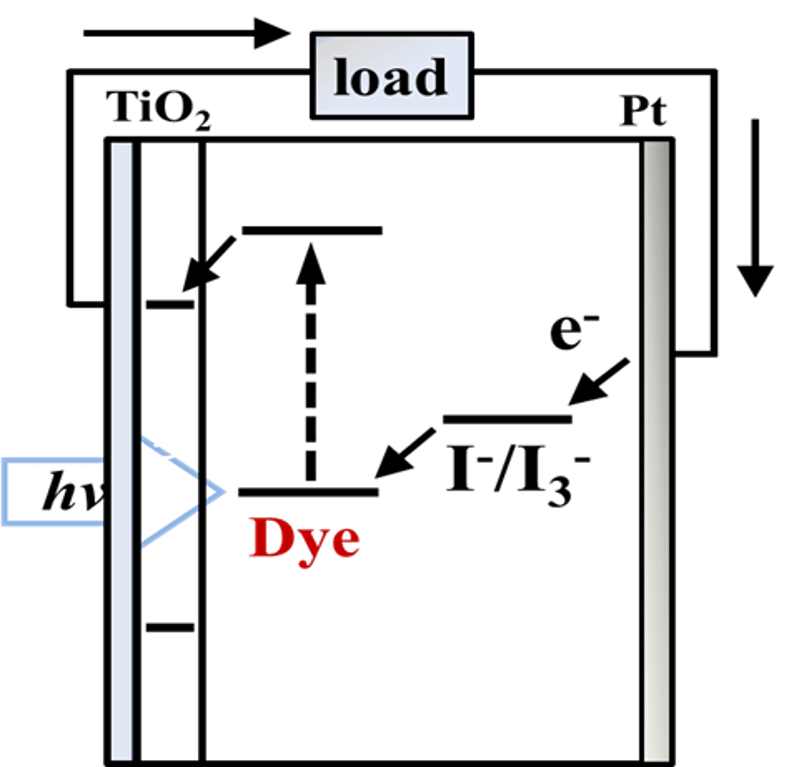
Dye-sensicied solar cell and energy transfer and FRET
| Authors | Article Title | Source Title | Author Keywords | Keywords Plus | Abstract | Publisher | Journal Abbreviation | Journal ISO Abbreviation | Publication Year | Volume | Issue | Start Page | End Page | Article Number | DOI |
|---|---|---|---|---|---|---|---|---|---|---|---|---|---|---|---|
| Nyembe, S; Chindeka, F; Ndlovu, G; Mkhohlakali, A; Nyokong, T; Sikhwivhilu, L | Enhanced Solar Efficiency via Incorporation of Plasmonic Gold Nanostructures in a Titanium Oxide/Eosin Y Dye-Sensitized Solar Cell | NANOMATERIALS | gold nanoparticles; titanium oxide; dye-sensitized solar cell; photon-to-electron conversion efficiency; hot electron injection mechanism; charge recombination | NANOPARTICLES; END | Plasmonic gold nanoparticles significantly improved the efficiency of a TiO2 and Eosin Y based dye-sensitized solar cell from 2.4 to 6.43%. The gold nanoparticles' sizes that were tested were 14 nm, 30 nm and 40 nm synthesized via the systematic reduction of citrate concentration using the Turkevich method. Prestine TiO2 without plasmonic gold nanoparticles yielded an efficiency of 2.4%. However, the loading of 40 nm gold nanoparticles into the TiO2 matrix yielded the highest DSSC efficiency of 6.43% compared to 30 nm (5.91%) and 14 nm (2.6%). The relatively high efficiency demonstrated by plasmonic gold nanoparticles is ascribed to light absorption/scattering, hot electron injection and plasmon-induced resonance energy transfer (PIRET), influenced by the size of the gold nanoparticles. | MDPI | NANOMATERIALS-BASEL | Nanomaterials | 2022 | 12 | 10 | 1715 | 10.3390/nano12101715 | ||
| Takekuma, Y; Ochiai, T; Nagata, M | Immobilization of Rhodamine B Isothiocyanate on TiO2 for Light Harvesting in Zinc Phthalocyanine Dye-sensitized Solar Cells | CHEMISTRY LETTERS | Dye-sensitized solar cell (DSSC); FRET; Light-harvesting | ENERGY RELAY DYES; PHOTOSYNTHETIC BACTERIA; EFFICIENCY; COMPLEX; LITHIUM | Dye-sensitized solar cells (DSSCs) were fabricated with immobilized Rhodamine B isothiocyanate (RB-ITC) on TiO2 as energy relay dye (ERD), by reaction of the isothiocyanate group of RB-ITC and the amino group of 6-aminohexanoic acid (6AHA) adsorbed on TiO2. The resulting DSSCs showed improved performance in the spectral range of 450-600nm and the power conversion efficiency via Forster resonant energy transfer (FRET). | CHEMICAL SOC JAPAN | CHEM LETT | Chem. Lett. | 2018 | 47 | 2 | 225 | 227 | 10.1246/cl.171024 | |
| Ramanarayanan, R; Chokiveetil, N; Pullanjiyot, N; Meethal, BN; Swaminathan, S | The deterministic role of resonance energy transfer in the performance of bio-inspired colloidal silver nanoparticles incorporated dye sensitized solar cells | MATERIALS RESEARCH BULLETIN | FRET; LSPR; DSSC; Ag nanoparticles; Green synthesis; Photoanode | SURFACE-PLASMON RESONANCE; ELECTRIC-POWER; EFFICIENCY; ENHANCEMENT; PHOTOANODE; PHOTOCURRENT; CONVERSION; COMPOSITE; DYNAMICS; AG | The crucial role of non-radiative energy transfer mechanism, Forster Resonance Energy Transfer (FRET), competing with Localized Surface Plasmon Resonance (LSPR) mediated charge transfer in influencing the performance efficiency of dye sensitized solar cell has been discussed in this investigation. LSPR enhances the light harvesting efficiency of the dye but FRET (TiO2 - Ag) acts as a loss mechanism in the cell performance. Bio-inspired silver colloids were incorporated into the TiO2 photoanode with dip coating for 30, 60 and 120 min. The 30 min dipped Ag-TiO2 photoanode solar cell showed an improved efficiency of 6.69% as compared to 4.85% of bare TiO2 photoanode. Higher dipping time reduces efficiency of the cell by dominating FRET over LSPR effects. The magnitude TiO2-Ag, Ag-dye and dye-TiO2 interfaces can be controlled by changing the dipping time to get the benefits of LSPR and to revoke FRET in a DSSC structure for high performance efficiency. | PERGAMON-ELSEVIER SCIENCE LTD | MATER RES BULL | Mater. Res. Bull. | 2019 | 114 | 28 | 36 | 10.1016/j.materresbull.2019.02.017 | ||
| Ghann, W; Sharma, V; Kang, H; Karim, F; Richards, B; Mobin, SM; Uddin, J; Rahman, MM; Hossain, F; Kabir, H; Uddin, N | The synthesis and characterization of carbon dots and their application in dye sensitized solar cell | INTERNATIONAL JOURNAL OF HYDROGEN ENERGY | Carbon dots; Dye; DSSC; N719; Photoanode; Solar cell | COUNTER ELECTRODE; GREEN SYNTHESIS; QUANTUM DOTS; EFFICIENCY; PERFORMANCE; PEEL | Carbon dots (CDOTs) are increasingly becoming popular in the areas ranging from sensing and bioimaging to electronics. The interesting optical properties of CDOTs make it vital to explore its potential in the development of sustainable energy. In this work, one-step hydrothermally synthesized CDOTs were used as sensitizing agent in the fabrication of dye sensitized solar cell. The fabrication of the CDOT-based dye sensitized solar cell and its performance characteristics are explored in depth. The fabricated dye sensitized solar cell performance in terms of efficiency, voltage, and current was evaluated using a standard illumination of air-mass 1.5 global (AM 1.5 G) having an irradiance of 100 mW/cm [2]. The photon-to-current conversion efficiency (eta) of only the carbon dot sensitized solar cell was 0.10% whereas the efficiency of the solar cell fabricated with a sensitizing dye made up of CDOT and N719 was 0.19%. As compared with the performance DSSCs fabricated with only 719 dye, it was observed that when CDOT was used in combination with N719 as sensitizing dye, the open circuit voltage increases yet the overall efficiency of the resulting solar cells decreases. It is clear from the result that CDOT could be used as a sensitizing dye in DSSCs. However, it is not very useful when used in combination with other sensitizing dyes due to energy transfer. (C) 2019 Hydrogen Energy Publications LLC. Published by Elsevier Ltd. All rights reserved. | PERGAMON-ELSEVIER SCIENCE LTD | INT J HYDROGEN ENERG | Int. J. Hydrog. Energy | 2019 | 44 | 29 | 14580 | 14587 | 10.1016/j.ijhydene.2019.04.072 | |
| Seok, S; Goud, BS; Gwak, SJ; Chitumalla, RK; Lim, J; Lee, W; Thuy, CTT; Vuppala, S; Jang, J; Koyyada, G; Kim, JH | Unveiling the effect of TADF as an energy relay dye in fluorescence resonance energy transfer based solid-state dye-sensitized solar cells | JOURNAL OF MOLECULAR STRUCTURE | CHARGE-TRANSFER; QUANTUM DOTS; AB-INITIO; EFFICIENCY; PERFORMANCE; CONTINUUM | Herein, the effect of thermally activated delayed fluorescence (TADF) material (4CzBN) as an energy donor (energy relay dye) has been studied using TVP208 as an energy acceptor in fluorescence resonance energy transfer (FRET) based solid state dye sensitized solar cell (SS-DSSC). The performances of the TVP208 dye sensitized SS-DSSCs were compared by systematically changing the concentrations (0.0, 0.05, 0.10 and 0.15 wt%) of donor molecule, 4CzBN. FRET-based SS-DSSC has achieved 5.17% power conversion efficiency (PCE) with 11.52 mAcm(-2) current density (Jsc) at 0.10 wt% of 4CzBN, which was 22% higher than that of the pristine SS-DSSC. The improvement in PCE performance could be ascribed to the enhanced light-harvesting property as demonstrated from the increased incident photon to current conversion efficiency (IPCE), which signifies the effect of FRET donor, 4CzBN. Detailed optical and electrochemical properties of the synthesized molecules have been analyzed and complemented with the density functional theory studies. (C) 2021 Elsevier B.V. All rights reserved. | ELSEVIER | J MOL STRUCT | J. Mol. Struct. | 2022 | 1249 | 131576 | 10.1016/j.molstruc.2021.131576 | ||||
| Patwari, J; Sardar, S; Liu, B; Lemmens, P; Pal, SK | Three-in-one approach towards efficient organic dye-sensitized solar cells: aggregation suppression, panchromatic absorption and resonance energy transfer | BEILSTEIN JOURNAL OF NANOTECHNOLOGY | anti-aggregation; co-sensitization; dye-sensitized solar cells (DSSC); Forster resonance energy transfer (FRET); NIR harvesting; panchromatic absorption | UNSYMMETRICAL SQUARAINE DYE; TIO2 FILMS; ELECTRON; FABRICATION; DYNAMICS; TITANIA | In the present study, protoporphyrin IX (PPIX) and squarine (SQ2) have been used in a co-sensitized dye-sensitized solar cell (DSSC) to apply their high absorption coefficients in the visible and NIR region of the solar spectrum and to probe the possibility of Forster resonance energy transfer (FRET) between the two dyes. FRET from the donor PPIX to acceptor SQ2 was observed from detailed investigation of the excited-state photophysics of the dye mixture, using time-resolved fluorescence decay measurements. The electron transfer time scales from the dyes to TiO2 have also been characterized for each dye. The current-voltage (I-V) characteristics and the wavelength-dependent photocurrent measurements of the co-sensitized DSSCs reveal that FRET between the two dyes increase the photocurrent as well as the efficiency of the device. From the absorption spectra of the co-sensitized photoanodes, PPIX was observed to be efficiently acting as a co-adsorbent and to reduce the dye aggregation problem of SQ2. It has further been proven by a comparison of the device performance with a chenodeoxycholic acid (CDCA) added to a SQ2-sensitized DSSC. Apart from increasing the absorption window, the FRET-induced enhanced photocurrent and the anti-aggregating behavior of PPIX towards SQ2 are crucial points that improve the performance of the co-sensitized DSSC. | BEILSTEIN-INSTITUT | BEILSTEIN J NANOTECH | Beilstein J. Nanotechnol. | 2017 | 8 | 1705 | 1713 | 10.3762/bjnano.8.171 | ||
| Subramanian, A; Pan, ZH; Rong, GL; Li, HF; Zhou, LS; Li, WF; Qiu, YC; Xu, YJ; Hou, Y; Zheng, ZZ; Zhang, YG | Graphene quantum dot antennas for high efficiency Forster resonance energy transfer based dye-sensitized solar cells | JOURNAL OF POWER SOURCES | Graphene quantum dot antenna; Forster resonance energy transfer; Synergistic interaction; Dye-sensitized solar cell | UP-CONVERSION; TUNABLE FLUORESCENCE; ELECTRON INJECTION; TIO2 ELECTRODES; GRAPHITE; SURFACE; DESIGN; CHARGE | The light harvesting efficiency of an acceptor dye can be enhanced by judicious choice and/or design of donor materials in the Forster resonance energy transfer (FRET) based dye-sensitized solar cells (DSSCs). In this work, we explore graphene quantum dots (GQDs) as energy relay antennas for the high power conversion efficiency Ru-based N719 acceptor dyes. The absorption, emission, and time decay spectral results evidence the existence of the FRET, the radiative energy transfer (RET), and a synergistic interaction between GQDs and N719 dye. The FRET efficiency is measured to be 27%. The GQDs co-sensitized DSSC achieves an efficiency (eta) of 7.96% with a J(sc) of 16.54 mAcm(-2), which is 30% higher than that of a N719-based DSSC. GQDs also reduce the charge recombination, which results in an increased open circuit voltage up to 770 mV. The incident photon-to-current conversion efficiency and UV Vis absorption measurement reveal that the enhanced absorption of the GQDs antennas is responsible for the improved J(sc) in the whole UV Visible region, while the RET/FRET and the synergistic effect contribute to the significant increase of Jsc in the UV region. (C) 2017 Elsevier B.V. All rights reserved. | ELSEVIER SCIENCE BV | J POWER SOURCES | J. Power Sources | 2017 | 343 | 39 | 46 | 10.1016/j.jpowsour.2017.01.043 | ||
| Lee, GH; Kim, YS | Theoretical Study of Effect of Introducing π-Conjugation on Efficiency of Dye-Sensitized Solar Cell | JOURNAL OF NANOSCIENCE AND NANOTECHNOLOGY | Dye-Sensitized Solar Cell (DSSC); Heteroleptic; Donor; Acceptor; Density Functional Theory (DFT) | PHOTOVOLTAIC PERFORMANCE; INDOLINE DYES; ORGANIC-DYES; TIO2 FILMS | In this study, phenoxazine (PXZ)-based dye sensitizers with triphenylamine (TPA) as a dual-electron donor and thiophen and benzothiadiazole (BTD) or 4,7-diethynylbenzo[c][1,2,5] thiadiazole (DEBT) as an electron acceptor (dye1, dye2, and dye3) were designed and investigated. Dye3 can significantly stabilize the lowest unoccupied molecular orbital (LUMO) energy level of an organic dye. We used density functional theory (DFT) and time-dependent DFT (TD-DFT) calculations to better understand the factors responsible for the photovoltaic performance. The absorption spectrum of the dyes showed different forms because of the different energy levels of the molecular orbital (MO) of each dye and the intramolecular energy transfer (EnT). Among the three dyes, dye3 showed greater red-shift, broader absorption spectra, and higher molar extinction coefficient. These results indicate that adding a withdrawing unit and pi-conjugation to a dye can result in good photovoltaic properties for dye-sensitized solar cells (DSSCs). | AMER SCIENTIFIC PUBLISHERS | J NANOSCI NANOTECHNO | J. Nanosci. Nanotechnol. | 2018 | 18 | 9 | 6640 | 6644 | 10.1166/jnn.2018.15714 | |
| Mihalache, I; Radoi, A; Mihaila, M; Munteanu, C; Marin, A; Danila, M; Kusko, M; Kusko, C | Charge and energy transfer interplay in hybrid sensitized solar cells mediated by graphene quantum dots | ELECTROCHIMICA ACTA | Graphene quantum dots; dye sensitized solar cell; co-sensitizer; charge separation; energy transfer | HIGHLY EFFICIENT; PERFORMANCE; PHOTOLUMINESCENCE; HETEROJUNCTION; CONVERSION; ELECTRODES; OXIDATION; ARRAYS; DYES | We explored the role of graphene quantumdots (GQDs) as co-sensitizers in hybrid dye sensitized solar cell (DSSC) architectures, focusing on various concurring mechanisms, such as: charge transfer, energy transfer and recombination rate, towards light harvesting improvement. GQDswere prepared by the hydrothermal method that allows the tuning of electronic levels and optical properties by employing appropriate precursors and synthesis conditions. The aim was to realize a type II alignment for TiO2/GQD/ dye hybrid configuration, using standard N3 Ru-dye in order to improve charge transfer. When GQDswere used as cosensitizers together with N3 Ru-dye, an improvement in power conversion efficiency was achieved, as shown by electricalmeasurements. The experimental analysis indicates that this improvement arises from the interplay of various mechanisms mediated by GQDs: (i) enhancement of charge separation and collection due to the cascaded alignment of the energy levels; (ii) energy transfer from GQDs to N3 Ru-dye due to the overlap betweenGQDphotoluminescence and N3 Ru-dye absorption spectra; and (iii) reduction of the electron recombination to the redox couple due to the inhibition of the back electron transfer to the electrolyte by the GQDs. (C) 2014 Elsevier Ltd. All rights reserved. | PERGAMON-ELSEVIER SCIENCE LTD | ELECTROCHIM ACTA | Electrochim. Acta | 2015 | 153 | 306 | 315 | 10.1016/j.electacta.2014.11.200 | ||
| Efa, MT; Huang, JC; Imae, T | Cascade Forster Resonance Energy Transfer Studies for Enhancement of Light Harvesting on Dye-Sensitized Solar Cells | NANOMATERIALS | cascade Forster resonance energy transfer; light harvesting; dye-sensitized solar cell; zinc oxide; carbon dot | CARBON-DOTS; FRET; PYRENE; EFFICIENCY; EMISSION | This work reports cascade Forster resonance energy transfer (FRET)-based n-type (ZnO) and p-type (NiO) dye-sensitized solar cells (DSSCs), discussing approaches to enhance their overall performance. Although DSSCs suffer from poorer performance than other solar cells, the use of composites with carbon dot (Cdot) can enhance the power conversion efficiency (PCE) of DSSCs. However, further improvements are demanded through molecular design to stimulate DSSCs. Here, a photosensitized system based on a cascade FRET was induced alongside the conventional photosensitizer dye (N719). To N719 in a DSSC is transferred the energy cascaded through donor fluorescence materials (pyrene, 3-acetyl-7-N,N-diethyl-coumarin or coumarin and acridine orange), and this process enhances the light-harvesting properties of the sensitizers in the DSSC across a broad region of the solar spectrum. PCE values of 10.7 and 11.3% were achieved for ZnO/Cdot and NiO/Cdot DSSCs, respectively. These high PCE values result from the energy transfer among multi-photosensitizers (cascade FRET fluorophores, N719, and Cdot). Moreover, Cdot can play a role in intensifying the adsorption of dyes and discouraging charge recombination on the semiconductor. The present results raise expectations that a significant improvement in photovoltaic performance can be attained of DSSCs exploiting the cascade FRET photonics phenomenon. | MDPI | NANOMATERIALS-BASEL | Nanomaterials | 2022 | 12 | 22 | 4085 | 10.3390/nano12224085 | ||
| Ahmad, S; Liu, JX; Ji, W; Sun, LC | Metal-Organic Framework Thin Film-Based Dye Sensitized Solar Cells with Enhanced Photocurrent | MATERIALS | surface supported metal organic framework; triplet-triplet annihilation upconversion; triplet-triplet energy transfer; dye sensitized solar cell | TRIPLET-TRIPLET ANNIHILATION; PHOTON-UP-CONVERSION; SELF-ASSEMBLED BILAYERS; VISIBLE-LIGHT; EFFICIENCY; BODIPY; ENERGY; GENERATION; REDUCTION; STATE | Metal-organic framework thin film-based dye sensitized solar cell is fabricated with highly oriented, crystalline, and porous Zn-perylene metal-organic framework (MOF) thin film (SURMOF) which is integrated with Bodipy embedded in poly(methyl methacrylate). It has been demonstrated that the photocurrent can be enhanced by a factor of 5 relative to Zn-perylene MOF thin film due to triplet-triplet annihilation up-conversion between the Bodipy/PMMA sensitizer and the Zn-perylene MOF thin film acceptor using Co(bpy)(3)(2+/3+) as redox mediator. | MDPI | MATERIALS | Materials | 2018 | 11 | 10 | 1868 | 10.3390/ma11101868 | ||
| Li, WX; Zhang, JB; Cao, YY; Lin, Y | Double dye cubic-sensitized solar cell based on Forster resonant energy transfer | RSC ADVANCES | QUANTUM-DOT ANTENNAS; EFFICIENCY; PERFORMANCE; ELECTRODES | To extend the solar spectral response range of dye-sensitized nanocrystalline semiconductor thin film solar cells, eosin Y (EY) and Rhodamine B (RB) were chosen to cubic-sensitize nanocrystalline ZnO thin film. A hybrid layer containing EY and ZnO (EY/ZnO) was first electrodeposited on a nanocrystalline ZnO thin film (n-ZnO) to form a structure of n-ZnO/EY/ZnO, and then RB was sensitized to form a double dye cubic-sensitized nanocrystalline ZnO thin film with a structure of n-ZnO/EY/ZnO/RB. The absorption spectra of the two organic dyes are complementary and the emission spectrum of EY overlaps with the absorption spectrum of RB. A new dye-sensitized solar cell based on the n-ZnO/EY/ZnO/RB thin film was fabricated, in which EY as an energy-relay dye simultaneously transfers both electrons and holes to the sensitizing dye of RB by the Forster resonant energy transfer (FRET) process. Thus the spectral response range of the fabricated dye-sensitized solar cell was extended and the energy conversion efficiency was improved. The thickness of the EY/ZnO hybrid layer is the key factor in affecting the conversion efficiency of the new solar cells, and it was optimized by changing the deposition time of the hybrid layer. | ROYAL SOC CHEMISTRY | RSC ADV | RSC Adv. | 2015 | 5 | 13 | 10026 | 10032 | 10.1039/c4ra10935j | ||
| Samanta, PN; Majumdar, D; Roszak, S; Leszczynski, J | First-Principles Approach for Assessing Cold Electron Injection Efficiency of Dye-Sensitized Solar Cell: Elucidation of Mechanism of Charge Injection and Recombination | JOURNAL OF PHYSICAL CHEMISTRY C | ENERGY-CONVERSION EFFICIENCY; D-PI-A; ORGANIC SENSITIZERS; HIGHLY EFFICIENT; DENSITY FUNCTIONALS; AUXILIARY ACCEPTOR; OPTICAL-PROPERTIES; ABSORPTION; DYNAMICS; DESIGN | The adequacy of the inclusion of spacer units in the metal-free D-pi-A organic dyes concerning the augmentation of dye-sensitized solar cell (DSSC) efficiency has been examined through the excited-state simulations of the charge injection and recombination processes at the dye-semiconductor interface. Within the framework of the time-dependent density functional theory, the proposed computational studies focus on the precise evaluation of pivotal factors controlling the rates of photoinduced charge-transfer and energy-transfer processes, including electronic coupling, reorganization energy, and threshold energy barrier in the semiclassical Marcus formalism. The estimation of the fluorescent state appears to be the crucial step while explaining the ultrafast electron injection process and the charge recombination at the Marcus inverted region, as revealed by the obtained results. The retardation of charge recombination is facilitated by the insertion of a thiophene moiety between the pi-bridge and the acceptor units. The estimated cold electron injection efficiencies deploying the Onsager-Braun theory, which rely on the computations of cold electron injection lifetime and cold electron lifetime, show a linear correlation with the experimental photovoltaic parameters of the DSSC comprising short-circuit current density, open-circuit voltage, and power conversion efficiency. The outcomes of the present investigation establish a basis for unraveling the mechanism of intricate dynamical processes upon photoexcitation of the sensitizers, as well as devising plausible routes for functional DSSC materials. | AMER CHEMICAL SOC | J PHYS CHEM C | J. Phys. Chem. C | 2020 | 124 | 5 | 2817 | 2836 | 10.1021/acs.jpcc.9b10616 | ||
| Kim, DW; Jo, HJ; Thogiti, S; Yang, WK; Cheruku, R; Kim, JH | Fluorescent material concentration dependency: Forster resonance energy transfer in quasi-solid state DSSCs | ELECTRONIC MATERIALS LETTERS | FRET; dye-sensitized solar cell; quasi-solid state electrolyte | SENSITIZED SOLAR-CELLS; TIO2 FILMS; DYE; ELECTROLYTE; PERFORMANCE; EFFICIENCIES | Forster resonance energy transfer (FRET) is critical for wide spectral absorption, an increased dye loading, and photocurrent generation of dye-sensitized solar cells (DSSCs). This process consists of organic fluorescent materials (as an energy donor), and an organic dye (as an energy acceptor on TiO2 surfaces) with quasi-solid electrolyte. The judicious choice of the energy donor and acceptor facilitates a strong spectral overlap between the emission and absorption regions of the fluorescent materials and dye. This FRET process enhances the light-harvesting characteristics of quasi-solid state DSSCs. In this study, DSSCs containing different concentrations (0, 1, and 1.5 wt%) of a fluorescent material (FM) as the energy donor are investigated using FRET. The power conversion efficiency of DSSCs containing FMs in a quasi-solid electrolyte increased by 33% over a pristine cell. The optimized cell fabricated with the quasi-solid state DSSC containing 1.0 wt% FM shows a maximum efficiency of 3.38%, with a short-circuit current density (J (SC) ) of 4.32 mA/cm(-2), and an open-circuit voltage (V (OC) ) of 0.68 V under illumination of simulated solar light (AM 1.5G, 100 mW/cm(-2)). | KOREAN INST METALS MATERIALS | ELECTRON MATER LETT | Electron. Mater. Lett. | 2017 | 13 | 3 | 249 | 254 | 10.1007/s13391-017-6412-2 | |
| Lia, XY; Li, JY; Li, JQ; Lin, H; Li, B | Upconversion 32Nb2O5-10La2O3-16ZrO2 glass activated with Er3+/Yb3+ and dye sensitized solar cell application | JOURNAL OF ADVANCED CERAMICS | aerodynamic levitation (ADL); niobium pentoxide; upconversion; rare earth concentration; solar cell | NEAR-INFRARED LIGHT; NANOCRYSTALLINE PHOSPHOR; NANOPARTICLES; CERAMICS; TRANSPARENT; EMISSION | Er3+/Yb3+ codoped niobium pentoxide glasses were fabricated by the aerodynamic levitation (ADL) method with rapid cooling rate. All samples with various doping concentrations showed good upconversion luminescence properties under 980 nm laser excitation. The structure, transmittance spectrum, and luminescence properties of the samples were systemically investigated by XRD, UV-Vis-NIR spectrophotometer, and upconversion spectra. All transparent samples exhibited green and red upconversion emissions centered at 532, 547, and 670 nm. Experimental results showed that the sample codoped with 1 mol% Er3+/Yb3+ has the strongest upconversion emissions, and the increase of the doped Yb3+ concentration results in the increased red emission and reduced green emission. The logI-logP plot of green emission indicated that the green emissions reach the saturation at high pump power excitation, deviating from the low-power regime. After one-photon energy transfer (ET) process, I-4(11/2)+I-4(11/2)-> F-4(7/2)+I-4(15/2) process between the two neighboring Er3+ ions was responsible for the population of the S-4(3/2)/H-4(11/2) states. The niobium pentoxide codoped with Er-3+/Yb-3+ bulk glasses could be used in the dye sensitized solar cell (DSSC) to improve the efficiency. | TSINGHUA UNIV PRESS | J ADV CERAM | J. Adv. Ceram. | 2017 | 6 | 4 | 312 | 319 | 10.1007/s40145-017-0243-3 | |
| Chougala, LS; Kadadevarmath, JS; Kamble, AA; Torvi, AI; Yatnatti, MS; Nirupama, JM; Kamble, RR | Spectroscopic investigations of interaction between TiO2 and newly synthesized phenothiazine derivative-PTA dye and its role as photo-sensitizer | JOURNAL OF LUMINESCENCE | (E)-2-cyano-3-(10-decyl-10H-phenothiazin-7-yl) acrylic acid (PTA dye); TiO2 NPs; Dynamic quenching; Electron transfer; Dye sensitized solar cell (DSSC) | TITANIUM-DIOXIDE NANOPARTICLES; PHOTOINDUCED ELECTRON-TRANSFER; LIGHT-EMITTING-DIODES; SOLAR-CELLS; ORGANIC-DYES; SIGNIFICANT IMPROVEMENT; PI-CONJUGATION; NANO-ANATASE; PERFORMANCE; EFFICIENCY | Interaction of TiO2 nanoparticles (NPs) on newly synthesized phenothiazine derivative-(E)-2-cyano-3-(10-decyl10-H-phenothiazin-7-yl) acrylic acid (PTA dye) has been studied using absorption, fluorescence and electrochemical techniques. From the results of absorption spectra of PTA dye in the presence of TiO2 NPs and the magnitude of association constant (k(a)) determined from Benesi-Hildebrand theory, strong association between the PTA dye and TiO2 NPs was confirmed. Fluorescence study, under both steady and transient states, reveals the energy transfer between PTA dye and TiO2 NPs as dynamic phenomenon in ethyl acetate. A study of Rehm-Weller theory indicates the predominant electron transfer process between PTA dye and TiO2 NPs in polar solvent (Acetonitrile) than in less polar solvent (Ethyl acetate). Electron transfer process has been exploited in solar energy harvesting applications by fabricating PTA dye sensitized solar cell. Photovoltaic energy conversion efficiency (eta) and fill factor (FF) of PTA dye were found to be 1.24% and 0.54 respectively under AM 1.5 irradiation (1000 W/m(2)). | ELSEVIER | J LUMIN | J. Lumines. | 2018 | 198 | 117 | 123 | 10.1016/j.jlumin.2018.02.025 | ||
| Megala, M; Rajkumar, BJM | Heteroaromatic rings as linkers for quercetin-based dye-sensitized solar cell applications: a TDDFT investigation | JOURNAL OF COMPUTATIONAL ELECTRONICS | Dye-sensitized solar cell; Quercetin dye; Molecular orbital; Absorption spectra; Light harvesting efficiency | FUNCTIONAL THEORY DFT; DERIVATIVES; EFFICIENT; TIO2 | The electronic properties of quercetin (Q)-pi-cyanoacrylic acid (CNA) dye molecules using heteroaromatic rings, namely cyclopentadiene (F1), furan (F2), pyrrole (F3), thiophene (F4), oxazole (F5), imidazole (F6), thiazole (F7), isoindene (FF1), benzofuran (FF2), indole (FF3), benzothiophene (FF4), benzoxazole (FF5), benzimidazole (FF6), and benzothiazole (FF7), as pi-linkers are studied for the first time using Time-Dependent Density Functional Theory (TDDFT) with dimethyl sulfoxide (DMSO) as solvent to predict their excitation energy, absorption wavelength, oscillator strength, light harvesting efficiency, and exciton binding energy. The charge transfer and charge regeneration in the ground and excited states of the dyes are established. The photon to electron energy transfer from the dye (quercetin) to the semiconductor (TiO2) surface is analyzed based on intramolecular charge transfer. The results of the electron transfer studies on these newly designed dyes could be used to enhance the performance of resulting dye-sensitized solar cells. | SPRINGER | J COMPUT ELECTRON | J. Comput. Electron. | 2019 | 18 | 4 | 1128 | 1138 | 10.1007/s10825-019-01398-0 | |
| Kar, P; Maji, TK; Sarkar, PK; Sardar, S; Pal, SK | Direct observation of electronic transition-plasmon coupling for enhanced electron injection in dye-sensitized solar cells | RSC ADVANCES | CORE-SHELL NANOPARTICLES; GOLD NANOPARTICLES; AL NANOPARTICLES; NANOSTRUCTURES; SURFACE; FRET; FLUORESCENCE; GENERATION; DISTANCE; STATE | We illustrate experimental evidence of the effect of surface plasmon resonance (SPR) of a noble metal on the ultrafast-electron injection efficiencies of a sensitizing dye in proximity of a wide band gap semiconductor. We have compared the effect of Au with Al nanoparticles as the former have a strong SPR band (peak 560 nm) at the emission (similar to 600 nm) of the model dye protoporphyrin IX (PP) in the proximity of mesoporous TiO2 nanoparticles in a model dye sensitized solar cell (DSSC). We have used detailed electron microscopic procedures for the characterization of Au/Al nanoparticle-embedded TiO2, the host of PP. Picosecond resolved emission spectroscopy on the model dye reveals an ultrafast component consistent with photoinduced electron transfer (PET) from the dye to the TiO2 matrix in the presence of Au nanoparticles. In order to investigate the dipolar separation of PP from the Au nanoparticle surface, we have employed a Forster Resonance Energy Transfer (FRET) strategy in the PPAu nanoparticle system in the absence of TiO2. Although the time scale of FRET and PET were found to be similar, the plasmon induced enhanced electron transfer in the case of Au nanoparticles is found to be clear from various device parameters of the plasmonic solar cell (DSSC) designed from the materials. We have also fabricated a DSSC with the developed materials consisting of Al-Au nanoparticles with N719 dye as sensitizer. The fabricated DSSC exhibits a much higher power conversion efficiency of (7.1 +/- 0.1)% compared to that with TiO2 alone (5.63 +/- 0.13)%. The outstanding performance of DSSC based on plasmonic nanoparticles was attributed to the plasmonic coupling and scattering effect for enhanced electron injection efficiencies. | ROYAL SOC CHEMISTRY | RSC ADV | RSC Adv. | 2016 | 6 | 101 | 98753 | 98760 | 10.1039/c6ra18954g | ||
| Chougala, LS; Kadadevarmath, JS; Kamble, AA; Bayannavar, PK; Yatnatti, MS; Linganagoudar, RK; Nirupama, JM; Kamble, RR; Qiao, QQ | Effect of TiO2 nanoparticles on newly synthesized phenothiazine derivative-CPTA dye and its applications as dye sensitized solar cell | JOURNAL OF MOLECULAR LIQUIDS | (Z)-2-cyano-3-(10-hepty1-10H-phenothiazin7-y1)acrylic acid (CPTA dye); TiO2 nanoparticles; Fluorescence quenching; Electron transfer; Dye sensitized solar cell (DSSC) | LIGHT-EMITTING-DIODES; TITANIUM-DIOXIDE; ELECTROGENERATED CHEMILUMINESCENCE; PHOTOINDUCED INTERACTION; CONJUGATED POLYMERS; ANATASE TIO2; NANO-ANATASE; FLUORENE; EFFICIENCY; RESISTANT | In this paper, effect of titanium dioxide (TiO2) nanoparticles (NPs) on newly synthesized phenothiazine dye i.e., (Z)-2-cyano-3-(10-hepty1-10H-phenothiazin-7-y1) acrylic acid (CPTA dye) has been studied using spectroscopic techniques such as absorption, fluorescence and electrochemical. Absorption spectra of CPTA dye in the presence of TiO2 appears broadened without any shift in the absorption peaks which suggests possible interactions between the CPTA dye and TiO2 NPs and absence of complex formation. These inferences were validated by determining association constant (k(a)) according to Benesi-Hildebrand theory. In order to see the role of fluorescence quenching, S-V theory was invoked, it was observed that phenomenon of quenching follows dynamic or collisional process under both steady and transient states. Experimentally determined magnitude of bimolecular quenching rate parameter is equal to the order of maximum collisional quenching rate parameter. Role of energy transfer between CPTA dye and TiO2 NPs has been discussed using Rehm-Weller theory. From this it reveals that electron transfer process is more pronounced under more polar solvent (Methanol) than less polar solvent (ethyl acetate). Electron transfer mechanism has been exploited in solar energy harvesting applications by fabricating solar cell sensitized by CPTA dye. From this, it was observed that the efficiency and fill factor of fabricated DSSC was 2.15% and 0.58 respectively under optimized conditions and solar harvesting property of newly synthesized phenothiazine derivative of CPTA dye is the first report. (C) 2017 Elsevier B.V. All rights reserved. | ELSEVIER | J MOL LIQ | J. Mol. Liq. | 2017 | 244 | 97 | 102 | 10.1016/j.molliq.2017.08.120 | ||
| Yun, HJ; Jung, DY; Lee, DK; Jen, AKY; Kim, JH | Panchromatic quasi-solid-state squaraine dye sensitized solar cells enhanced by Forster resonance energy transfer of DCM-pyran | DYES AND PIGMENTS | Quasi-solid electrolyte; Dye sensitized solar cells; Forster resonance energy transfer; Squaraine dyes; DCM-Pyran fluorescence material; Panchromatic solar cell | IONIC LIQUID; ELECTROLYTE; PERFORMANCE; SYSTEMS | The panchromatic operation of quasi-solid state dye sensitized solar cells is one of the most important criteria for enhancing the performance of solar cells. This paper presents a novel strategy for designing efficient panchromatic quasi-solid state dye sensitized solar cells that are enhanced by Forster resonance energy transfer. 4-(Dicyanomethylene)-2-methyl-6-(4-dimethylaminostyryl)-4H-pyran is excited by the irradiation of visible light with a short wavelength, and the excited energy is then transferred to a blue organic photosentizer, symmetrically structured squaraine. The addition of 4-(dicyanomethylene)-2-methyl-6-(4-dimethylaminostyryl)-4H-pyran to the quasi-solid electrolyte improves the photovoltaic performance of squaraine-sensitized solar cells. The optimized quasi-solid state dye sensitized solar cell exhibits approximately 1.8 times higher overall conversion efficiency than the solar cell without any fluorescence materials. In particular, the photocurrent is enhanced significantly at the absorption wavelength range of 4-(dicyanomethylene)-2-methy1-6-(4-dimethylaminostyryl)-4H-pyran, which means that the panchromatic quasi-solid state dye sensitized solar cell has been designed successfully. (C) 2014 Elsevier Ltd. All rights reserved. | ELSEVIER SCI LTD | DYES PIGMENTS | Dyes Pigment. | 2015 | 113 | 675 | 681 | 10.1016/j.dyepig.2014.09.034 | ||
| Dilbeck, T; Hill, SP; Hanson, K | Harnessing molecular photon upconversion at subsolar irradiance using dual sensitized self-assembled trilayers | JOURNAL OF MATERIALS CHEMISTRY A | TRIPLET-TRIPLET ANNIHILATION; SOLAR-CELLS; FILMS; ENERGY; SYSTEMS; PHOTOELECTROCHEMISTRY; PHOTOCATALYSIS; INTERFACES; COMPLEXES; BILAYERS | Photon upconversion via triplet-triplet annihilation (TTA-UC) is an intriguing strategy to potentially increase maximum solar cell efficiencies from 33% to greater than 43%. TTA-UC has been incorporated into a dye-sensitized solar cell (DSSC) but the low solar energy conversion efficiency can be attributed, at least in part, to the relatively narrow absorption features of the sensitizer molecule. Here we incorporate multiple sensitizers into a TTA-UC DSSC using bilayer and trilayer self-assembly via metal ion linkages. The sensitizers' complementary absorption features increase broad-band light absorption and work cooperatively to achieve peak TTA-UC efficiency at sub-solar irradiance (<1 sun or <100 mW cm(-2)). The trilayer DSSC, with high sensitizer density and directional energy transfer cascade towards the charge seperation interface, exhibited the highest efficiency yet reported for harvesting low energy light in an integrated TTA-UC solar cell (1.2 x 10(-3)%). | ROYAL SOC CHEMISTRY | J MATER CHEM A | J. Mater. Chem. A | 2017 | 5 | 23 | 11652 | 11660 | 10.1039/c7ta00317j | ||
| Roy, A; Mohamed, MJS; Gondal, MA; Mallick, TK; Tahir, AA; Sundaram, S | Co-sensitization effect of N719 dye with Cu doped CdS colloidal nanoparticles for dye sensitized solar cells | INORGANIC CHEMISTRY COMMUNICATIONS | CdS; Colloidal; DSSC; Dye; Energy transfer; Photovoltaic | RESONANCE ENERGY-TRANSFER; QUANTUM DOTS; PERFORMANCE; EFFICIENCY; DSSC; IMPROVEMENT; COMPLEXES; FRET | Dye-sensitized solar cell's (DSSC) performances are enhanced by engineering the materials at the interface of various device components owing to easy and inexpensive fabrication steps. Ru (II) polypyridyl-based synthetic dyes are the most widely used photosensitizers for DSSCs due to their superior molar extinction coefficient and facile interaction with metal oxide electrodes. However, these dyes are mostly expensive, and as a result, natural dyes and metal-free organic dyes have become an alternative way for sensitization to reduce the significant drawbacks of synthetic dyes. In this study, minimizing the usage of the N719 dye can be performed through an alternative method for better light-harvesting through supreme optical interfacial interaction with colloidal Cu doped CdS as a co-sensitizer in a facile approach. This co-sensitization signifies the colloidal CdS (donor), which can corroborate the energy transfer mechanism with the N719 dye (acceptor). The introduction of Cu causes extreme tuning of broad absorption to near-infrared for CdS, enhancing the solar light harvesting entrapment followed by extensive optical interaction with N719 dye. This accelerates the activity of the sensitizers for light absorption enhancement and expects a better performance of DSSC compared to traditional sensitization. A massive improvement in photocurrent density (similar to 42 %) was observed without sacrificing other photovoltaic parameters, as observed for TiO2-based photoanodes. The sensitizer's interfacial optical energy transfer process, unless excited electron recombination, may indirectly be used as an excitation source of the acceptor and minimizes the recombination energy loss. | ELSEVIER | INORG CHEM COMMUN | Inorg. Chem. Commun. | 2023 | 148 | 110298 | 10.1016/j.inoche.2022.110298 | |||
| Sasaki, S; Wang, XF; Ikeuchi, T; Tamiaki, H | Synthesis of carboxylated chlorophylls and their application as functional materials | JOURNAL OF PORPHYRINS AND PHTHALOCYANINES | chlorin; tetrapyrrole; visible absorption spectrum; dye-sensitized solar cell | GREEN PHOTOSYNTHETIC BACTERIA; SENSITIZED SOLAR-CELLS; BACTERIOCHLOROPHYLL-A; CONVERSION EFFICIENCY; OPTICAL-PROPERTIES; ANTENNA COMPLEXES; SELF-AGGREGATION; ENERGY-TRANSFER; ELECTRON; DERIVATIVES | A series of chlorophyll derivatives possessing a carboxy group were synthesized aiming at their application as sensing materials and to dye-sensitized solar cells (DSSCs). Their absorption and fluorescence responses to amine concentrations in THF and photovoltaic performance of DSSCs on TiO2 films were investigated. | WORLD SCI PUBL CO INC | J PORPHYR PHTHALOCYA | J. Porphyr. Phthalocyanines | 2015 | 19 | 1-3 | 517 | 526 | 10.1142/S1088424615500418 | |
| Batmunkh, M; Dadkhah, M; Shearer, CJ; Biggs, MJ; Shapter, JG | Tin Oxide Light-Scattering Layer for Titania Photoanodes in Dye-Sensitized Solar Cells | ENERGY TECHNOLOGY | dye-sensitized solar cells; energy transfer; photochemistry; tin; titanium | SNO2 HOLLOW MICROSPHERES; SPHERICAL TIO2; EFFICIENCY; PERFORMANCE; NANOPARTICLES; ANATASE; FABRICATION; CANDIDATE; BEADS; FILM | High-performance dye-sensitized solar cell (DSSC) devices rely on photoanodes that possess excellent light-harvesting capabilities and high surface areas for sufficient dye adsorption. In this work, morphologically controlled SnO2 microstructures were synthesized and used as an efficient light-backscattering layer on top of a nanocrystalline TiO2 layer to prepare a double-layered photoanode. By optimizing the thickness of both the TiO2 bottom layer and the SnO2 top layer, a high power conversion efficiency (PCE) of 7.8% was achieved, an enhancement of approximately 38% in the efficiency compared with that of a nanocrystalline TiO2-only photoanode (5.6%). We attribute this efficiency improvement to the superior light-backscattering capability of the SnO2 microstructures. | WILEY-V C H VERLAG GMBH | ENERGY TECHNOL-GER | Energy Technol. | 2016 | 4 | 8 | 959 | 966 | 10.1002/ente.201600008 | |
| Puntambekar, A; Chakrapani, V | Excitation energy transfer from long-persistent phosphors for enhancing power conversion of dye-sensitized solar cells | PHYSICAL REVIEW B | LIGHT-EMITTING-DIODES; UP-CONVERSION; RELAY DYES; EFFICIENCY; PERFORMANCE; SRAL2O4; DEVICE; LAYER | Incorporation of inorganic phosphors to improve the spectral absorption range of a dye-sensitized solar cell (DSSC) is a promising strategy to enhance efficiency beyond 15%. However, only marginal improvements have been achieved so far, which is mainly due to the use of nonoptimized device architecture and the lack of understanding of the energy transfer mechanism. Here we report results of DSSCs employing long-persistence phosphor coupled to the sensitizing dye. Detailed time-resolved photoluminescence measurements suggest that excitation energy is transferred radiatively as opposed to Forster resonance energy transfer. As a result of efficient energy transfer, large-area solar cells show a 63% increase in the photocurrent density along with a 54% increase in power conversion efficiency. In addition, the device works as a nighttime solar cell with generation of 52 mu Wcm(-2) power density in the dark. Under short-circuit conditions, the device can output 300 mV for 30 h in the dark. | AMER PHYSICAL SOC | PHYS REV B | Phys. Rev. B | 2016 | 93 | 24 | 245301 | 10.1103/PhysRevB.93.245301 | |||
| Kumar, V; Swami, SK; Kumar, A; Ntwaeaborwa, OM; Dutta, V; Swart, HC | Eu3+ doped down shifting TiO2 layer for efficient dye-sensitized solar cells | JOURNAL OF COLLOID AND INTERFACE SCIENCE | Down-shifting; Defects; XPS; DSSC | ZNO NANOCRYSTALS; ENERGY-TRANSFER; RED EMISSION; NANOPHOSPHORS; SILICON; FILMS; NANOPARTICLES; LUMINESCENCE; FABRICATION; ELECTRODES | Europium doped TiO2 (TiO2:Eu3+) down-shifting (DS) nanophosphors (NPrs) were synthesized by the solution-combustion method with different concentrations of Eu3+. The X-ray diffraction results confirmed the formation of a polycrystalline tetragonal structure of the TiO2. The emission of colour of the TiO2:Eu3+ DS NPr was tuned by varying the doping concentration of Eu3+. The photoluminescence results confirmed that the TiO2:Eu3+ DS NPrs converted the UV light into visible light by energy down-conversion process, i.e. down-shifting of high energy UV photons to low energy visible photons. These TiO2:Eu3+ DS NPrs were used to enhance the efficiency of the Dye sensitized solar cell from 8.32% to 8.80%. (C) 2016 Elsevier Inc. All rights reserved. | ACADEMIC PRESS INC ELSEVIER SCIENCE | J COLLOID INTERF SCI | J. Colloid Interface Sci. | 2016 | 484 | 24 | 32 | 10.1016/j.jcis.2016.08.060 | ||
| Otieno, F; Airo, M; Erasmus, RM; Quandt, A; Billing, DG; Wamwangi, D | Annealing effect on the structural and optical behavior of ZnO:Eu3+ thin film grown using RF magnetron sputtering technique and application to dye sensitized solar cells | SCIENTIFIC REPORTS | ZINC-OXIDE; ENERGY-TRANSFER; ZNO; PHOTOLUMINESCENCE; EU3+; LUMINESCENCE; TEMPERATURE; EMISSION; ELECTRODEPOSITION; SPECTROSCOPY | Eu-doped ZnO (ZnO:Eu3+) thin films deposited by RF magnetron sputtering have been investigated to establish the effect of annealing on the red photoluminescence. PL spectra analysis reveal a correlation between the characteristics of the red photoluminescence and the annealing temperature, suggesting efficient energy transfer from the ZnO host to the Eu3+ ions as enhanced by the intrinsic defects levels. Five peaks corresponding to (5)D0-7F(J) transitions were observed and attributed to Eu3+ occupancy in the lattice sites of ZnO thin films. As a proof of concept a dye sensitized solar cell with ZnO:Eu3+ thin films of high optical transparency was fabricated and tested yielding a PCE of 1.33% compared to 1.19% obtained from dye sensitized solar cells (DSSC) with pristine ZnO without Eu produced indicating 11.1% efficiency enhancement which could be attributed to spectral conversion by the ZnO:Eu3+. | NATURE PORTFOLIO | SCI REP-UK | Sci Rep | 2020 | 10 | 1 | 8557 | 10.1038/s41598-020-65231-6 | |||
| Urbani, M; Ragoussi, ME; Nazeeruddin, MK; Torres, T | Phthalocyanines for dye-sensitized solar cells | COORDINATION CHEMISTRY REVIEWS | Phthalocyanine; Molecular photovoltaics; Dye-sensitized solar cell; Solar energy conversion | NANOCRYSTALLINE TIO2 FILMS; INTERFACIAL ELECTRON-TRANSFER; TETRASULFONATED GALLIUM PHTHALOCYANINE; STERICALLY HINDERED PHTHALOCYANINES; UNSYMMETRICAL ZINC PHTHALOCYANINES; HOLE TRANSPORTING MATERIAL; RESONANCE ENERGY-TRANSFER; NEAR-IR SENSITIZATION; OPEN-CIRCUIT VOLTAGE; FREE ORGANIC-DYES | Phthalocyanines (Pcs) are robust and intensely colored macrocycles (blue pigments) with high chemical, thermal and light stability, properties that are of paramount importance for realistic photovoltaic applications. In particular, Pcs have played a very important role in the development of dye-sensitized solar cells (DSSCs), as they are promising candidates for incorporation in these devices. Good efficiencies have been obtained by the use of Pcs as the light harvester, and, most importantly, a number of synthetic strategies have been developed for engineered dyes based on the Pc scaffold, due to the synthetic versatility and robustness of these macrocycles. In this review, recent advances in the use of phthalocyanines as photosensitizers for DSSC applications are presented. (C) 2018 Published by Elsevier B.V. | ELSEVIER SCIENCE SA | COORDIN CHEM REV | Coord. Chem. Rev. | 2019 | 381 | 1 | 64 | 10.1016/j.ccr.2018.10.007 | ||
| Kumar, A; Singh, AP; Maduraipandian, M; Verma, SK; Verma, R; Dwivedi, LK; Krishna, KM; Kumar, K | Infrared and UV assisted visible up/down-conversion in Gd2O3:Ho3+/ Yb3+micro-rods for highly efficient photovoltaic performance of dye-sensitized solar cell | JOURNAL OF MOLECULAR STRUCTURE | Microstructure; Phosphors; Infrared/visible/UV; DSSC; N3 dye | UP-CONVERSION; HO3+/YB3+ PHOSPHOR; ENERGY-TRANSFER; LUMINESCENCE; NANOPARTICLES; ENHANCEMENT; IMPROVEMENT; LAYER; TIO2 | In this study, we have sensitized the high luminescent Gd2O3:Ho3+/Yb3+ upconversion micro rods via the hydrothermal route at a constant pH value of the synthesizing precursors of around 8. The prepared particles were found to be rectangular micro rod-shaped. The sample was further annealed at 800 degrees C for 3 h, resulting in slight deformation of the microstructure and improved size. The annealing process has been shown to enhance the crystallinity of the present sample, thereby improving the up/down conversion emission intensity through 980 nm and a wide range of UV excitation around 550 nm emission band. Finally, the present sample was utilized in conjunction with TiO2 nanoparticles and N3 [Cis-bis(isothiocyanato)bis(2,2 '-bipyridyl-4,4-dicarboxylato) ruthenium (II)] dye for the fabrication of dye-sensitized solar cells (DSSCs) with a view to enhancing the efficiency of energy harvesting devices. | ELSEVIER | J MOL STRUCT | J. Mol. Struct. | 2025 | 1341 | 142559 | 10.1016/j.molstruc.2025.142559 | |||
| Lin, YJ; Chang, CC; Cherng, SJ; Chen, JW; Chen, CM | Manipulation of light harvesting for efficient dye-sensitized solar cell by doping an ultraviolet light-capturing fluorophore | PROGRESS IN PHOTOVOLTAICS | fluorophore; light harvesting; solar cell; Forster resonance energy transfer | An organic fluorophore is doped into a mesoporous TiO2 photoelectrode to absorb ultraviolet light and convert it to green light for more efficient light harvesting of N719 dye. This fluorescence conversion enables the absorption of additional green light by dye molecules by means of Forster resonance energy transfer between fluorescent compound donor and N719 dye acceptor. Owing to close fit between the emission peak of fluorophore and the absorption peak of N719 dye, the Forster resonance energy transfer effect enhances the incident photon to current conversion efficiency of the dye-sensitized solar cells based on fluorophore-doped TiO2 photoelectrodes. Improved power conversion efficiency (8.03-8.13%) is also achieved for the fluorophore-doped (10(-4) M) dye-sensitized solar cells compared with a cell without the doping of fluorophore (7.63%). Copyright (c) 2013 John Wiley & Sons, Ltd. | WILEY | PROG PHOTOVOLTAICS | Prog. Photovoltaics | 2015 | 23 | 1 | 106 | 111 | 10.1002/pip.2407 | ||
| Surana, K; Pansari, P; Sharma, R; Bhattacharya, B; Soni, SS; Durga, G | Controlled carbon dots mixing boosts perylene diimide dye for enhanced absorbance and white light emission: Finding application in optoelectronic devices | OPTICAL MATERIALS | Carbon dots; Perylene diimide; Energy transfer; White light emission; Invisible ink; Dye-sensitized solar cell (DSSC) | QUANTUM DOTS; ENERGY-TRANSFER; EFFICIENT; PHOTOLUMINESCENCE; MODULATION | The development of white light-emitting materials is of particular importance for backlights, lighting, and fullcolor visual display devices. This work successfully attempts to obtain white light by mixing blue-emitting carbon dots (C-Dots) and greenish-yellow-emitting valine functionalized perylene diimide (PDI) dye in an aqueous medium. The two components were mixed in a controlled manner using the host-guest approach, i.e. adding PDI dye to C-Dots and C-Dots to PDI dye for generating C-Dots-PDI composites. The optical characterization of CDots-PDI composites revealed intriguing results wherein the incremental addition of C-Dots to a fixed concentration of PDI dye resulted in an unexpected enhancement in the absorbance of the PDI dye. The optimized CDots-PDI composites exhibited pure white light emission (CIE coordinates = 0.33, 0.33) upon excitation at 370 nm. The mechanism involved in the interaction was evaluated using photoluminescence spectroscopy, transmission electron microscopy, and cyclic voltammetry measurement. Additionally, the C-Dots were investigated for their practical application as an invisible ink for transmitting secret messages. Finally, the white lightemitting composites were evaluated for their solid-state emission and also employed as sensitizers in dyesensitized solar cells (DSSC), which revealed the superior performance of PDI as a host and C-Dots as a dopant. | ELSEVIER | OPT MATER | Opt. Mater. | 2025 | 161 | 116789 | 10.1016/j.optmat.2025.116789 | |||
| Zarick, HF; Erwin, WR; Boulesbaa, A; Hurd, OK; Webb, JA; Puretzky, AA; Geohegan, DB; Bardhan, R | Improving Light Harvesting in Dye-Sensitized Solar Cells Using Hybrid Bimetallic Nanostructures | ACS PHOTONICS | dye-sensitized solar cell; plasmon-enhanced solar cell; bimetallic nanostructures; transient absorption spectroscopy; electron dynamics | ALLOY POPCORN NANOPARTICLES; ENHANCED RAMAN-SCATTERING; SURFACE-PLASMON RESONANCE; HIGH-EFFICIENCY; AG NANOPARTICLES; TRANSIENT ABSORPTION; GOLD NANOSTRUCTURES; ELECTRON-TRANSFER; ENERGY-TRANSPORT; SILICON DIOXIDE | In this work we demonstrate improved light trapping in dye-sensitized solar cells (DSSCs) with hybrid bimetallic gold core/silver shell nanostructures. Silica-coated bimetallic nanostructures (Au/Ag/SiO2 NSs) integrated in the active layer of DSSCs resulted in 7.51% power conversion efficiency relative to 5.97% for reference DSSCs, giving rise to 26% enhancement in device performance. DSSC efficiencies were governed by the particle density of Au/Ag/SiO2 NSs with best performing devices utilizing only 0.44 wt % of nanostructures. We performed transient absorption spectroscopy of DSSCs with variable concentrations of Au/Ag/SiO2 NSs and observed an increase in amplitude and decrease in lifetime with increasing particle density relative to reference. We attributed this trend to plasmon resonant energy transfer and population of the singlet excited states of the sensitizer molecules at the optimum concentration of NSs promoting enhanced exciton generation and rapid charge transfer into TiO2. | AMER CHEMICAL SOC | ACS PHOTONICS | ACS Photonics | 2016 | 3 | 3 | 385 | 394 | 10.1021/acsphotonics.5b00552 | |
| Pastore, M; Etienne, T; De Angelis, F | Structural and electronic properties of dye-sensitized TiO2 for solar cell applications: from single molecules to self-assembled monolayers | JOURNAL OF MATERIALS CHEMISTRY C | RESONANCE ENERGY-TRANSFER; CARBAZOLE-PHENOTHIAZINE DYADS; INTERMOLECULAR HOLE TRANSFER; EFFICIENT CO-SENSITIZATION; CONDUCTION-BAND ELECTRONS; OPEN-CIRCUIT VOLTAGE; NANOCRYSTALLINE TIO2; ORGANIC-DYE; CHARGE-TRANSFER; CONVERSION-EFFICIENCY | We review computational contributions to the understanding of the physical principles underlying interface phenomena related to dye adsorption at the surface of titanium oxide, within the scope of dye sensitized solar cell applications. We focus our attention on the theoretical studies aimed at computationally representing dye-sensitized solar cells under realistic conditions, e.g. by including the solvent and the electrolyte in interactions with dye-sensitized TiO2 through protocols accounting for thermal nuclear motion. The impact of dye clustering and self-aggregation into monolayers on the optical and transport properties of dye-sensitized TiO2 is addressed. Computational studies of surface protonation, charge and energy-transfer, or the influence of the presence of additive agents or co-sensitizers are also reviewed in relation to the electronic, spectroscopic, kinetic and diffusion properties of self-assembled dye monolayers sensitizing TiO2. | ROYAL SOC CHEMISTRY | J MATER CHEM C | J. Mater. Chem. C | 2016 | 4 | 20 | 4346 | 4373 | 10.1039/c6tc00554c | ||
| Hill, SP; Dilbeck, T; Baduell, E; Hanson, K | Integrated Photon Upconversion Solar Cell via Molecular Self-Assembled Bilayers | ACS ENERGY LETTERS | TRIPLET-TRIPLET ANNIHILATION; INTERFACIAL RECOMBINATION; EFFICIENCY; TIO2; SENSITIZERS; COMPLEXES; POLYMERS; JUNCTION; LIGHT; FILMS | Molecular photon upconversion, by way of triplet-triplet annihilation (TTA-UC), is an intriguing strategy to increase solar cell efficiencies beyond the Shockley-Queisser limit. Here we introduce self-assembled bilayers of acceptor and sensitizer molecules on high surface area electrodes as a means of generating an integrated TTA-UC dye-sensitized solar cell. Intensity dependence and IPCE measurements indicate that bilayer films effectively generate photo current by two different mechanisms: (1) direct excitation and electron injection from the acceptor molecule and (2) low-energy light absorption by the sensitizer molecule followed by TTA-UC and electron injection from the upconverted state. The power conversion efficiency from the upconverted photons is the highest yet reported for an integrated TTA-UC solar cell. Energy transfer and photocurrent generation efficiency of the bilayer device is also directly compared to the previously reported heterogeneous UC scheme. | AMER CHEMICAL SOC | ACS ENERGY LETT | ACS Energy Lett. | 2016 | 1 | 1 | 3 | 8 | 10.1021/acsenergylett.6b00001 | ||
| Liu, SS; Jiao, YF; Ding, YJ; Fan, XL; Song, J; Mi, BX; Gao, ZQ | Position engineering of cyanoacrylic-acid anchoring group in a dye for DSSC applications | DYES AND PIGMENTS | Dye-sensitized solar cell; Organic dyes; Acceptor; Link position; Phenothiazine | SENSITIZED SOLAR-CELLS; PHENOTHIAZINE-BASED DYES; D-PI-A; ORGANIC-DYES; HIGHLY-EFFICIENT; SUBSTITUENT; CARBAZOLE; SURFACES; META | This study provides insights into the molecular tailoring of DSSC dyes via synthesis/investigation of three new organic dyes with the position engineering of the acceptor moiety. Differences in photophysical, electrochemical and photovoltaic properties are found and interpreted in detail. The excitation-spectrum study shows that the population of the intramolecular charge transfer (ICT) is incident-wavelength dependent; and the ICT excitons originate not only from direct ICT band transition but also from pi-pi energy transfer, and the degree of the latter depends much on the position of the anchoring group. The transient photoluminescence discloses that the noninjection quenching of the ortho dye is the most severe possibly due to the instability of the excited state resulting from the hurdling of electron delocalization by the large steric hinderance. Large steric hinderance in the ortho dye also results in the least dye loading on TiO2 photoanode. Due to broader/stronger absorption, higher dye loading, high injection efficiency and low charge recombination rate, the para-substituted dye DSSC device achieves the best performance with power conversion efficiency of 6.63%; while the ortho dye based device performs the worst with significant lower of photocurrent and photovoltage compared to the para dye. The dye dependent V-OC is explained by combination of dipole moment and dye loading. Particularly, the employing of excitation spectrum as tools to investigate the intrinsic photophysical complicity of dyes with D-pi-A structure, which is scarcely reported, is proved to be an effective way. | ELSEVIER SCI LTD | DYES PIGMENTS | Dyes Pigment. | 2020 | 180 | 108470 | 10.1016/j.dyepig.2020.108470 | |||
| Galateia, ZE; Agapi, N; Vasilis, N; Sharma, GD; Athanassios, CG | Scorpion-shaped mono(carboxy)porphyrin-(BODIPY)2, a novel triazine bridged triad: synthesis, characterization and dye sensitized solar cell (DSSC) applications | JOURNAL OF MATERIALS CHEMISTRY C | ENERGY-TRANSFER; CONVERSION EFFICIENCY; PORPHYRIN SENSITIZERS; FUSED PORPHYRINS; CHARGE-TRANSPORT; GRAPHENE OXIDE; ORGANIC-DYES; TIO2; DONOR; ELECTRON | A novel BODIPY-porphyrin triad PorCOOH-(BDP)(2) (scorpion shaped) was prepared, in which two BODIPY molecules are covalently attached via a 1,3,5-triazine molecule to a free-base carboxyphenyl meso-substituted porphyrin. The chromophore was synthesized via stepwise substitution reactions of cyanuric chloride. Photophysical and electrochemical studies of this triad, in combination with DFT theoretical calculations, suggest that there is negligible electronic interaction between the porphyrin and BODIPY moieties in the triad's ground states, but the frontier orbital energy levels are suitable for use as sensitizers in dye-sensitized solar cells (DSSCs). Solar cells sensitized by triad PorCOOH-(BDP)(2) were fabricated, and were found to exhibit a power conversion efficiency (PCE) value of 5.17% under illumination (AM1.5, 100 mW cm(2)) and with a TiO2 film of 12 mm thickness, with a sensitization time of 3 h without any coadsorbent. The PCE value of DSSC was enhanced to 6.20% when a thin layer of reduced graphene oxide (rGO) was incorporated between TiO2 and PorCOOH-(BDP)(2) dye, which is attributed to the formation of an rGO-TiO2 Schottky barrier in the device, leading to efficient charge transport of injected electrons towards the external circuit, resulting in higher J(SC) and FF. Electrochemical impedance spectra (EIS) demonstrate that a photoelectrode with rGO-TiO2 exhibits shorter transport time of electrons, longer electron lifetime and lower charge transfer resistance. | ROYAL SOC CHEMISTRY | J MATER CHEM C | J. Mater. Chem. C | 2015 | 3 | 22 | 5652 | 5664 | 10.1039/c4tc02902j | ||
| Yang, LN; Lin, LG; Men, AL; Li, ZJ | Theoretical insights into co-sensitization mechanism in Zn-porphyrin and Y123 co-sensitized solar cells | JOURNAL OF PHOTOCHEMISTRY AND PHOTOBIOLOGY A-CHEMISTRY | Co-sensitization; Zn-porphyrin; Light harvesting; Interfacial electron transfer kinetics | RESONANCE ENERGY-TRANSFER; ORGANIC-DYES; REGENERATION PROCESS; EFFICIENCY; DONOR; COSENSITIZATION; RECOMBINATION; PERFORMANCE; KINETICS | Donor-pi-acceptor YD2-o-C8, WW-6, and SM315 are among best-performing Zn-porphyrins for their outstanding light-harvesting properties. To reach the further enhancement of photovoltaic performance of the corresponding cells, co-sensitization of these typical porphyrins with those dyes possessing intense absorption in the green spectral region (typically, Y123) is necessary. In this work, using density functional theory (DFT) and time dependent DFT (TD-DFT) approaches, co-sensitization mechanism in the above three typical Y123/Zn-porphyrin systems has been systematically investigated. Moreover, due to the excellent performance of dithienosilole (DTS) group in organic dyes, it is designed here to replace the benzothiadiazole (BTD) unit in SM315 to give a new Zn-porphyrin dye designated SM315-1. This specific modification of SM315 can effectively retard the interfacial charge recombination compared to that in YD2-o-C8 and WW-6 cells by reducing the contact between oxidized porphyrins and injected electrons in TiO2 substrate, and simultaneously improves the overall light harvesting ability of the co-sensitized film with the theoretical maximum limit of photocurrent to be 38.31 mA/cm(2). The both favorable aspects suggest an attractive application of the fully novel Y123/SM315-1 co-sensitized film in dye-sensitized solar cell (DSSC). | ELSEVIER SCIENCE SA | J PHOTOCH PHOTOBIO A | J. Photochem. Photobiol. A-Chem. | 2019 | 369 | 25 | 33 | 10.1016/j.jphotochem.2018.10.014 | ||
| Sehgal, P; Narula, AK | Enhanced performance of porphyrin sensitized solar cell based on graphene quantum dots decorated photoanodes | OPTICAL MATERIALS | MWCNTs; Hot electron injection; Multiple exciton generation; Photoexcitation; Porphyrin sensitized solar cell; Graphene quantum dots | TUNABLE FLUORESCENCE; ZNO; TIO2; NANOPARTICLES; FABRICATION; EFFICIENCY; GRAPHITE; ANATASE | Porphyrin sensitized solar cells (PSSC) has been successfully fabricated composed of graphene quantum dots (GQD) functionalized ZnO photoanodes, zinc tetrakis (4-carboxy phenyl)porphyrin (TCPPZn) as sensitizer and polypyrrole coated oxidised multiwalled carbon nanotubes (PPy/OMWCNT) as counter electrode. The effect of the concentration of GQD on the structural, morphological, photophysical and photovoltaic properties of GQD@ZnO, and GQD@ZnO/TCPPZn nanocomposites has also been investigated. Studies indicate that TCPPZn adsorbed on the surface on GQD@ZnO. Hot electron injection mechanism and multiple exciton generation from GQD to ZnO were mainly responsible for the photoexcitation response in PSSC. This study indicates that GQD can play role of sensitizer to some extent. The time decay measurements reveals the evidences of FRET mechanism, and synergistic interaction between GQD and TCPPZn. The J(sc), V-oc, PCE of the corresponding PSSC devices enhanced initially and then decreased. Among all the devices fabricated, the PSSC with a 40% amount of GQD (GQD@ZnO/TCPPZn 40%) attains the best performance with the J(sc) = 10.1 mA/cm(2), V-oc = 0.48, PCE = 2.45% FF = 0.507 higher than ZnO@TCPPZn device fabricated without GQD. Overall, this design provides a new concept for the development of photoanodes which derive better efficiency for dye sensitized solar cell (DSSC) and PSSC at economical low cost. | ELSEVIER SCIENCE BV | OPT MATER | Opt. Mater. | 2018 | 79 | 435 | 445 | 10.1016/j.optmat.2018.04.005 | ||
| Tavangar, Z; Zareie, N | Efficiency improvement of new Tetrathienoacene-based dyes by enhancing donor, acceptor and bridge units, a theoretical study | SPECTROCHIMICA ACTA PART A-MOLECULAR AND BIOMOLECULAR SPECTROSCOPY | Polyacene dyes; Time dependent density functional theory; Dye sensitized solar cell; UV-Vis absorption spectra; Light harvesting efficiency | SENSITIZED SOLAR-CELLS; FREE ORGANIC-DYES; ELECTRONIC-STRUCTURES; CHARGE-TRANSFER; ENERGY-TRANSFER; TIO2; ABSORPTION; CONVERSION; DESIGN; PHOTOSENSITIZER | A series of metal free Tetrathienoacene-based (TTA-based) organic dyes are designed and investigated as sensitizers for application in dye sensitized solar cells (DSSCs). Density function theory and time dependent density function theory calculations were performed on these dyes at vacuum and orthodichlorobenzene as the solvent. Effects of changing pi-conjugation bridges and different functional groups in acceptor and donor units were investigated. UV-Vis absorption spectra were simulated to show the wavelength shifting and absorption properties. Inserting nitro and acyl chloride functional groups in acceptor and NH2 in donor units leads to the reduction of HOMO-LUMO gap by lowering the lowest unoccupied molecular orbital (LUMO) energy level and raising the highest occupied molecular orbital (HOMO) energy level and the increase in effective parameters in DSSC' efficiency. The results show that changing spacer units from thiophene to furan has a great effect on electronic structure and absorption spectra. Investigation of the electron distributions of frontier orbitals shows the HOMO and LUMO localization in donor and acceptor, respectively. Some key parameters that were studied here include light harvesting efficiency, free energy of electron injection and open circuit photo-voltage. (C) 2016 Elsevier B.V. All rights reserved. | PERGAMON-ELSEVIER SCIENCE LTD | SPECTROCHIM ACTA A | Spectroc. Acta Pt. A-Molec. Biomolec. Spectr. | 2016 | 167 | 72 | 77 | 10.1016/j.saa.2016.05.022 | ||
| Roji, MAM; Kumar, PR; Shajan, XS; Raj, TAB | Silver doped ZnSnO3/SnO hybrid nanostructures as DSSC photoanodes: Charge injection dynamics, slow recombination kinetics and simulation studies | OPTICAL MATERIALS | Dye sensitized solar cell; Zinc stannate; Silver-sensitization; Semiconductors; Absorption spectroscopy; Electrochemical impedance spectroscopy | SENSITIZED SOLAR-CELLS; PHOTOVOLTAIC PROPERTIES; EFFICIENCY; PERFORMANCE; PORPHYRINS; PROGRESS; OXIDE | Sol-gel synthesis was used to develop a new hybrid photoanode material, a spherical zinc stannate/tin oxide nanorod named ZSTP. The subsequent step involves doping ZSTP with silver using a precursor called silver nitrate. The undoped sample was labelled as ZSTP, whereas silver-doped composites containing 1, 2, and 3 wt% silver were labelled as ZSTP-Ag1, ZSTP-Ag2 and ZSTP-Ag3 respectively. The pattern of powder X-ray diffraction (PXRD) with 2 theta values of 26.52 and 33.84 confirms the orthorhombic structure of ZSTP and silver-doped samples. In the FT-IR spectra of the ZSTP and their silver-doped samples, the stretching frequency for Zn-O-Sn is observed at 1100 and 1464 cm-1. In addition, the surface-adsorbed Ag peaks at 1384 cm-1. The XPS spectra of ZSTP-Ag3 confirms the existence and structure of SnO and Ag. Examining the morphology with a scanning electron microscope (SEM) and transmission electron microscope (TEM) reveals a porous structure with adsorbed Ag on the surface. Doped silver appears as tiny spherical particles on the surfaces, whereas SnO nanorod zinc stannate appears as spherical particles in the TEM image. In-depth optical experiments were conducted to evaluate the characteristics of hybrid composites for DSSC applications. It was explored how the dye aggregates on the surface of silver-doped ZSTP. On the basis of the energy levels of their conductance bands, the electron transfer kinetics and energy transfer mechanism were predicted. Under a conventional one-sun illumination condition, the output photocurrent and photovoltage of these DSSC materials are evaluated. ZSTP-Ag3 offered the highest PCE at 1.38%. Due to the role of Ag2O in electron transfer, silver doped samples based devices offer a high FF (0.7) and steady photovoltage. Using the photovoltage decay curve, the recombination time (tau rec) and rate (krec) were calculated to confirm a slower rate of recombination. Using simulated results, the overall performance of the DSSC is compared and validated. | ELSEVIER | OPT MATER | Opt. Mater. | 2023 | 138 | 113696 | 10.1016/j.optmat.2023.113696 | |||
| Lindquist, RJ; Phelan, BT; Reynal, A; Margulies, EA; Shoer, LE; Durrant, JR; Wasielewski, MR | Strongly oxidizing perylene-3,4-dicarboximides for use in water oxidation photoelectrochemical cells | JOURNAL OF MATERIALS CHEMISTRY A | SENSITIZED SOLAR-CELLS; INTERFACIAL ELECTRON-TRANSFER; NANOCRYSTALLINE TIO2; CHARGE-TRANSFER; DYE SENSITIZATION; TRANSFER DYNAMICS; ENERGY-TRANSFER; SEMICONDUCTOR; CATALYST; IMIDE | Perylene-3,4-dicarboximide (PMI) based chromophores have demonstrated the ability to inject electrons into TiO2 for dye-sensitized solar cell applications and to accept electrons from metal complexes relevant to water oxidation, but they are nearly unexplored for use in photoelectrochemical cells (PECs) for solar fuels generation. A series of related PMIs with high oxidation potentials and carboxylate binding groups was synthesized and investigated for this purpose. Charge injection and recombination dynamics were measured using transient absorption (TA) spectroscopy on the picosecond to second timescales. The dynamics and electron injection yields were correlated with the PMI energetics and structures. Injection began in less than 1 ps for the dye with the best performance and a significant charge-separated state yield remained at long times. Finally, this chromophore was used to oxidize a covalently bound water oxidation precatalyst following electron injection into TiO2 to demonstrate the utility of the dyes for use in PECs. | ROYAL SOC CHEMISTRY | J MATER CHEM A | J. Mater. Chem. A | 2016 | 4 | 8 | 2880 | 2893 | 10.1039/c5ta05790f | ||
| Etefa, HF; Imae, T; Yanagida, M | Enhanced Photosensitization by Carbon Dots Co-adsorbing with Dye on p-Type Semiconductor (Nickel Oxide) Solar Cells | ACS APPLIED MATERIALS & INTERFACES | nickel oxide; carbon dot; nickel oxide@carbon dots composite; power conversion efficiency; dye-sensitized solar cell | QUANTUM DOTS; CHARGE SEPARATION; COUNTER ELECTRODE; NANOPARTICLES; NANOCOMPOSITE; TEMPERATURE; ADSORPTION; GENERATION; EFFICIENCY; GREEN | In this work, the effect of carbon dots (C-dots) on the performance of NiO-based dye-sensitized solar cells (DSSCs) was explored. NiO nanoparticles (NPs) with a rectangular shape (average size: 11.4 x 16.5 nm(2)) were mixed with C-dots, which were synthesized from citric acid (CA) and ethylenediamine (EDA). A photocathode consisting of a composite of C-dots with NiO NPs (NiO@C-dots) was then used to measure the photovoltaic performance of a DSSC. A power conversion efficiency (PCE) of 9.85% (430 nm LED@50 mW/cm(2)) was achieved by a DSSC fabricated via the adsorption of N719 sensitizer with a C-dot content of 12.5 wt % at a 1.5:1 EDA/CA molar ratio. This PCE value was far larger than the PCE value (2.44 or 0.152%) obtained for a NiO DSSC prepared without the addition of C-dots or N719, respectively, indicating the synergetic effect by the co-adsorption of C-dots and N719. This synergetically higher PCE of the NiO@C-dot-based DSSC was due to the larger amount of sensitizer adsorbed onto the composites with a larger specific surface area and the faster charge transfer in the NiO@C-dot working electrode. In addition, the C-dots bound to the NiO NPs shorten the band gap of the NiO NPs due to energy transfer and give rise to faster charge separation in the electrode. The most important fact is that C-dots are the main sensitizer, while N719 tightly adsorbs on C-dots and NiO behaves as an accelerator of a positive electron transfer and a restrainer of the electron-hole recombination. These results reveal that C-dots are a remarkable enhancer for NiO NPs in DSSCs and that NiO@C-dots are promising photovoltaic electrode materials for DSSCs. | AMER CHEMICAL SOC | ACS APPL MATER INTER | ACS Appl. Mater. Interfaces | 2020 | 12 | 16 | 18596 | 18608 | 10.1021/acsami.0c02413 | |
| Jyothi, MS; Laveena, PD; Shwetharani, R; Balakrishna, GR | Novel hydrothermal method for effective doping of N and F into nano Titania for both, energy and environmental applications | MATERIALS RESEARCH BULLETIN | N, F doped TiO2; Hydrothermal; Photocatalysis; Ethidium bromide; Dye sensitized solar cell | PHOTOCATALYTIC DEGRADATION; TIO2 NANOPARTICLES; ETHIDIUM-BROMIDE; ACID; MECHANISM | A novel and an efficient hydrothermal method for the preparation of an effective doped titania photocatalyst is reported. The crystal phase, binding energy, elemental composition, morphology, optical and electronic structure analyses were done by various techniques. The doped titania proved as an efficient electrode material and photocatalyst for solar cells and water treatment respectively. The photocatalyst is able to degrade the most potent mutagen ethidium bromide under sunlight with an enhancement of 1.6 times over its undoped analogue. As photo-anode material, showed an improved open circuit potential and fill factor. The created electron states in the doped sample act as charge carrier traps suppressing recombination which later detraps the same to the surface of the catalyst causing enhanced interfacial charge transfer. Surface acidity caused by F induction and lowered band gap energy that can respond to visible light facilitates improved energy harvesting and energy transfer leading to better photo activity. (C) 2015 Elsevier Ltd. All rights reserved. | PERGAMON-ELSEVIER SCIENCE LTD | MATER RES BULL | Mater. Res. Bull. | 2016 | 74 | 478 | 484 | 10.1016/j.materresbull.2015.11.020 | ||
| Zhao, L | Effect of the second chromophore energy gap on photo-induced electron injection in di-chromophoric porphyrin-sensitized solar cells | ROYAL SOCIETY OPEN SCIENCE | charge transfer; dye-sensitized solar cell; electron injection; multichromophoric sensitizer; energy transfer | LIGHT-HARVESTING ANTENNAS; CHARGE-TRANSFER; DICHROMOPHORIC PORPHYRIN; DYE; EFFICIENCY; FORSTER; ARRAYS; FEMTOSECOND; ENHANCEMENT; PERFORMANCE | This work investigates the effect of the second chromophore energy gap on charge generation in porphyrin-based di-chromophoric dye-sensitized solar cells (DSSCs). Three di-chromophoric porphyrin dyes (PorY, PorO and PorR) containing three organic chromophores with decreasing frontier orbital energy offsets, including a carbazole-triphenylamine chromophore (yellow, Y), a carbazole fused-thiophene chromophore (orange, O) or a carbazole-thiophene benzothiadiazole thiophene chromophore (red, R), were investigated using optical and electrochemical methods, steady-state photoluminescence and photovoltaic device characterization. Energy transfer from the organic chromophore to the porphyrin was suggested in PorY and PorO as the main charge generation mechanism in DSSCs using these di-chromophoric dyes. On the other hand, electron transfer from the photo-excited porphyrin to the organic chromophore as a competing pathway leading to the loss of photocurrent is suggested for PorR-sensitized solar cells. The latter pathway leading to a loss of photocurrent is due to the lower lying lowest unoccupied molecular orbital of the additional organic chromophore (R) and suggests the limitation of the current di-chromophoric approach to increase the overall efficiency of DSSCs. | ROYAL SOC | ROY SOC OPEN SCI | R. Soc. Open Sci. | 2018 | 5 | 9 | 181218 | 10.1098/rsos.181218 | ||
| Unger, EL; Yang, L; Zietz, B; Boschloo, G | Hole transporting dye as light harvesting antenna in dye-sensitized TiO2 hybrid solar cells | JOURNAL OF PHOTONICS FOR ENERGY | solid-state dye-sensitized solar cell; hole transporting dye; energy transfer; regeneration | ORGANIC SEMICONDUCTORS; ENERGY-TRANSFER; LITHIUM-SALTS; POLYMER; PERFORMANCE; BILAYER; IMPACT; OXYGEN | We herein demonstrate the viability of utilizing the hole transporting medium of solid-state dye-sensitized solar cells for light harvesting. When using a hole transporting dye (HTD) in addition to an interface dye (ID) bound to the surface of the mesoporous metal oxide scaffold, both are shown to contribute to the photocurrent. Efficient energy transfer (ET) from the HTD to the ID was accomplished by spectrally matching two triphenylamine dyes. The photoluminescence of the HTD was found to be quenched in the presence of the ID. In nanosecond transient absorption measurements, rapid formation of the oxidized HTD was observed after photoexcitation of the ID, demonstrating fast regeneration of the oxidized ID by the HTD. In solar cell devices comprising both the ID and HTD, the spectral response of the external quantum efficiency shows that both dyes contribute to the photocurrent, resulting in a doubling of the photocurrent. In comparison with devices comprising only TiO2 and the HTD, devices with the additional ID exhibited an increased photovoltage due to more efficient charge-carrier separation and energy transfer. Combining and matching HTDs with IDs for optimal ID regeneration but also providing ET is thus a viable means to optimize hybrid solar cells based on mesoporous TiO2. (C) 2015 Society of Photo-Optical Instrumentation Engineers (SPIE) | SPIE-SOC PHOTO-OPTICAL INSTRUMENTATION ENGINEERS | J PHOTON ENERGY | J. Photonics Energy | 2015 | 5 | 57406 | 10.1117/1.JPE.5.057406 | |||
| Barlóg, M; Yavuz, C; Ali, AK; Kandemir, Z; Comí, M; Bazzi, HS; Al-Hashimi, M; Erten-Ela, S | An electron rich indaceno [2,1-b:6,5-b′] dithiophene derivative as a high intramolecular charge transfer material in dye sensitized solar cells | NEW JOURNAL OF CHEMISTRY | ORGANIC-DYES; PHOTOVOLTAIC PERFORMANCE; NONFULLERENE ACCEPTORS; BUILDING-BLOCK; INDACENODITHIOPHENE; DESIGN; ABSORPTION; IMPEDANCE; TRANSPORT; RECOMBINATION | The synthesis, characterisation and photovoltaic performance of an indacenodithiophene (IDT)-based organic dye in DSSCs has been presented. The dye was designed with a novel A-D-A system, which combines the advantages of a large, pi-extended donor core, flanked with double acceptor/anchoring groups. The studies presented herein illustrate the utility of the IDT core as an efficient energy-level mediator, and fluorescence resonance energy-transfer module operating via intramolecular charge transfer (ITC). In contrast to the current dyes used for DSCCs, the excitation in the IDT moiety occurs symmetrically along the long axis of the molecule, representing a new pathway of development of DSSCs. This compact system when fabricated into a metal free dye sensitized solar cell achieves promising power conversion efficiency of up to 4.2%, with a high short-circuit current density (J(sc)) of 11.69 mA cm(-2) and open-circuit voltage (V-oc) of 0.6 V and fill factor (FF) of 0.6 under AM 1.5 irradiation (100 mW cm(2)). | ROYAL SOC CHEMISTRY | NEW J CHEM | New J. Chem. | 2021 | 45 | 5 | 2734 | 2741 | 10.1039/d0nj06067d | ||
| Gopinath, J; Balasubramanyam, RKC; Santosh, V; Swami, SK; Kumar, DK; Gupta, SK; Dutta, V; Reddy, KR; Sadhu, V; Sainath, AVS; Aminabhavi, TM | Novel anisotropic ordered polymeric materials based on metallopolymer precursors as dye sensitized solar cells | CHEMICAL ENGINEERING JOURNAL | Metallopolymers; Anisotropic nanostructures; Template free synthesis; Molecular assemblies; Energy harvesting devices | TRANSFER RADICAL POLYMERIZATION; METAL-COMPLEXES; PHOTOPHYSICAL PROPERTIES; METALLOSUPRAMOLECULAR POLYMERS; DERIVATIZED POLYSTYRENES; POLYPYRIDYL COMPLEXES; BLOCK-COPOLYMERS; ANTENNA POLYMER; ENERGY-TRANSFER; SIDE-CHAIN | Developing molecular self-assembly is an important step to generate ordered nanostructure materials. In this pursuit, a simple template-free method is reported to develop anisotropic nanostructures using metallopolymer precursors. The phenanthroline-based ruthenium complex monomer (PDAR) and its polymers [3-armed PPDAR (PPDAR-3) and 4-armed PPDAR (PPDAR-4)] were synthesized using ATRP method. These materials displayed higher glass transition temperatures (182 degrees C for PPDAR-4 and 176 degrees C for PPDAR-3) compared to the linear polymer, PPDAR (144 degrees C). The materials showed metal-to-ligand charge transfer (MLCT) absorption peak at 440 nm and armed polymers exhibited higher molar absorption coefficient (PPDAR-4: 7.6 x 10(5) M-1 cm(-1) and PPDAR-3: 6.58 x 10(5) M(-1)cm(-1)) compared to the linear polymer (4.6 x 10(5)M(-1)cm(-1)). The materials were self-assembled in the presence of non-polar solvents to form uniform nano-domain micelles. Thin films of these materials were formed and subjected to elevated annealing temperatures (180 degrees C) and were fully characterized by AFM, SEM, and XRD techniques to understand the mechanism of self-assembly. Furthermore, dye sensitized solar cell (DSSC) devices were fabricated using the materials as additional components of a liquid electrolyte (I-3(-)/I-)to explore the role of these architectures on open circuit voltage (V-OC) as well as cell power conversion efficiency (PCE). Overall, this study provides new insights in the area of metallopolymers. | ELSEVIER SCIENCE SA | CHEM ENG J | Chem. Eng. J. | 2019 | 358 | 1166 | 1175 | 10.1016/j.cej.2018.10.090 | ||
| Lanzilotto, A; Büldt, LA; Schmidt, HC; Prescimone, A; Wenger, OS; Constable, EC; Housecroft, CE | Improved light absorbance does not lead to better DSC performance: studies on a ruthenium porphyrin-terpyridine conjugate | RSC ADVANCES | SENSITIZED SOLAR-CELLS; ELECTRON-TRANSFER; ENERGY-TRANSFER; DYE; EFFICIENCY; COMPLEXES; PHOSPHONATE; PHOTOCHEMISTRY; COORDINATION; LUMINESCENCE | The preparation and characterization of 7-(4-([2,20: 60,200-terpyridin]-40-yl) phenyl)-5,10,15,20-tetraphenyl-porphyrinatozinc(II), 3, are reported, and the structure of 3 has been confirmed by a single crystal structure determination. Reaction of RuCl3 center dot 3H(2)O with diethyl (4-([2,20: 60,200-terpyridin]-40-yl) phenyl) phosphonate, 4, followed by 3 in reducing conditions gives [Ru(3)(4)][PF6](2). In solution, 3 and [Ru(3)(4)][PF6](2) undergo two, reversible porphyrin-centred oxidation processes at lower potential than the Ru2+/Ru3+ process in [Ru(3)(4)][PF6](2). In the solution absorption spectra, the Soret and Q bands in 3 are little perturbed upon complex formation; the MLCT band in [Ru(3)(4)][PF6](2) has lambda(max) = 492 nm. Spectroelectrochemical data for 3 and [Ru(3)(4)][PF6](2) are presented. [Ru(3)(4)](2+) binds to nanoparticulate TiO2 and the solid-state absorption spectrum confirms enhanced light absorption with respect to the standard dye-sensitized solar cell (DSC) dye N719. However, the photoconversion efficiencies of DSCs sensitized with [Ru(3)(4)](2+) are disappointingly low. Transient absorption spectroscopic studies on this series of compounds indicate that triplet-triplet energy transfer processes are likely to be responsible for this poor performance. | ROYAL SOC CHEMISTRY | RSC ADV | RSC Adv. | 2016 | 6 | 19 | 15370 | 15381 | 10.1039/c5ra27397h | ||
| Dryza, V; Bieske, EJ | Does the triphenylamine-based D35 dye sensitizer form aggregates on metal-oxide surfaces? | JOURNAL OF PHOTOCHEMISTRY AND PHOTOBIOLOGY A-CHEMISTRY | Spectroscopy; Lifetime; Dye aggregation; Dye-sensitized solar cell | SOLAR-CELLS; ORGANIC-DYES; TRANSFER DYNAMICS; ELECTRON-TRANSFER; ENERGY-TRANSFER; EFFICIENCY; TIO2; ACID; COADSORPTION; SPECTROSCOPY | The absorption and emission properties of the D35 organic dye sensitizer attached to zirconia and titania nanoparticles are examined. The dye-sensitized nanoparticles are prepared in the presence and absence of the chenodeoxycholic acid (CDCA) co-adsorbent to control the amount of dye adsorbed to the metal-oxide surface. The broadening of the dye's optical absorption band on the long wavelength side for layers without CDCA co-adsorbent demonstrates that J-aggregates are formed. Fast energy transfer is found to occur from the excited dye monomers to the dye aggregates. From the time-resolved fluorescence decay curves recorded for the dye attached to zirconia, the isolated dye monomer is determined to have an excited state lifetime of 1.42 ns, whereas the largest dye aggregates have shorter lifetimes (<= 1.00 ns). From the time-resolved fluorescence decay curves recorded for the dye attached to titania, the isolated dye monomer is estimated to have an electron injection rate of 6 ns(-1) and electron injection quantum yield of 0.89. The results provide a clear view of the light-harvesting behaviour for the triphenylamine-based D35 dye, which is commonly employed within dye-sensitized solar cells. Crown Copyright (C) 2015 Published by Elsevier B.V. All rights reserved. | ELSEVIER SCIENCE SA | J PHOTOCH PHOTOBIO A | J. Photochem. Photobiol. A-Chem. | 2015 | 302 | 35 | 41 | 10.1016/j.jphotochem.2015.01.007 | ||
| Song, XK; Yang, XC; Wang, HX; An, JC; Yu, Z; Wang, XN; Hagfeldt, A; Sun, LC | Improving energy transfer efficiency of dye-sensitized solar cell by fine tuning of dye planarity | SOLAR ENERGY | Dihydroindolocarbazole sensitizers; Dye-sensitized solar cells; Sensitizer planarity | HIGHLY EFFICIENT; ORGANIC-DYES; CHARGE-TRANSFER; MOLECULAR DESIGN; PERFORMANCE; PORPHYRIN; COMPLEXES; DONOR; ELECTROLYTE; CONVERSION | Two push-pull metal-free sensitizers with 5,11-dihydroindolo[3,2-b]carbazole derivatives as electron-donating groups and 4-(benzo[c][1,2,5]thiadiazol-4-ylethynyl)benzoic acid (BTZ) as electron-withdrawing unit, denoted by SK201 and SK202, were synthesized and used for fabrication of dye-sensitized solar cells (DSSCs). SK202 contains a thienyl group between the donor and acceptor, whereas in SK201 the donor and acceptor are connected directly by a single bond. Introduction of a thienyl group improved the planarity of the dye molecule, broadened the absorption spectrum, enhanced the molar extinction coefficient, increased the dye loading on TiO2, and accelerated interface electron transfer on TiO2. This fine tuning of dye structure improved the performances of DSSCs based on SK202 sensitizers and gave a power conversion efficiency (PCE) of 11.0% (J(SC) 16.5 mA cm(-2), V-OC 932 mV, and fill factor 71.7%), compared with that of 7.2% for SK201, under standard AM1.5G solar irradiation (100 mW cm(-2)) with a Co(II/III) complex based redox couple. | PERGAMON-ELSEVIER SCIENCE LTD | SOL ENERGY | Sol. Energy | 2019 | 187 | 274 | 280 | 10.1016/j.solener.2019.05.053 |
シクロデキストリン × DSSC:FRETで“広帯域×可変”を実現
(HP掲載用|日本語版+英語版+DOI付き参考文献)
概要
シクロデキストリン(CD)の包接(ホスト–ゲスト)を利用して色素の距離・配向を制御し、色素増感太陽電池(DSSC)でFRET(Förster共鳴エネルギー移動)や共増感を高効率に設計する研究が進んでいます。特に2025年の Energies 論文では、スピロピラン(SP)の光異性化を利用してFRET経路とデバイス応答を可逆にチューニングできることが示されました。CDはTiO₂表面の再結合抑制(パッシベーション)にも寄与し、低照度環境でもJₛc/Vₒc/安定性のバランス改善が期待されます。
ここがポイント
- FRETで光捕集を拡張:ドナー/アクセプターの吸収帯を補完し、LHEとJₛcを底上げ。
- 光スイッチ可能な経路設計:SP⇄メロシアニン体の異性化でFRET経路・光応答をON/OFF。
- CDの“距離固定化+欠陥被覆”:ドナー–アクセプター距離(~1–10 nm)の保持とTiO₂欠陥の被覆で暗電流低減。
- 複数材料系に展開:有機色素、金属錯体、n/p型DSSCでもカスケードFRETへ発展可能。
論文別ハイライト
- Tunable DSSC via SP→YD2 FRET(Energies, 2025)
設計:SP誘導体(UVでメロシアニン化)+有機色素YD2の共増感。
機能:照射波長に応じて発電応答が可逆変調(FRET経路のON/OFF)。
用途:屋内光・可変出力のスマートPV。 - PMC(SPの異性体)→SQ2 共増感(Molecules, 2024)
設計:PMCをドナー、SQ2をアクセプターとしてFRETを誘起。
機能:分光・光電流でFRET寄与を実証、可視域補完に有効。 - カスケードFRET設計指針(Nanomaterials, 2022)
設計:n型ZnO/p型NiOで段階的FRETを検証。
機能:発光–光電変換の相関解析により多段設計の指針を提示。 - 総説(2018/2019 ほか)
要点:共増感+FRETがVₒc/FFを損なわずLHEを拡張し得る設計論を整理。
用語ミニ解説
- CD(Cyclodextrin):疎水性空洞でゲスト色素を包接し、距離・配向を制御。
- FRET:近接(~1–10 nm)で起こる非放射エネルギー移動。
- 共増感(Co-sensitization):複数色素で吸収帯を補完し光捕集を強化。
- スピロピラン(SP)/メロシアニン:UV/可視で可逆異性化し吸収とFRET経路を切替。
- パッシベーション:TiO₂表面欠陥を被覆し再結合を抑制。
想定アプリケーション
- 屋内・低照度DSSC(センサー/IoT電源)
- 光で効率可変のスマート太陽電池
- 長寿命セル(色素固定化+再結合抑制)
- 教育・実験用FRET可視化プラットフォーム
関連キーワード
#Cyclodextrin #DSSC #FRET #CoSensitization #Spiropyran #Merocyanine #TiO2 #IndoorPV #HostGuest #Passivation #SmartPV
Cyclodextrin-Enabled DSSCs with FRET: Broader Harvesting & Light-Tunable Output
Overview
Cyclodextrins (CDs) provide host–guest positioning to control dye distance/orientation, making FRET-based co-sensitization practical in DSSCs. The 2025 Energies paper demonstrates reversible, light-programmable device response by switching spiropyran (SP) to its merocyanine form. CDs additionally passivate TiO₂, suppressing recombination and improving the Jₛc/Vₒc/stability balance—especially under low-light conditions.
Why it matters / Key points
- FRET broadens absorption and boosts Jₛc without sacrificing Vₒc/FF.
- Wavelength-gated control: SP⇄merocyanine toggles FRET pathways and output.
- CDs fix spacing & passivate TiO₂ to curb dark current.
- Scalable to cascaded FRET across n- and p-type architectures.
Highlights by study
- Tunable FRET via SP→YD2 (Energies, 2025): Co-sensitization with SP derivative and YD2; UV drives SP→merocyanine to reversibly tune photovoltaic response.
- PMC→SQ2 FRET (Molecules, 2024): Demonstrates FRET-assisted co-sensitization and visible-band completion.
- Cascade FRET blueprint (Nanomaterials, 2022): Stepwise FRET validated on ZnO/NiO DSSCs; practical design guidance.
- Reviews (2018/2019): Summarize co-sensitization + FRET strategies and efficiency records.
Mini-glossary
- Cyclodextrin (CD): Macrocycle enabling host–guest control of dye spacing/orientation.
- FRET: Near-field, non-radiative donor→acceptor energy transfer (~1–10 nm).
- Co-sensitization: Complementary absorption using multiple dyes.
- Spiropyran (SP)/Merocyanine: Photochromic pair enabling light-gated FRET.
- Passivation: Defect suppression at TiO₂ to reduce recombination.
Potential applications
- Indoor/low-light DSSCs for IoT
- Light-adaptive PV with reversible output tuning
- Durable cells via dye anchoring and recombination control
- Didactic FRET platforms for PV education
Suggested tags
#Cyclodextrin #DSSC #FRET #CoSensitization #Spiropyran #Merocyanine #TiO2 #IndoorPV #HostGuest #Passivation #SmartPV
参考文献 / References
- Ono, K.; Ejima, R.; Hara, M. Tunable Dye-Sensitized Solar Cells via Co-Sensitization and Energy Transfer from Spiropyran Derivatives to YD2. Energies 2025, 18(17), 4751. DOI: https://doi.org/10.3390/en18174751
- Hara, M.; Umeda, T.; et al. Fabrication and Characterization of Co-Sensitized Dye Solar Cells with Energy Transfer from Photomerocyanine to SQ2. Molecules 2024, 29(20), 4896. DOI: https://doi.org/10.3390/molecules29204896
- Efa, M. T.; et al. Cascade Förster Resonance Energy Transfer Studies for n- and p-Type DSSCs. Nanomaterials 2022, 12(23), 4157. DOI: https://doi.org/10.3390/nano12234157
- Sharma, K.; Sharma, V.; Sharma, S. S. Dye-Sensitized Solar Cells: Fundamentals and Current Status. Nanoscale Research Letters 2018, 13, 381. DOI: https://doi.org/10.1186/s11671-018-2760-6
- Ananthakumar, S.; et al. Role of Co-sensitization in Dye-Sensitized and Quantum Dot-Sensitized Solar Cells. SN Applied Sciences 2019, 1, 921. DOI: https://doi.org/10.1007/s42452-018-0054-3