有機ELと発光材料の進化(日本語)
1. 有機EL(OLED)とは?
有機EL(OLED: Organic Light-Emitting Diode)は、有機分子そのものが光るディスプレイ技術です。
スマートフォン、テレビ、スマートウォッチ、車載ディスプレイなど、身の回りの多くの画面に使われています。
- 自発光なのでバックライトが不要 → 薄型・軽量
- 黒が深く、高コントラスト
- 曲げられる・丸められる → フレキシブルディスプレイ
といった特長があります。
しかし、「どのような分子で光らせるか(発光材料)」と「ディスプレイとしてどう使うか」は、30年以上にわたって研究と産業が一体となって進化してきたテーマです。
ここでは、ファイル内に含まれる以下の3本のレビュー論文をもとに、一般の方向けにやさしく紹介します。 :contentReference[oaicite:0]{index=0}
2. このページで紹介するレビュー論文
- A Brief History of OLEDs – Emitter Development and Industry Milestones
Hong, G. et al. Advanced Materials 33 (2021), 2005630.
→ 有機EL発光材料の「歴史と世代交代」を整理したレビュー。 - Mini-LED, Micro-LED and OLED displays: present status and future perspectives
Huang, Y. et al. Light: Science & Applications 9 (2020), 128.
→ Mini-LED / Micro-LED / OLED を総合比較したディスプレイレビュー。 - Liquid crystal display and organic light-emitting diode display: present status and future perspectives
Chen, H.-W. et al. Light: Science & Applications 7 (2018), 17168.
→ LCD と OLED を画質・消費電力・応答速度などで比較したレビュー。
3. 発光材料の「3世代+第4世代」 (Hong ら)
Hong らのレビューでは、有機EL発光材料の発展が世代として整理されています。 :contentReference[oaicite:1]{index=1}
3-1. 第1世代:蛍光型(Fluorescent)
最初の有機ELは、蛍光を出す有機分子を使ったデバイスでした。
- 作りやすく安定だが、電流から光になる効率に限界がある
- 電子と正孔からできる励起子のうち、「一重項」だけが光って「三重項」はほとんど捨てている
という「もったいない」状態でした。
3-2. 第2世代:リン光型(Phosphorescent)
次に現れたのが、イリジウムや白金などの金属錯体を使うリン光型発光材料です。
- 一重項と三重項の両方を光として利用できる
- 緑や赤では非常に高い効率が実現され、現在の有機ELテレビにも使われている
一方、青色リン光材料の寿命や安定性はまだ課題が残っています。
3-3. 第3世代:TADF(熱活性化遅延蛍光)
第3世代として登場したのが、TADF(Thermally Activated Delayed Fluorescence)材料です。
- いったん三重項になった励起子を、「熱の助け」で一重項に戻して再び光らせる
- 希少金属を使わない純有機分子でも、高効率発光が可能
という点が注目され、多くの分子設計が報告されています。
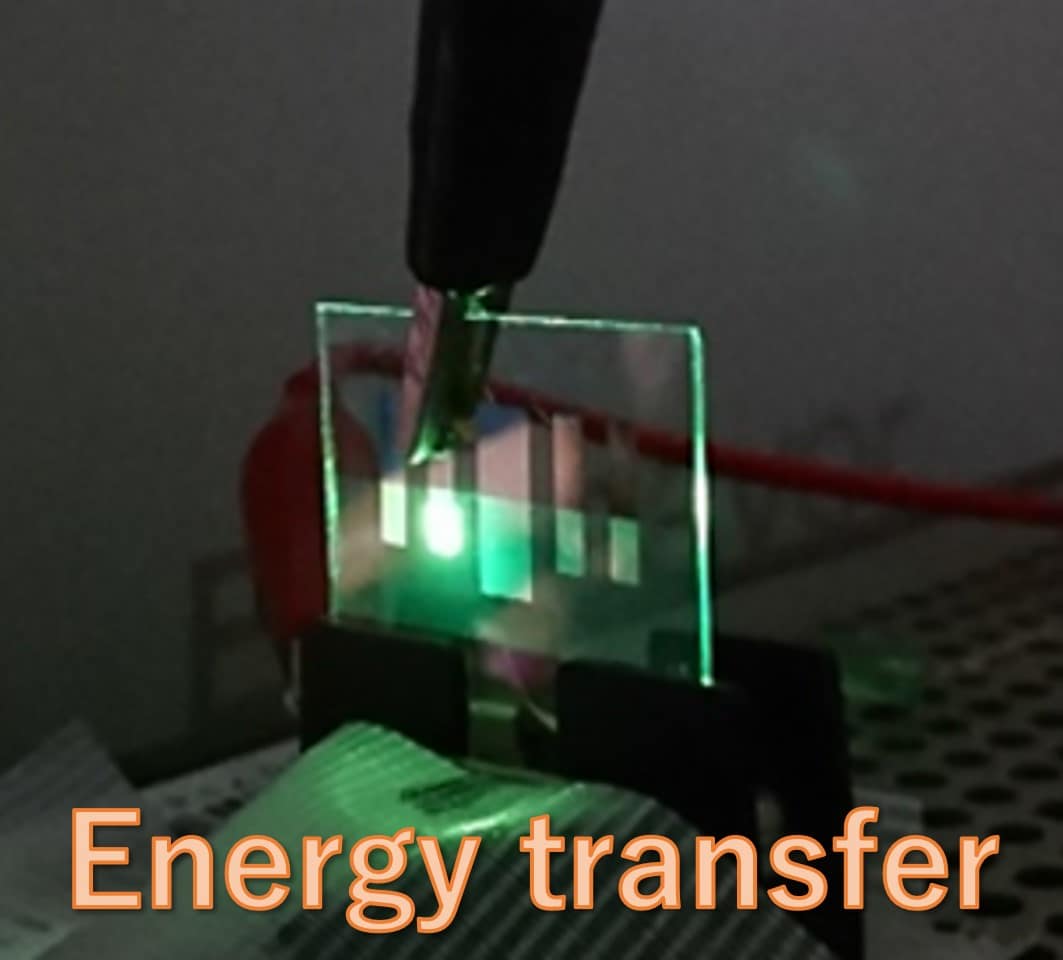
3-4. 第4世代候補:ハイパーフルオレッセンス(Hyperfluorescence)
さらに Hong らは、ハイパーフルオレッセンス(Hyperfluorescence)という第4世代コンセプトも紹介しています。
- TADF分子を「エネルギーの中継役(増感体)」として使い、
- 発光そのものは狭いスペクトル幅の蛍光色素に任せる
ことで、「高効率」と「高色純度」を同時にねらうアプローチです。
このレビューでは、緑・橙赤・青の各色について、学術界と産業界双方のマイルストーンがまとめられており、有機ELの「進化の年表」としても読むことができます。
4. ディスプレイの中でのOLEDの位置づけ
4-1. Mini-LED / Micro-LED と OLED(Huang ら)
Huang らは、
Mini-LED, Micro-LED, OLED, および Mini-LEDバックライトLCD を比較しながら、それぞれの利点・課題を整理しています。 :contentReference[oaicite:2]{index=2}
- Mini-LED:多数の小型LEDでバックライトを細かく制御 → 高いダイナミックレンジ
- Micro-LED:LEDそのものが画素となる自発光方式 → 高輝度・高耐久
- OLED:有機分子の自発光 → 高コントラスト・柔軟・広色域
著者らは、「mLED, OLED, それとも μLED が勝つのか?」という問いに対し、
用途によって最適解が異なり、それぞれが共存しながら進化すると述べています。
4-2. LCD vs OLED(Chen ら)
Chen らのレビューは、「LCD と OLED のどちらが優れているのか?」という議論を、具体的な指標で比較しています。 :contentReference[oaicite:3]{index=3}
特に、
- 応答速度(Response time)
- 動画像応答(MPRT: Motion Picture Response Time)
- 環境コントラスト比(ACR: Ambient Contrast Ratio)
- 色域・寿命・消費電力・柔軟性
などが取り上げられています。
直感的には「OLED の方が速くてコントラストも高い」と思われがちですが、
バックライトや駆動方式を工夫したLCDは、MPRTやACRといった実使用感ではOLEDと同等か、それ以上の性能を出せる場合もあることが示されています。
5. 教育・研究・社会実装へのつながり
この3つのレビューを組み合わせると、
- 「有機ELの中身(発光材料の世代交代)」
- 「他方式ディスプレイとの比較(Mini/Micro-LED, LCD)」
- 「実際の画質指標やユーザー体験」
を一度に俯瞰することができます。
理工系の学生や一般の方にとっても、
- 「なぜスマホの画面はあんなにきれいなのか?」
- 「なぜ青色材料の開発が難しいとニュースになるのか?」
- 「液晶はもう終わりなのか? いや、そうでもないのか?」
といった素朴な疑問を考える入口として、とても良い教材になっています。
6. まとめ(日本語)
- 有機ELは、発光材料の進化(蛍光 → リン光 → TADF → Hyperfluorescence)とともに高効率化してきました。
- ディスプレイの世界では、Mini-LED / Micro-LED / OLED / 高度化したLCD がそれぞれの得意分野を生かしつつ競争・共存しています。
- 本ページで紹介した3本のレビュー論文は、有機ELと発光材料、そしてディスプレイ全体の流れをつかむための「地図」として役立ちます。
OLEDs and Emitter Evolution (English)
1. What this page is about
This page provides a gentle, non-technical introduction to OLEDs and their emitter materials,
based solely on three review papers listed in the accompanying file. :contentReference[oaicite:4]{index=4}
We briefly discuss:
- How OLED emitters have evolved from fluorescent to phosphorescent, TADF and hyperfluorescent systems
- How OLEDs compare with mini-LED / micro-LED displays
- How OLED panels compete and coexist with LCDs in real products
2. Review papers introduced
- A Brief History of OLEDs – Emitter Development and Industry Milestones
Hong, G.; Gan, X.; Leonhardt, C.; Zhang, Z.; Seibert, J.; Busch, J. M.; Bräse, S.
Advanced Materials 33 (2021), 2005630. DOI: 10.1002/adma.202005630 - Mini-LED, Micro-LED and OLED displays: present status and future perspectives
Huang, Y.; Hsiang, E.-L.; Deng, M.-Y.; Wu, S.-T.
Light: Science & Applications 9 (2020), 128. DOI: 10.1038/s41377-020-0341-9 - Liquid crystal display and organic light-emitting diode display: present status and future perspectives
Chen, H.-W.; Lee, J.-H.; Lin, B.-Y.; Chen, S.; Wu, S.-T.
Light: Science & Applications 7 (2018), 17168. DOI: 10.1038/lsa.2017.168
3. Generations of OLED emitters (Hong et al.)
According to Hong and co-workers, emitter development in OLEDs can be grouped into three main generations plus a possible fourth one. :contentReference[oaicite:5]{index=5}
- 1st generation: fluorescent emitters
- Simple organic molecules emitting prompt fluorescence
- Only singlet excitons contribute efficiently → limited internal quantum efficiency
- 2nd generation: phosphorescent emitters
- Heavy-metal complexes (Ir, Pt, etc.) harvest both singlet and triplet excitons
- Very high efficiency, especially for green and red emission
- Blue phosphorescent emitters still face lifetime and stability issues
- 3rd generation: TADF emitters
- Purely organic molecules designed to enable thermally activated delayed fluorescence
- Triplet excitons are up-converted to singlets by thermal energy and then emit light
- High efficiency without using scarce heavy metals
- Towards 4th generation: hyperfluorescence
- A TADF sensitizer first collects excitons (including triplets)
- Energy is then transferred to a narrowband fluorescent emitter
- Aims to combine high efficiency with high colour purity
The review also connects these scientific advances to industrial milestones in green, orange-red and blue OLEDs, highlighting the interplay between academia and industry.
4. OLEDs among competing display technologies
4-1. Mini-LED / micro-LED vs OLED (Huang et al.)
Huang et al. compare mini-LED, micro-LED and OLED as key display platforms. :contentReference[oaicite:6]{index=6}
- Mini-LED: many small LEDs used as a highly controllable backlight for LCDs
- Micro-LED: microscopic LEDs acting as self-emissive pixels
- OLED: thin organic emissive layers driven by electric current
Their analysis shows that each technology has its strengths:
- OLED excels in contrast, colour gamut and flexibility
- Mini-LED and micro-LED are strong contenders for high brightness and robustness
- Actual choice depends on the application (TV, mobile, AR/VR, automotive, etc.)
4-2. LCD vs OLED in practical performance (Chen et al.)
Chen et al. focus on a direct comparison between LCD and OLED using concrete metrics such as: :contentReference[oaicite:7]{index=7}
- Response time and motion picture response time (MPRT)
- Ambient contrast ratio (ACR) under real lighting conditions
- Colour gamut, lifetime, power efficiency and panel flexibility
Interestingly, they show that advanced LCDs, with optimized backlight and driving schemes, can achieve comparable MPRT and ACR to OLEDs in some scenarios, even though naive comparisons often favour OLEDs.
This reminds us that device engineering and system design are just as important as material choices.
5. Take-home messages (English)
- OLEDs are not a single fixed technology but a moving target, continuously improved by new emitter materials (fluorescent → phosphorescent → TADF → hyperfluorescent).
- In the broader display ecosystem, OLEDs coexist and compete with mini-LED, micro-LED and LCDs.
- The three review papers introduced here together provide:
- A historical and materials-oriented view (Hong et al.)
- A technology landscape view across emissive displays (Huang et al.)
- A system-level comparison between LCD and OLED (Chen et al.)
They are excellent entry points for students, engineers and interested readers who want to understand both the physics of light emission and the real-world performance of modern displays.
参考文献 / References
- Hong, G.; Gan, X.; Leonhardt, C.; Zhang, Z.; Seibert, J.; Busch, J. M.; Bräse, S.
A Brief History of OLEDs – Emitter Development and Industry Milestones.
Advanced Materials 33 (2021), 2005630. DOI: 10.1002/adma.202005630 - Huang, Y.; Hsiang, E.-L.; Deng, M.-Y.; Wu, S.-T.
Mini-LED, Micro-LED and OLED displays: present status and future perspectives.
Light: Science & Applications 9 (2020), 128. DOI: 10.1038/s41377-020-0341-9 - Chen, H.-W.; Lee, J.-H.; Lin, B.-Y.; Chen, S.; Wu, S.-T.
Liquid crystal display and organic light-emitting diode display: present status and future perspectives.
Light: Science & Applications 7 (2018), 17168. DOI: 10.1038/lsa.2017.168