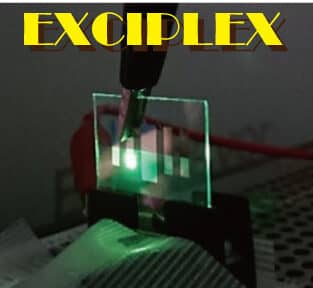
Organic LED and Exciplex
| Authors | Author Full Names | Article Title | Source Title | Author Keywords | Keywords Plus | Abstract | Addresses | Affiliations | Reprint Addresses | Email Addresses | Researcher Ids | ORCIDs | Funding Orgs | Funding Name Preferred | Funding Text | Cited References | Cited Reference Count | Times Cited, WoS Core | Times Cited, All Databases | 180 Day Usage Count | Since 2013 Usage Count | Publisher | Publisher City | Publisher Address | ISSN | eISSN | ISBN | Journal Abbreviation | Journal ISO Abbreviation | Publication Date | Publication Year | Volume | Issue | Part Number | Start Page | End Page | Article Number | DOI | DOI Link | Book DOI | Early Access Date | Number of Pages |
|---|---|---|---|---|---|---|---|---|---|---|---|---|---|---|---|---|---|---|---|---|---|---|---|---|---|---|---|---|---|---|---|---|---|---|---|---|---|---|---|---|---|---|
| Takeshita, T; Umeda, T; Hara, M | Takeshita, Tatsuya; Umeda, Takao; Hara, Michihiro | Fabrication of a dye-sensitized solar cell containing a noncarboxylated spiropyran-derived photomerocyanine with cyclodextrin | JOURNAL OF PHOTOCHEMISTRY AND PHOTOBIOLOGY A-CHEMISTRY | Dye-sensitized solar cell; Photomerocyanine; Cyclodextrin; Inclusion complex; Isomerization | NANOPARTICLES | The fabrication, photovoltaic conversion, and photo-response of dye-sensitized solar cell (DSSC) containing a noncarboxylated spiropyran 1,3,3-trimethylindolino-beta-naphthopyrylospiran (1) and carboxymethy1-beta-cyclodextrin sodium salt (CM-beta-CD) were investigated for the first time. In fact, we found the adsorption of photomerocyanine form (PMC) of 1 and inclusion complexes between the PMC and CM-beta-CD (PMC/CM-beta-CD) to the TiO2 surface. The formation of PMC/CM-beta-CD was confirmed by fluorescence spectroscopy. The incident photon-to-current conversion efficiency (IPCE) of the PMCcontaining DSSC obtained 4.1% under 570-nm light irradiation, and the highest IPCE reached 11.1% by inclusion effect of CM-beta-CD. Similar, the fillfactor and the open-circuit voltage were improved by CM-beta -CD layer. The IPCE value of PMC/CM-beta-CD-containing DSSC was decreased by visible light treatment, and it was considered that decrease of IPCE values are attributed to the formation of PMC isomer. Therefore, we demonstrated the photovoltaic conversion and photoresponsivity of the DSSC by incorporating a noncarboxylated PMC with inclusion effect of CM-beta-CD layer. (C) 2016 Elsevier B.V. All rights reserved. | [Takeshita, Tatsuya; Umeda, Takao; Hara, Michihiro] Fukui Univ Technol, Dept Environm & Food Sci, 3-6-1 Gakuen, Fukui 9108505, Japan | Fukui University of Technology | Hara, M i˜A—’˜ŽÒjAFukui Univ Technol, Dept Environm & Food Sci, 3-6-1 Gakuen, Fukui 9108505, Japan. | hara@fukui-ut.ac.jp | Fukui University of Technology | Fukui University of Technology | This research was supported by Fukui University of Technology, Special Reserch Fund (2014-2016). | 22 | 10 | 10 | 0 | 64 | ELSEVIER SCIENCE SA | LAUSANNE | PO BOX 564, 1001 LAUSANNE, SWITZERLAND | 1010-6030 | 1873-2666 | J PHOTOCH PHOTOBIO A | J. Photochem. Photobiol. A-Chem. | JAN 15 | 2017 | 333 | 87 | 91 | 10.1016/j.jphotochem.2016.10.017 | http://dx.doi.org/10.1016/j.jphotochem.2016.10.017 | 5 | |||||||||
| Pugachev, AD; Rostovtseva, IA; Makarova, NI; Ievlev, MY; Dmitriev, VS; Ozhogin, IV; Tkachev, VV; Utenyshev, AN; Borodkina, IG; Metelitsa, AV; Aldoshin, SM; Minkin, VI; Luk'yanov, BS | Pugachev, A. D.; Rostovtseva, I. A.; Makarova, N. I.; Ievlev, M. Yu.; Dmitriev, V. S.; Ozhogin, I. V.; Tkachev, V. V.; Utenyshev, A. N.; Borodkina, I. G.; Metelitsa, A. V.; Aldoshin, S. M.; Minkin, V. I.; Luk'yanov, B. S. | Synthesis and study of new photochromic halogen-substituted spiropyrans of the indoline series | RUSSIAN CHEMICAL BULLETIN | spiropyran; photochromism; synthesis; CrystalExplorer; NMR; photovoltaics; DSSC | New indoline spiropyrans containing chlorine and bromine atoms in position 5 of the indoline moiety of the molecule as a substituent were synthesized and studied. The structures of the synthesized compounds were confirmed by NMR and IR spectroscopy. The molecular structure of the chlorine-substituted derivative was determined by X-ray diffraction analysis, and intermolecular interactions in the crystal were studied using the CrystalExplorer21.5 software package. The spectral kinetic studies revealed photochromic properties of novel spiropyrans in an acetonitrile solution. The photoelectrochemical characteristics of dye-sensitized solar cells (DSSC) made from the synthesized compounds before and after UV irradiation were studied in comparison. | [Pugachev, A. D.; Rostovtseva, I. A.; Makarova, N. I.; Dmitriev, V. S.; Ozhogin, I. V.; Borodkina, I. G.; Metelitsa, A. V.; Minkin, V. I.; Luk'yanov, B. S.] Southern Fed Univ, Res Inst Phys & Organ Chem, 194-2 Prosp Stachki, Rostov Na Donu 344090, Russia; [Ievlev, M. Yu.] Chuvash State Univ, 15 Moskovskii Prosp, Cheboksary 428015, Russia; [Tkachev, V. V.; Utenyshev, A. N.; Aldoshin, S. M.] Russian Acad Sci, Fed Res Ctr Problems Chem Phys & Med Chem, 1 Prosp Akad Semenova, Chernogolovka 142432, Moscow Region, Russia | Southern Federal University; Russian Academy of Sciences | Pugachev, AD i˜A—’˜ŽÒjASouthern Fed Univ, Res Inst Phys & Organ Chem, 194-2 Prosp Stachki, Rostov Na Donu 344090, Russia. | artem_d_pugachev@mail.ru | Minkin, Vladimir/C-9433-2013; Ozhogin, Ilya/L-8756-2016; Makarova, Nadezhda/B-1960-2017; Borodkina, Inna/R-6464-2016; Dmitriev, Vitaliy/JUF-0763-2023; Ievlev, Mikhail/E-7151-2016; Rostovtseva, Irina/LZF-0067-2025; Lukianov, Boris/H-3305-2013; Tkachev, Valery/AAC-1433-2021; Pugachev, Artem/F-9090-2017 | Ievlev, Mikhail/0000-0003-0741-2254; Dmitriev, Vitaliy/0000-0002-5519-4418 | Ministry of Science and Higher Education of the Russian Federation [FENW-2023-0020] | Ministry of Science and Higher Education of the Russian Federation | This work was financially supported by the Ministry of Science and Higher Education of the Russian Federation in the framework of the state assignment in the area of scientific activities (Southern Federal University, registration No. FENW-2023-0020). The XRD study was performed in the framework of the state assignment (state registration No. AAAA-A19-119092390076-7). | 47 | 8 | 8 | 2 | 7 | SPRINGER | NEW YORK | ONE NEW YORK PLAZA, SUITE 4600, NEW YORK, NY, UNITED STATES | 1066-5285 | 1573-9171 | RUSS CHEM B+ | Russ. Chem. Bull. | NOV | 2023 | 72 | 11 | 2637 | 2648 | 10.1007/s11172-023-4068-7 | http://dx.doi.org/10.1007/s11172-023-4068-7 | 12 | |||||||
| Mavazzan, A; Mendhe, AC; Bayannavar, PK; Sankapal, BR; Kamble, RR; Madar, SF; Pasha, KMM; Bheemayya, L | Mavazzan, Ahmedraza; Mendhe, Avinash C.; Bayannavar, Praveen K.; Sankapal, Babasaheb R.; Kamble, Ravindra R.; Madar, Suresh F.; Pasha, K. M. Mussuvir; Bheemayya, Lokesh | Design of Metal Free Fluorescent Pyridine Dyes Anchored on Cadmium Sulfide Nanowires: Optical, Electrochemical and Photovoltaic Applications | JOURNAL OF FLUORESCENCE | Chalcone; DSSC; J-V study; EQE; CdS-NW study | HETEROCYCLIC CHALCONE ANALOGS; PHOTOCHROMIC BEHAVIOR; THIN-FILMS; TRIPHENYLAMINE; DERIVATIVES; EFFICIENCY; SPIROPYRAN; STABILITY; DSSC | Through a facile two-step synthetic procedure, three metal-free organic dyes having D-pi-A kind of structure, belonging to chalcone family have been designed, produced and anchored on one dimensional cadmium sulfide nanowires (1D CdS NWs) to serve as a light energy harvester through dye-sensitized solar cells (DSSC) assembly. In order to anchor dye on CdS NWs nano-network, solution chemistry has been used in an easy and effective manner. The sensitizing capability of synthesized materials has been evaluated using optical and electrochemical studies, density functional theory (DFT) simulations, and photovoltaic performances. In line with a detailed analysis of fabricated Dye sensitized solar cells containing T4PC a photovoltaic efficiency yields 4.35 times (0.487%) more than that of bare CdS NWs (0.112%), while the other devices having T3PC and T2PC have shown 3.0 (0.338%) and 2.40 (0.273%) times greater photovoltaic efficiencies, respectively under standard light illumination. The obtained results offer solid evidence in favour of boosting external quantum efficiency (EQE) and reflect good agreement with the optical studies. | [Mavazzan, Ahmedraza; Bayannavar, Praveen K.; Kamble, Ravindra R.; Madar, Suresh F.; Bheemayya, Lokesh] Karnatak Univ, Dept Studies Chem, Dharwad 580003, Karnataka, India; [Mendhe, Avinash C.] Hanyang Univ, Dept Civil & Environm Engn, ERICA, Ansan 15588, South Korea; [Mendhe, Avinash C.; Sankapal, Babasaheb R.] Visvesvaraya Natl Inst Technol, Dept Phys, Nanomat & Device Lab, South Ambazari Rd, Nagpur 440010, MS, India; [Pasha, K. M. Mussuvir] Karnatak Sci Coll, Dept Chem, Dharwad 580003, Karnataka, India | Karnatak University; Hanyang University; National Institute of Technology (NIT System); Visvesvaraya National Institute of Technology, Nagpur; Karnatak University | Kamble, RR i˜A—’˜ŽÒjAKarnatak Univ, Dept Studies Chem, Dharwad 580003, Karnataka, India. | ravichem@kud.ac.in | ; Sankapal, Babasaheb R./M-4759-2015; KAMBLE, RAVINDRA/AAH-7335-2021; Sankapal, Babasaheb/M-4759-2015 | Mendhe, Avinash/0000-0003-4513-1066; Sankapal, Babasaheb R./0000-0002-7464-9633; | We are grateful to DST, the Government of India, New Delhi and the University Scientific Instrumentation Centre (USIC), Karnatak University, Dharwad, India, for providing instrumentation facility viz., NMR, UV-Visible, Fluorescence, Powder X-ray and EDX-SE; Government of India, New Delhi; Government of Karnatak; University Grants Commission (UGC) | We are grateful to DST, the Government of India, New Delhi and the University Scientific Instrumentation Centre (USIC), Karnatak University, Dharwad, India, for providing instrumentation facility viz., NMR, UV-Visible, Fluorescence, Powder X-ray and EDX-SE; Government of India, New Delhi; Government of Karnatak; University Grants Commission (UGC)(University Grants Commission, India) | We are grateful to DST, the Government of India, New Delhi and the University Scientific Instrumentation Centre (USIC), Karnatak University, Dharwad, India, for providing instrumentation facility viz., NMR, UV-Visible, Fluorescence, Powder X-ray and EDX-SEM data under SAIF programme, and to Nanomaterials and Device Laboratory, Department of Physics, Visvesvaraya National Institute of Technology, Nagpur, India, for Solar cell Fabrication and analysis. One of the authors Ahmedraza Mavazzan (AM) thanks the Government of Karnatak for providing the GOKDOM Fellowship and University Grants Commission (UGC), Delhi for providing Maulana Azad National Fellowship (MANF). | 50 | 2 | 2 | 0 | 5 | SPRINGER/PLENUM PUBLISHERS | NEW YORK | 233 SPRING ST, NEW YORK, NY 10013 USA | 1053-0509 | 1573-4994 | J FLUORESC | J. Fluoresc. | SEP | 2024 | 34 | 5 | 2405 | 2414 | 10.1007/s10895-023-03457-z | http://dx.doi.org/10.1007/s10895-023-03457-z | OCT 2023 | 10 |
エキシプレックス型OLEDとPBD系材料の最前線:主要3論文ダイジェスト
概要
本セットは、エキシプレックス(exciplex)発光とPBD系ブレンドを軸に、TADF/ハイパーフルオレッセンス設計、PhOLED/PLEDにおけるエキシプレックスの役割、ならびに汎用OLED分子群の標準酸化還元速度定数の測定という三つの視点をカバーします。TAPC:PBDブレンドでは遅い逆項間交差(reverse ISC)を抑制する設計指針が示され、高効率発光への道筋が整理されました。古典的なPVK/PBD系研究は、エキシプレックスがホスト‐ドーパント系のエネルギーフローや寿命制御に与える影響を再確認します。さらに、m-MTDATAやPBDなど実務で頻用される分子の電気化学動力学が整理され、設計時の定量的根拠を提供します。
ここがポイント
- TAPC:PBDブレンドにおける遅いrISCのボトルネックと、その緩和戦略を提示。
- PhOLED/PLEDでのエキシプレックス形成が励起子ダイナミクス・寿命・効率に及ぼす影響を体系化。
- m-MTDATA/PBD等の標準酸化還元速度定数を取得し、注入・再結合設計に直結する指標を提供。
- FRET/TADF/ハイパーフルオレッセンスの協奏設計により、低電圧・高色純度の両立を狙う。
- 実装面では、ブレンド比・エネルギー準位整合・界面制御の三位一体最適化が鍵。
論文別ハイライト
- Mitigating slow reverse ISC rates in TAPC:PBD blends for hyperfluorescent OLEDs(2025, Organic Electronics)
- 設計/材料:TAPC:PBDブレンド+ハイパーフルオレッセンス(TADF発光体→蛍光発光体へのFRET)。
- 機能/現象:遅いrISCを抑え、励起子リサイクルと発光取り出しの両立を目指す。
- 数値的特長:N/A(記事番号:107180)。
- 用途像:高効率・高色純度のフラットパネル照明/ディスプレイ。
- The role of exciplex states in phosphorescent and polymer LEDs(2015, Organic Electronics)
- 設計/材料:PVK/PBD等の古典的ホスト系を含むPhOLED/PLED。
- 機能/現象:エキシプレックス準位が寿命・効率・色度に与える影響を比較検討。
- 数値的特長:N/A(pp. 97–102)。
- 用途像:長寿命・高効率のポリマー系発光デバイス設計。
- Standard redox rate constants for common OLED molecules(2017, Electrochimica Acta)
- 設計/材料:m-MTDATA, PBD ほか商用有機分子の電気化学解析。
- 機能/現象:標準酸化還元速度定数を測定し、電荷注入/輸送/再結合の指標を提供。
- 数値的特長:N/A(pp. 1160–1172)。
- 用途像:材料スクリーニング、デバイス等価回路・シミュレーションの精緻化。
用語ミニ解説
- エキシプレックス(exciplex):異種分子間の励起錯体。界面/ブレンドで形成され、広帯域発光やTADF母体として機能。
- 逆項間交差(reverse intersystem crossing, rISC):三重項→一重項への熱活性化遷移。TADFの要。
- TADF(熱活性化遅延蛍光):小ΔE_ST設計でrISCを促し、100%に近い内部量子効率を狙う。
- ハイパーフルオレッセンス:TADF発光体→蛍光発光体へのFRETで高色純度・高効率を両立。
- PBD:電子輸送材の代表。PVK等とのブレンドでエキシプレックス母体を形成。
- TAPC:正孔輸送材。PBDとの組合せで界面エキシプレックス設計に奏功。
想定アプリケーション
- 低電圧駆動の高効率OLED照明
- 広色域・高色純度ディスプレイ
- 長寿命ポリマーLED(PLED)
- センサー/センシング用発光素子
- 電気化学評価に基づく材料スクリーニング
関連キーワード
TADF, ハイパーフルオレッセンス, エキシプレックス, PBD, TAPC, PVK, FRET, PhOLED, PLED, 電荷移動発光, ΔE_ST, 標準酸化還元速度定数
English version
Title
Exciplex-Based OLEDs around PBD Systems: A 3-Paper Digest
Overview
This set covers three complementary angles: (i) mitigating slow reverse intersystem crossing (rISC) in TAPC:PBD blends to enable hyperfluorescent OLEDs, (ii) clarifying how exciplex states govern exciton dynamics in PhOLED/PLED architectures (including PVK/PBD hosts), and (iii) providing standard redox rate constants for widely used OLED molecules such as m-MTDATA and PBD. Together, they outline practical knobs—blend ratio, level alignment, and interface control—for high efficiency, color purity, and longevity.
Why it matters / Key points
- Identifies strategies to relieve slow rISC in TAPC:PBD exciplex hosts.
- Systematizes the impact of exciplex states on lifetime, efficiency, and color in PhOLED/PLEDs.
- Supplies standard redox rate constants for common OLED materials to inform injection/recombination design.
- Leverages TADF-to-fluorophore FRET (hyperfluorescence) for high color purity at high efficiency.
- Stresses co-optimization of blend, energetics, and interfaces for deployable devices.
Highlights by study
- Mitigating slow reverse ISC rates in TAPC:PBD blends for hyperfluorescent OLEDs (2025, Organic Electronics)
- Design/Materials: TAPC:PBD host; hyperfluorescence via TADF donor → fluorescent acceptor (FRET).
- Phenomena: Suppresses slow rISC bottlenecks to recycle excitons efficiently.
- Metrics: N/A (Article No. 107180).
- Use case: High-efficiency, high-purity lighting/displays.
- The role of exciplex states in phosphorescent and polymer LEDs (2015, Organic Electronics)
- Design/Materials: PhOLED/PLED with classic PVK/PBD hosts.
- Phenomena: Dissects how exciplex levels steer exciton flow, lifetime, and efficiency.
- Metrics: N/A (pp. 97–102).
- Use case: Durable, efficient polymer-based emitters.
- Standard redox rate constants for common OLED molecules (2017, Electrochimica Acta)
- Design/Materials: Electrochemical kinetics for m-MTDATA, PBD, and others.
- Phenomena: Provides kinetic constants to ground charge injection/transport models.
- Metrics: N/A (pp. 1160–1172).
- Use case: Materials screening and physics-based device simulation.
Mini-glossary
- Exciplex: Intermolecular excited complex; forms at blends/interfaces and can act as a broad emitter or TADF host.
- Reverse intersystem crossing (rISC): Triplet → singlet up-conversion; central to TADF.
- TADF: Thermally activated delayed fluorescence enabled by small ΔE_ST.
- Hyperfluorescence: FRET from a TADF donor to a narrowband fluorescent emitter.
- PBD: Prototypical electron-transport material; forms exciplexes with hosts like PVK.
- TAPC: Hole-transport material; forms efficient exciplex hosts with PBD.
Potential applications
- Low-voltage, high-efficiency OLED lighting
- Wide-gamut, high-purity displays
- Long-lived polymer LEDs (PLEDs)
- Optical sensing light sources
- Data-driven materials down-selection
Suggested tags
TADF, hyperfluorescence, exciplex, PBD, TAPC, PVK, FRET, PhOLED, PLED, charge-transfer emission, ΔE_ST, redox kinetics
参考文献(共通)
- Weatherill, L. A., Milverton, R., Pander, P., Dias, F. B. Mitigating slow reverse ISC rates in TAPC:PBD blends for hyperfluorescent OLEDs. Organic Electronics 2025, 137, Article 107180. DOI: https://doi.org/10.1016/j.orgel.2025.107180
- Jankus, V., Abdullah, K., Griffiths, G. C., Al-Attar, H. A., Ariu, M., Monkman, A. P. The role of exciplex states in phosphorescent and polymer LEDs. Organic Electronics 2015, 20, 97–102. DOI: https://doi.org/10.1016/j.orgel.2015.01.017
- Chulkin, P., Lapkowski, M., Bryce, M. R., Santos, J. Determination of standard redox rate constants for selected organic compounds used in OLEDs by RDE Voltammetry. Electrochimica Acta 2017, 258, 1160–1172. DOI: https://doi.org/10.1016/j.electacta.2017.11.171