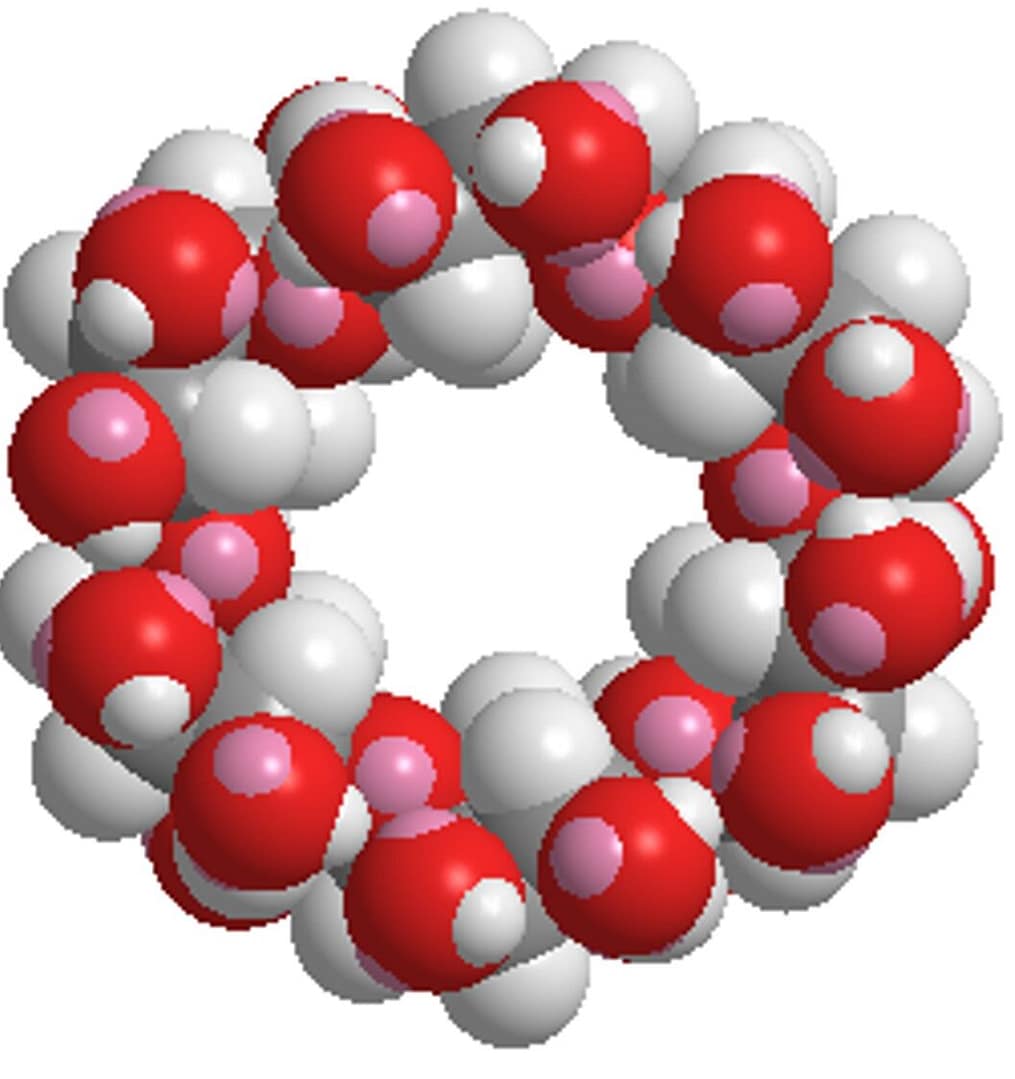
α-Cyclodextrin (α-CD): A Molecular “Cavity” That Transforms Batteries, Catalysis, and Friction
キーワード(5つ) / Keywords (5)
- α-シクロデキストリン(α-CD) / α-cyclodextrin
- デンプン由来の環状分子。内側の空洞に分子を取り込み、分子認識や材料設計に使われる。生体適合性の高さも利点。
- A starch-derived cyclic molecule with a host cavity, widely used for molecular recognition and materials design.
- ホスト–ゲスト相互作用 / Host–guest interaction
- 約束事は「空洞(ホスト)に分子(ゲスト)が出入りする」こと。可逆で設計しやすく、機能を切り替える材料の核になる。
- Reversible binding of a guest inside a host cavity—an engineerable foundation for switchable functions.
- ポリロタキサン / Polyrotaxane
- 鎖状分子に輪(CD)が通った構造。輪の動きで柔らかさと強さを両立し、電解質や摩擦材料などへ展開できる。
- Ring-on-chain architectures where cyclodextrin rings can move, enabling unusual mechanical and functional properties.
- 固体高分子電解質(SPE) / Solid polymer electrolyte
- 液体電解質の可燃性リスクを避けるための“固体”電解質。α-CDを含む設計で導電性・界面安定・難燃性を同時に狙う研究がある。
- Solid electrolytes that reduce flammability risks; α-CD-based designs aim to balance conductivity, interface stability, and safety.
- 分子スケールの摩擦制御 / Molecular-scale friction control
- 「滑り」を「転がり」に置き換える発想を分子レベルへ。α-CDを“輪”として使い、摩擦低減・耐摩耗を狙う報告がある。
- Translating “rolling instead of sliding” into molecular engineering using α-CD rings to reduce friction and wear.
概要(一般向け) / Overview (plain language)
日本語
α-シクロデキストリン(α-CD)は、ドーナツ状の分子で、内側に小さな「空洞」を持ちます。ここに別の分子が入ると、分子同士の結びつき方が変わり、材料の性質まで変えられます。
今回の添付ファイルに含まれる研究では、①α-CDを“輪”として高分子鎖に通し、安全で長寿命な全固体電池の電解質を設計する例、②空洞内での結合を“内側で編集する”という新しい化学の考え方、③分子レベルの“転がり”を使って摩擦を下げる例が示されています。
English
α-Cyclodextrin (α-CD) is a donut-shaped molecule with a host cavity. When other molecules enter this cavity, interactions change—often enough to change material properties.
The attached papers showcase: (1) α-CD as rings in polyrotaxanes for safer, longer-lasting all-solid-state batteries, (2) a new “interior editing” concept—chemistry occurring and selectively modified inside a confined cavity, and (3) molecular “rolling” to reduce
1) α-CDポリロタキサン電解質で「燃えにくく、長寿命」な全固体リチウム金属電池へ
1) α-CD polyrotaxane electrolytes for fire-safe, long-cycling all-solid-state lithium metal batteries
論文 / Paper: Bifunctional Polyrotaxane-Based Electrolytes Enable Long-Cycling and Fire-Safe All-Solid-State Lithium Metal Batteries
掲載誌 / Journal: Advanced Functional Materials(JIF 19.0, 2024)
DOI: https://doi.org/10.1002/adfm.202526101
わかりやすい要点(Abstract本文は転載せず) / Key points (no abstract copying)
- α-CDを含むポリロタキサン(PEOにα-CDが通った構造)を骨格にした固体電解質を提案。
- PEOの結晶化を抑え、イオン伝導と機械的強さを両立させる狙いが述べられている。
- 難燃性と界面安定化を同時に狙う添加成分(リチウムフェニルホスホネート)を組み合わせている。
- 電池動作(長寿命、短絡なしの安定動作)や燃焼試験で安全性向上を示す、とまとめている。
- ポリロタキサンの可逆的な“かみ合い”構造により、リサイクル性にも言及している。
- Proposes a solid polymer electrolyte built on an α-CD-threaded polyrotaxane framework.
- Aims to suppress PEO recrystallization and balance ionic transport with mechanical robustness.
- Combines a flame-retardant / interface-stabilizing lithium phenylphosphonate component.
- Reports improved cycling stability and fire-safety test outcomes.
- Notes recyclability enabled by reversible interlocking/hydrogen bonding in the polyrotaxane.
2) 「空洞の内側」で化学結合を選択的に編集する:動的分子認識という新パラダイム
2) Selectively editing bonds inside a cavity: a new paradigm based on dynamic molecular recognition
論文 / Paper: Interior Editing via Dynamic Molecular Recognition
掲載誌 / Journal: Journal of the American Chemical Society(JIF 15.6, 2024)
DOI: https://doi.org/10.1021/jacs.6c00524
わかりやすい要点 / Key points
- 「分子容器(α-CD)の内側空間」を設計し、選択性(分子認識・輸送・触媒)を高めるという問題意識から出発。
- α-CD空洞に可逆結合する触媒(キヌクリジン)が、特定の“内側C–H”に関与するという枠組みを提示。
- その結果、α-CDの一部官能基が内向きになる(空洞の極性サイトが変わる)と述べられている。
- 生成した修飾α-CDは、未修飾α-CDでは難しいキラル分離を可能にした、としている。
- Starts from the challenge of engineering container interiors to control selectivity in recognition/transport/catalysis.
- Presents a catalyst (quinuclidine) that reversibly binds α-CD and targets an interior C–H context.
- Describes an interior-facing functional change (a polar recognition site emerging within the cavity).
- Reports improved chiral separation in gas chromatography compared with native α-CD.
3) 分子の「転がり」で摩擦を減らす:α-CDリングを使った分子レベル潤滑
3) Reducing friction by molecular “rolling”: α-CD rings for molecular-scale lubrication
論文 / Paper: Exploring molecular-level rolling friction based on cyclodextrins for lubrication
掲載誌 / Journal: Carbohydrate Polymers(JIF 12.5, 2024)
DOI: https://doi.org/10.1016/j.carbpol.2026.125255
わかりやすい要点(Abstract本文は転載せず) / Key points (no abstract copying)
- 摩擦低減の基本発想「滑り→転がり」を、分子スケールで実現する狙いを掲げている。
- 生体適合性のあるα-CDを“輪”としてポリロタキサンネットワークに組み込み、摩擦係数と摩耗を下げる方向性を示す。
- 比較対象として金属材料(Ti6Al4V合金)やリング無し系を挙げ、優位性を示したと述べている。
- 「分子工学で摩擦科学を前進させる」可能性を強調している。
- Targets a molecular analogue of the macroscopic strategy “replace sliding with rolling.”
- Uses biocompatible α-CD rings in polyrotaxane networks to reduce friction and wear.
- Benchmarks against Ti6Al4V and ring-free controls and reports improved lubricity.
- Highlights the broader potential of molecular-scale engineering for friction materials.
文献 / References
- Chen, Q.; Tang, W.; Gu, T.-T.; Wang, D.-Y. Bifunctional Polyrotaxane-Based Electrolytes Enable Long-Cycling and Fire-Safe All-Solid-State Lithium Metal Batteries. Advanced Functional Materials. https://doi.org/10.1002/adfm.202526101
- Han, Y.-Q.; Lam, C. C.; Houk, K. N.; Chen, A. X.-Y. Interior Editing via Dynamic Molecular Recognition. Journal of the American Chemical Society. https://doi.org/10.1021/jacs.6c00524
- Wang, J. et al. Exploring molecular-level rolling friction based on cyclodextrins for lubrication. Carbohydrate Polymers. https://doi.org/10.1016/j.carbpol.2026.125255