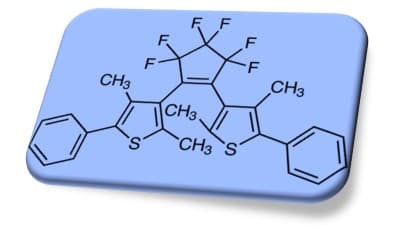
キーワード / Keywords
- DEs関連分子 / DEs-related molecules
- 蛍光センサー / fluorescent sensor
- 光応答性分子 / photoresponsive molecules
- フォトクロミズム / photochromism
- 蛍光スイッチ / fluorescence switching
- 超分子ポリマー / supramolecular polymer
- 金属イオン検出 / metal ion detection
- 光メモリ・光機能材料 / optical memory and photonic materials
日本語版
DEs関連研究とは?
今回のファイルには、光で性質が変わる分子や、金属イオンを高感度に見つける蛍光分子に関する研究が含まれていました。
こうした研究は、医療・環境分析・光機能材料などにつながる基礎技術として重要です。
特に、分子が「光」や「金属イオン」に応答して色や蛍光を変える仕組みは、センサーや光スイッチの設計に役立ちます。
1. ナノモル濃度でCu²⁺とNi²⁺を見分けるポルフィリン蛍光プローブ
論文
Shin SH, Kim J, Moon H, Reddy TS, Choi MS.
Porphyrin-Based Fluorescent Probe for Nanomolar Detection of Cu2+ and Ni2+ Ions
Molecules (2026), 31(10), 1739.
DOI: 10.3390/molecules31101739
この論文: 一般の方にも理解しやすい「金属イオンを見つける蛍光センサー」という応用が明確です。
わかりやすいポイント
– この研究では、ポルフィリンという発色・発光しやすい分子を使って、金属イオンを感じ取る蛍光プローブを作っています。
– とくに Cu²⁺(銅イオン) と Ni²⁺(ニッケルイオン) を非常に低い濃度で検出できる点が特徴です。
– 仕組みとしては、金属イオンが結合すると蛍光が弱くなる「turn-off型」の応答を利用しています。
– Cu2+は体に必要な微量元素ですが、異常に増えると神経変性との関連が指摘されるため、高精度な検出法には意味があります。
– このような分子は、将来的に環境中の金属分析や生体関連のイオンセンシングへ応用できる可能性があります。
一般向けに言うと…
「ごく少量の金属イオンを、光の変化で見つける分子センサー」 の研究です。
2. 酸で“熱の出し方”を調整できる光スイッチ分子
論文
Kunfi A, Zsignar-Nagy B, Perumalla DS, Durbeej B, London G.
Fatigue-Resistant Dithienylarene Photoswitches with Acid-Regulated Thermal Ring Opening
ACS Omega (2026), 11(21), 31357–31370.
DOI: 10.1021/acsomega.6c01422
この論文を選んだ理由
– 2番目に高いインパクトファクターの掲載誌でした。
– 「光で蓄えたエネルギーを必要なときに放出する」という、一般にもイメージしやすいテーマです。
わかりやすいポイント
– この研究で扱う分子は、光を当てると形が変わり、その状態にエネルギーを一時的にためることができます。
– 面白いのは、酸を加えることで、その分子が元に戻る速さを大きく変えられる点です。
– つまり、“いつ熱を出すか”を酸でコントロールすることができるわけです。
– しかも、繰り返し使っても性能が落ちにくい「耐久性」も示されています。
– さらに、水に溶ける形へ変えたり、ハイドロゲルへ組み込んだりできる可能性も示されており、光応答性材料としての広がりがあります。
一般向けに言うと…
「光でためたエネルギーを、必要なタイミングで熱として取り出せる分子スイッチ」 の研究です。
3. 光で“沈む集合体”と“分散した超分子ポリマー”を切り替える研究
論文
Murai K, Matsui H, Seki T, Umakoshi T, Ganser C, Kajitani T, Datta S, Hanayama H, Yagai S.
Diarylethene-powered photo-switching between precipitated nanostrips and dispersed supramolecular polymers
Chemical Communications (2026)
DOI: 10.1039/d6cc01370h
この論文を選んだ理由
– 光によって分子集合体の状態そのものを切り替える、“見てわかりやすい分子レベルのON/OFF制御”という点が魅力です。
わかりやすいポイント
– この研究では、ジアリールエテンという光で形が変わる分子を使っています。
– 紫外光と可視光を当て分けることで、分子集合体が
– まとまって沈殿したナノストリップ
– 均一に広がった超分子ポリマーの間を行き来します。
– つまり、光によって材料の「集まり方」そのものを切り替えているのがポイントです。
– こうした制御は、将来的に光メモリ、応答性材料、分子レベルの情報制御などへつながる可能性があります。
– 分子1個の変化ではなく、分子の集団のふるまいが切り替わるところが面白い点です。
一般向けに言うと…
「光を当てるだけで、分子の集まり方をON/OFFのように切り替える研究」 です。
まとめ
- 今回のDEs関連ファイルでは、
- 金属イオンを見つける蛍光センサー
- 熱の出し方を制御する光スイッチ
- 分子集合体を光で切り替える材料
といった、異なる方向の研究が見られました。 - 共通しているのは、分子が外部刺激(光・金属イオン・酸など)に応答して、目に見える性質や機能を変える点です。
- こうした研究は、センサー、医療分析、情報記録、スマート材料など、将来の幅広い応用につながる基礎になります。
English Version
What kind of DEs-related studies were found?
The uploaded files included studies on molecules that change their properties in response to light and fluorescent molecules that can detect metal ions very sensitively.
These themes are important as fundamental technologies for medical analysis, environmental sensing, and photonic materials.
In particular, molecules that respond to light or metal ions by changing fluorescence or aggregation behavior are useful for the design of sensors and molecular switches.
1. A porphyrin fluorescent probe for nanomolar detection of Cu2+ and Ni2+
Paper
Shin SH, Kim J, Moon H, Reddy TS, Choi MS.
Porphyrin-Based Fluorescent Probe for Nanomolar Detection of Cu2+ and Ni2+ Ions
Molecules (2026), 31(10), 1739.
DOI: 10.3390/molecules31101739
Why this paper was selected
– It appeared in the highest-impact journal among the uploaded candidates.
– Its application is easy to understand for a broad audience: a fluorescent sensor for metal ions.
Easy-to-understand points
– This study used a porphyrin-based molecule, which is well known for strong optical properties.
– The probe can detect Cu2+ and Ni2+ at very low concentrations.
– It works through a turn-off fluorescence mechanism, meaning that the fluorescence becomes weaker when the target ion is present.
– Copper ions are biologically important, but abnormal accumulation is associated with disease, so sensitive monitoring is useful.
– Such probes may be valuable for environmental metal analysis and biological sensing applications.
In simple words…
This is a study on a molecular sensor that finds extremely small amounts of metal ions by using changes in light.
2. A light-responsive molecular switch whose heat release can be controlled by acid
Paper
Kunfi A, Zsignar-Nagy B, Perumalla DS, Durbeej B, London G.
Fatigue-Resistant Dithienylarene Photoswitches with Acid-Regulated Thermal Ring Opening
ACS Omega (2026), 11(21), 31357–31370.
DOI: 10.1021/acsomega.6c01422
Why this paper was selected
– It was published in the second-highest impact journal among the uploaded papers.
– The concept of storing energy with light and releasing it on demand is easy to imagine and highly appealing.
Easy-to-understand points
– The molecule in this study changes shape when exposed to light and can temporarily store energy in that changed form.
– The particularly interesting point is that adding acid can drastically change how fast it returns to its original form.
– That means the timing of heat release can be controlled chemically.
– The system also showed strong resistance to repeated switching cycles.
– The work further suggests possible use in water-compatible forms and gel materials, broadening its potential in photoresponsive systems.
In simple words…
This is a study on a molecular switch that stores energy using light and releases it as heat when needed.
3. Switching between precipitated nanostrips and dispersed supramolecular polymers using light
Paper
Murai K, Matsui H, Seki T, Umakoshi T, Ganser C, Kajitani T, Datta S, Hanayama H, Yagai S.
Diarylethene-powered photo-switching between precipitated nanostrips and dispersed supramolecular polymers
Chemical Communications (2026)
DOI: 10.1039/d6cc01370h
Why this paper was selected
– It came from the third-highest impact factor journal among the candidates.
– It offers a visually intuitive example of molecular assemblies being switched ON and OFF by light.
Easy-to-understand points
– This study used diarylethene, a molecule that changes form under different light conditions.
– By alternating UV and visible light, the molecular system switches between
– precipitated nanostrip aggregates, and
– uniformly dispersed supramolecular polymers.
– In other words, light changes not only a single molecule, but the way many molecules organize together.
– Such control may be useful for optical memory, responsive materials, and information control at the molecular level.
– The key interest lies in switching the collective behavior of molecular assemblies using an external stimulus.
In simple words…
This is a study on using light to switch the way molecules gather together, almost like turning a material ON and OFF.
Take-home message
- In the uploaded DEs-related files, the selected studies focused on
- fluorescent sensors for metal ions,
- light-powered molecular switches for energy release, and
- photo-controlled supramolecular material switching.
- The common feature is that these molecules respond to external triggers such as light, metal ions, or acid and change visible or functional properties.
- This kind of research provides the molecular foundation for future applications in sensing, medical analysis, smart materials, and information technologies.
参考文献 / References
- Shin SH, Kim J, Moon H, Reddy TS, Choi MS. Porphyrin-Based Fluorescent Probe for Nanomolar Detection of Cu2+ and Ni2+ Ions. Molecules. 2026;31(10):1739. DOI: 10.3390/molecules31101739
- Kunfi A, Zsignar-Nagy B, Perumalla DS, Durbeej B, London G. Fatigue-Resistant Dithienylarene Photoswitches with Acid-Regulated Thermal Ring Opening. ACS Omega. 2026;11(21):31357–31370. DOI: 10.1021/acsomega.6c01422
- Murai K, Matsui H, Seki T, Umakoshi T, Ganser C, Kajitani T, Datta S, Hanayama H, Yagai S. Diarylethene-powered photo-switching between precipitated nanostrips and dispersed supramolecular polymers. Chemical Communications. 2026. DOI: 10.1039/d6cc01370h