キーワード / Keywords
- DSSC(色素増感太陽電池) / dye-sensitized solar cells
- 天然色素 / natural dyes
- クマリン系感光剤 / coumarin-based sensitizers
- カーボン量子ドット / carbon quantum dots
- バイオマス / biomass
- 銀ナノワイヤー / silver nanowires
- 光電変換効率 / power conversion efficiency
- 持続可能性 / sustainability
- 柔軟性 / flexibility
- コスト削減 / cost reduction
日本語版
DSSCとは?
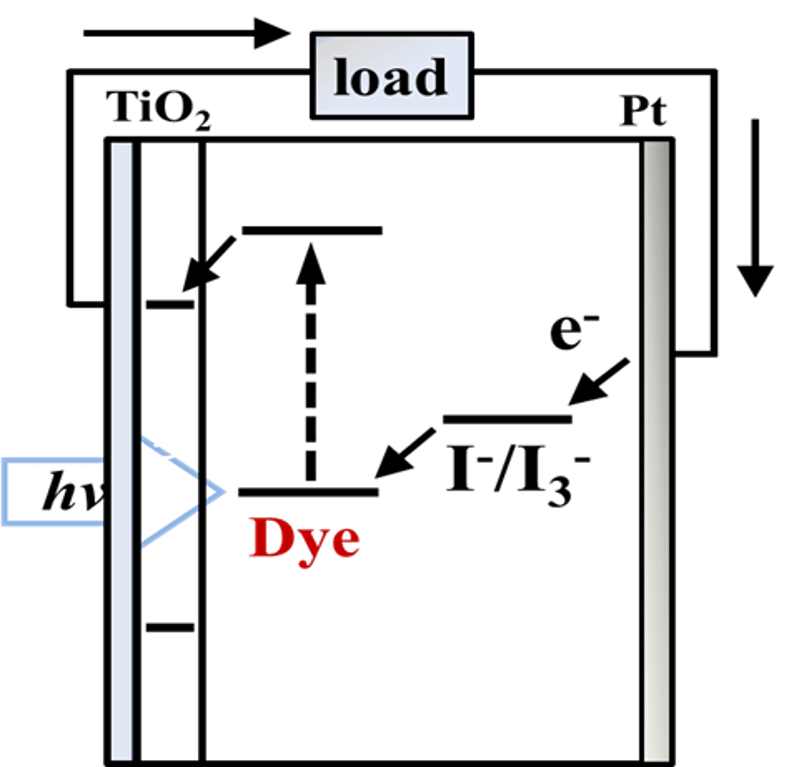
DSSC(色素増感太陽電池)は、光を吸収する「色素」と、電子を運ぶ材料を組み合わせて発電する太陽電池です。
このファイルでは、低コスト化、環境配慮、性能向上を目指した研究が中心で、特に 天然由来の色素、分子設計された感光剤、バイオマス由来の電極材料 が注目されていました。
1. マホガニー由来の天然色素 Rubiadin を使った DSSC
論文
Arsyad WS, Munawaroh KS, Asharuddin M, Ramadhan LAN, Aba L, Usman I, Hidayat R.
Solvent-mediated solid-liquid extraction of Rubiadin dye from Mahogany wood (Swietenia macrophylla) and its characteristics as a natural photosensitizer for DSSC
Journal of Nonlinear Optical Physics & Materials (2026)
DOI: 10.1142/S021886352650027X
わかりやすいポイント
– マホガニー材から Rubiadin という天然色素を取り出し、DSSCの感光色素として使えるかを調べた研究です。
– 抽出方法を変えることで、光の吸収範囲や TiO2 への吸着量が変わることが確認されました。
– アルカリ抽出は広い吸収域を示し、ハイドロアルコール抽出は TiO2 への吸着が高く、マセレーション法 が最終的に最も良い発電性能を示しました。
– つまり、天然色素でも抽出のしかたを工夫すれば性能を高められる ことを示しています。
一般向けに言うと…
「木から取り出した天然の色素を、太陽電池の光を集める材料として活かす研究」 です。
2. クマリン系感光剤と Ag ドープ TiO2 による高性能 DSSC
論文
Abumelha HM, Alhawiti F, Osra KA, Alshareef HF, Alshahrani M, Alharbi A, Alsoliemy A, El-Metwaly NM.
Acceptor engineering of coumarin-based sensitizers: Synthesis, DFT studies, and enhanced DSSC performance on Ag-doped TiO2
Dyes and Pigments (2026)
DOI: 10.1016/j.dyepig.2026.113852
わかりやすいポイント
– この研究では、新しい クマリン系感光剤(TTC-1 と TTP-1)を設計し、DSSCでの性能を比較しています。
– DFT解析では、TTC-1 の方が可視光を広く吸収しやすく、より有利な電子状態を持つことが示されました。
– Ag をドープした TiO2 に N719 と共感光させることで、屋外 13.23%、室内 29.81%(1000 lx) という高い効率が報告されています。
– この改善は、光の取り込みの増加、電子注入のしやすさ、再結合の抑制 によるものと整理されています。
一般向けに言うと…
「光をより多く集めて、無駄なく電気に変えるために、分子の形と材料表面を一緒に設計した研究」 です。
3. 廃棄トウモロコシ皮と Cu-ZnO を使った柔らかい DSSC 電極
論文
Sultana I, Rao IF, Ilyas S, Ramzan S, Abbas Q, Rafiq I, Mir A, Latif H, Akhtar S, Hussain SQ, Razaq A.
Eco-Friendly and Highly Porous Cu-Doped ZnO Electrodes for High-Performance DSSCs
JOM (2026)
DOI: 10.1007/s11837-026-08403-5
わかりやすいポイント
– 廃棄される トウモロコシ皮 からリグノセルロース繊維を取り出し、Cu ドープ ZnO と組み合わせた多孔質電極を作った研究です。
– この複合体は光をよりよく吸収し、DSSC効率は 4.0% と、純粋な Cu-ZnO の 2.9% を上回りました。
– 材料として 柔軟性、生分解性、軽量性 が期待されており、使い捨て・曲げ可能な電子機器への展開も示唆されています。
– DSSCをより環境にやさしい方向へ進めるための、バイオマス利用の好例 といえます。
一般向けに言うと…
「捨てられる植物の繊維を活かして、やわらかくて環境にやさしい太陽電池部材を作る研究」 です。
まとめ
- 天然色素の利用
- 分子設計による高性能感光剤
- バイオマス由来の柔軟電極
という3つの流れが見られました。 - 共通しているのは、DSSCを 安く、環境にやさしく、より高性能に しようという方向性です。
- そのためDSSCは、今後も屋外用途だけでなく、室内発電 や 柔軟電子デバイス にも広がる可能性があります。
English Version
What is a DSSC?
A dye-sensitized solar cell (DSSC) generates electricity by combining a light-absorbing dye with materials that transport electrons.
In this file, the main themes were cost reduction, sustainability, and performance improvement. In particular, the studies focused on natural dyes, molecularly designed sensitizers, and biomass-derived electrode materials.
1. A natural Rubiadin dye from mahogany wood for DSSCs
Paper
Arsyad WS, Munawaroh KS, Asharuddin M, Ramadhan LAN, Aba L, Usman I, Hidayat R.
Solvent-mediated solid-liquid extraction of Rubiadin dye from Mahogany wood (Swietenia macrophylla) and its characteristics as a natural photosensitizer for DSSC
Journal of Nonlinear Optical Physics & Materials (2026)
DOI: 10.1142/S021886352650027X
Easy-to-understand points
– This study extracted a natural dye called Rubiadin from mahogany wood and tested it as a DSSC photosensitizer.
– Different extraction methods produced different light-absorption behavior and different amounts of dye loading on TiO2.
– Alkaline extraction gave the broadest absorption, hydro-alcoholic extraction gave the highest TiO2 loading, and the maceration method gave the best final photovoltaic performance.
– This shows that even natural dyes can become more useful when the extraction method is optimized.
In simple words…
This is a study on using a natural dye from wood as the light-harvesting component of a solar cell.
2. High-performance DSSCs using coumarin sensitizers and Ag-doped TiO2
Paper
Abumelha HM, Alhawiti F, Osra KA, Alshareef HF, Alshahrani M, Alharbi A, Alsoliemy A, El-Metwaly NM.
Acceptor engineering of coumarin-based sensitizers: Synthesis, DFT studies, and enhanced DSSC performance on Ag-doped TiO2
Dyes and Pigments (2026)
DOI: 10.1016/j.dyepig.2026.113852
Easy-to-understand points
– This study designed two new coumarin-based sensitizers (TTC-1 and TTP-1) for DSSCs.
– DFT analysis indicated that TTC-1 had broader visible-light absorption and more favorable electronic properties.
– When co-sensitized with N719 on Ag-doped TiO2, the best device reached 13.23% efficiency outdoors and 29.81% efficiency indoors at 1000 lx.
– The improvement was explained by better light harvesting, more efficient electron injection, and less charge recombination.
In simple words…
This is a study on designing both the dye molecule and the material surface together so that more light can be converted into electricity efficiently.
3. Flexible DSSC electrodes from waste corn skin and Cu-ZnO
Paper
Sultana I, Rao IF, Ilyas S, Ramzan S, Abbas Q, Rafiq I, Mir A, Latif H, Akhtar S, Hussain SQ, Razaq A.
Eco-Friendly and Highly Porous Cu-Doped ZnO Electrodes for High-Performance DSSCs
JOM (2026)
DOI: 10.1007/s11837-026-08403-5
Easy-to-understand points
– This study used lignocellulose fibers from waste corn skin together with Cu-doped ZnO to build a porous DSSC electrode.
– The composite improved light absorption and achieved 4.0% efficiency, compared with 2.9% for pure Cu-ZnO.
– The material is expected to have flexibility, biodegradability, and light weight, which could be useful for disposable or bendable devices.
– It is a strong example of using biomass waste to move DSSCs toward more sustainable technologies.
In simple words…
This is a study on turning discarded plant fibers into soft, eco-friendly solar-cell components.
Take-home message
- In the selected DSSC-related studies, the key directions were:
- using natural dyes,
- designing higher-performance sensitizer molecules, and
- developing biomass-based flexible electrodes.
- The common goal is to make DSSCs cheaper, more sustainable, and more efficient.
- Because of this, DSSCs may continue expanding not only for outdoor use, but also for indoor energy harvesting and flexible electronic devices.
参考文献 / References
- Arsyad WS, Munawaroh KS, Asharuddin M, Ramadhan LAN, Aba L, Usman I, Hidayat R. Solvent-mediated solid-liquid extraction of Rubiadin dye from Mahogany wood (Swietenia macrophylla) and its characteristics as a natural photosensitizer for DSSC. Journal of Nonlinear Optical Physics & Materials. 2026. DOI: 10.1142/S021886352650027X.
- Abumelha HM, Alhawiti F, Osra KA, Alshareef HF, Alshahrani M, Alharbi A, Alsoliemy A, El-Metwaly NM. Acceptor engineering of coumarin-based sensitizers: Synthesis, DFT studies, and enhanced DSSC performance on Ag-doped TiO2. Dyes and Pigments. 2026. DOI: 10.1016/j.dyepig.2026.113852.
- Sultana I, Rao IF, Ilyas S, Ramzan S, Abbas Q, Rafiq I, Mir A, Latif H, Akhtar S, Hussain SQ, Razaq A. Eco-Friendly and Highly Porous Cu-Doped ZnO Electrodes for High-Performance DSSCs. JOM. 2026. DOI: 10.1007/s11837-026-08403-5.