キーワード / Keywords
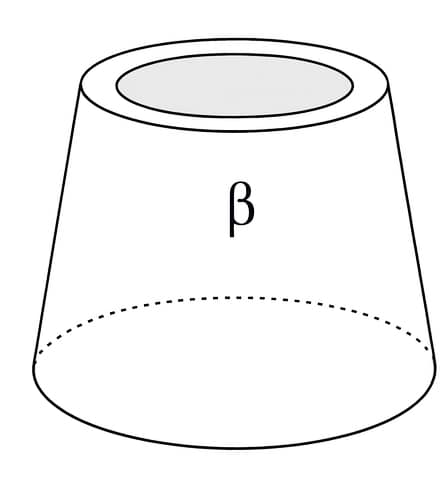
1. β-シクロデキストリン(β-Cyclodextrin)
日本語: ブドウ糖が環状につながった分子で、内部に小さな空洞を持ちます。特定分子を取り込む性質を利用し、輸送、放出、界面制御などの機能を材料へ与えられます。
English: A ring-shaped glucose molecule with a nanoscale cavity that can host selected molecules and regulate transport, release, and interfaces.
2. ホスト・ゲスト相互作用(Host–Guest Interaction)
日本語: 空洞を持つホスト分子が、形や性質の合うゲスト分子を非共有結合で取り込む仕組みです。環境変化に応じて結合を組み替える材料設計にも利用されます。
English: A reversible noncovalent interaction in which a host cavity accommodates a compatible guest molecule for responsive material design.
3. 水系亜鉛イオン電池(Aqueous Zinc-Ion Battery)
日本語: 水を主成分とする電解液中で亜鉛イオンを移動させる蓄電池です。安全性が期待される一方、大型化すると亜鉛析出の偏りが起こりやすくなります。
English: A battery that transports zinc ions through a water-based electrolyte, offering safety advantages but facing nonuniform deposition during scale-up.
4. pH応答性ナノゲル(pH-Responsive Nanogel)
日本語: 周囲の酸性度によって内部構造や働きを変える微小なゲルです。病変部の環境を合図として、潤滑状態や薬剤保持を自律的に調節できます。
English: A nanoscale gel that changes its structure or function with acidity, enabling environment-responsive lubrication and therapeutic delivery.
5. 超親水性分離膜(Superhydrophilic Separation Membrane)
日本語: 水となじみやすい表面を持ち、油や微粒子の付着を抑えながら水を通す膜です。複合汚染水の処理性能と洗浄後の回復性を高められます。
English: A highly water-wettable membrane that resists oil and particle fouling while maintaining efficient water separation and flux recovery.
日本語版
研究背景
β-シクロデキストリンは、分子を取り込む空洞を持つ環状オリゴ糖です。この空洞は、薬剤を包むだけでなく、イオンの移動を整える、材料同士を可逆的につなぐ、水に溶けにくい成分を均一に分散させるといった働きにも利用できます。近年は、β-シクロデキストリンを材料の一部として組み込み、外部環境に応答する機能を与える研究が進んでいます。
ここでは、大型亜鉛イオン電池の安定化、変形性関節症に対応する潤滑ナノゲル、ナノプラスチックと油を同時に除去する分離膜を紹介します。用途は異なりますが、いずれも分子の結合や移動を適切に制御する点で、β-シクロデキストリンの特性を活用しています。
研究内容
1. 大型亜鉛イオン電池の電流とイオンの偏りを抑える
Unraveling Spatial Electrochemical Heterogeneity and Additive-Mediated Regulation in Scale-up Aqueous Zinc-Ion Pouch-Type Cells
- パウチ型へ大型化した亜鉛イオン電池では、電場と亜鉛イオンの流れが場所によって不均一になる問題を調べました。
- β-シクロデキストリンは、電解液のイオン伝導度を3.44から5.95 mS/cmへ高めました。
- 亜鉛イオン輸率は0.16から0.47へ向上し、電池内部のイオンの流れが均一化しました。
- 対称型パウチセルは1 mA/cm²で1000時間を超えて動作しました。
- 電池の端部、中央部、電極接続部付近の差を小さくし、亜鉛の不均一な析出を抑えました。
- 実用型の亜鉛・五酸化バナジウム電池でも、β-シクロデキストリン添加系が長期の容量維持に優れました。
2. 関節内の酸性環境に応じて潤滑様式を切り替える
Supramolecular Nanogel-Enabled pH-Mediated Lubrication Mode Transition for Modulating Inflammatory Microenvironment in Osteoarthritis Therapy
- ベンズイミダゾール修飾ポリエチレングリコールと、β-シクロデキストリン修飾ヒアルロン酸から超分子ナノゲルを作製しました。
- 通常の環境では界面を滑るように働き、酸性環境では転がりを伴う潤滑へ移行しました。
- 酸性化によってゲスト分子がプロトン化され、β-シクロデキストリンとの結合と水和状態が変わることが示されました。
- 表面力測定と分子動力学計算により、環境応答型の構造変化を分子から界面のスケールまで解析しました。
- 動物試験では、薬剤を含まないナノゲルでも、デキサメタゾン搭載ナノゲルに近い結果を示しました。
- 潤滑の改善と、軟骨基質の維持に関係する細胞応答とのつながりが示されました。
3. ナノプラスチックと油を同時に除去する膜をつくる
Robust superhydrophilic membranes based on dual-polyphenol/amine for efficient removal of nanoplastic-oil co-contaminants
- β-シクロデキストリンとクルクミンの包接複合体を用い、クルクミンの溶解性を高めました。
- ピロガロール、クルクミン、ポリエチレンイミンを均一に共析出させ、架橋した親水性コーティングを形成しました。
- 得られた膜は、油を99.96%、直径100 nmのポリスチレン粒子を97.2%除去しました。
- ナノプラスチックと油が共存する条件で300分間ろ過した後も、流量回復率は91.1%でした。
- 酸性、アルカリ性、高塩濃度の環境にさらした後も、安定した分離性能を維持しました。
- 30日間水中に置いた後も抗菌作用が確認され、複雑な排水処理への可能性が示されました。
期待される応用
三つの研究は、β-シクロデキストリンが単なる「分子の容器」ではなく、材料内部の移動、結合、界面状態を調整する設計要素になることを示しています。電池では亜鉛イオンの流れを均一化し、ナノゲルでは酸性度に応答して潤滑構造を組み替え、分離膜では水に溶けにくいクルクミンを材料表面へ均一に導入しています。
これらの考え方は、大型で安全な蓄電池、関節環境に適応する治療材料、油と微細プラスチックが混在する排水の高度処理へつながる可能性があります。今後は、長期間使用した場合の材料劣化、実際の装置や生体環境での性能、大面積化や量産時の均一性、安全性を用途ごとに検証することが重要です。
English Version
β-Cyclodextrin in Next-Generation Materials: Batteries, Joint Therapy, and Water Purification
Introduction
β-Cyclodextrin is a cyclic oligosaccharide with a molecular cavity capable of hosting selected guest molecules. Beyond conventional drug encapsulation, this cavity can regulate ion transport, reversibly connect material components, and disperse poorly soluble compounds. Recent studies increasingly use β-cyclodextrin as an active structural component in materials that respond to their surrounding environment.
The three studies below address large-format zinc-ion batteries, adaptive lubrication for osteoarthritis, and membrane treatment of mixed nanoplastic and oil contamination. Although the applications differ, each uses β-cyclodextrin to control molecular binding, movement, or interfacial organization.
Research Highlights
1. Reducing Spatial Heterogeneity in Large Zinc-Ion Cells
- The study examined nonuniform electric fields and zinc-ion flux in scaled-up aqueous zinc-ion pouch cells.
- β-Cyclodextrin increased ionic conductivity from 3.44 to 5.95 mS/cm.
- The zinc-ion transference number increased from 0.16 to 0.47, promoting more uniform bulk ion transport.
- Symmetric pouch cells operated for more than 1000 hours at 1 mA/cm².
- Spatial differences among near-tab, central, and edge regions were reduced, suppressing nonuniform zinc deposition.
- In practical zinc–vanadium pentoxide pouch cells, the β-cyclodextrin formulation provided superior long-term capacity retention.
2. Switching Lubrication Modes in an Acidic Joint Environment
- Supramolecular nanogels were constructed from benzimidazole-modified polyethylene glycol and β-cyclodextrin-modified hyaluronic acid.
- The nanogels changed from interfacial sliding under physiological conditions to rolling-assisted lubrication under acidic conditions.
- Acid-induced protonation weakened the host–guest interaction and changed guest hydration, driving structural reconstruction.
- Surface-force measurements and molecular-dynamics simulations connected molecular changes with interfacial lubrication behavior.
- In animal experiments, drug-free nanogels achieved outcomes comparable to dexamethasone-loaded nanogels.
- The results linked adaptive lubrication with cellular programs associated with cartilage-matrix preservation.
3. Removing Nanoplastics and Oil with a Superhydrophilic Membrane
- A β-cyclodextrin–curcumin inclusion complex improved curcumin solubility for homogeneous coating formation.
- Pyrogallol, curcumin, and polyethyleneimine were co-deposited to create a cross-linked hydrophilic membrane surface.
- The membrane removed 99.96% of oil and 97.2% of 100 nm polystyrene nanospheres.
- After 300 minutes of cyclic filtration with mixed contaminants, the flux-recovery ratio remained 91.1%.
- Stable separation was maintained after exposure to acidic, alkaline, and high-salinity conditions.
- Antibacterial activity remained after 30 days of immersion in water, supporting potential use in complex wastewater treatment.
Overall Significance
Together, these studies show that β-cyclodextrin is more than a molecular container. It can serve as a design element for controlling transport, reversible binding, and interface structure. In batteries it homogenizes zinc-ion movement, in nanogels it enables acidity-responsive lubrication, and in membranes it supports the uniform incorporation of poorly soluble curcumin.
These concepts may contribute to safer large-format batteries, joint-treatment materials that adapt to local pathology, and advanced purification of wastewater containing both oil and nanoscale plastics. Future development should examine long-term material degradation, performance in practical devices and biological environments, scalability, manufacturing uniformity, and application-specific safety.
References / 文献
- Thieu, N. A.; Li, W.; Zhang, S.; et al. Unraveling Spatial Electrochemical Heterogeneity and Additive-Mediated Regulation in Scale-up Aqueous Zinc-Ion Pouch-Type Cells. Advanced Energy Materials (2026), Early Access. DOI: 10.1002/aenm.71532
- Ding, Y.; Chen, Y.; Peng, X.; et al. Supramolecular Nanogel-Enabled pH-Mediated Lubrication Mode Transition for Modulating Inflammatory Microenvironment in Osteoarthritis Therapy. Advanced Functional Materials (2026), Early Access. DOI: 10.1002/adfm.78190
- Chen, Q.; Chen, J.; Liu, R.; et al. Robust superhydrophilic membranes based on dual-polyphenol/amine for efficient removal of nanoplastic-oil co-contaminants. Journal of Membrane Science 759 (2026), 126108. DOI: 10.1016/j.memsci.2026.126108