キーワード / Keywords
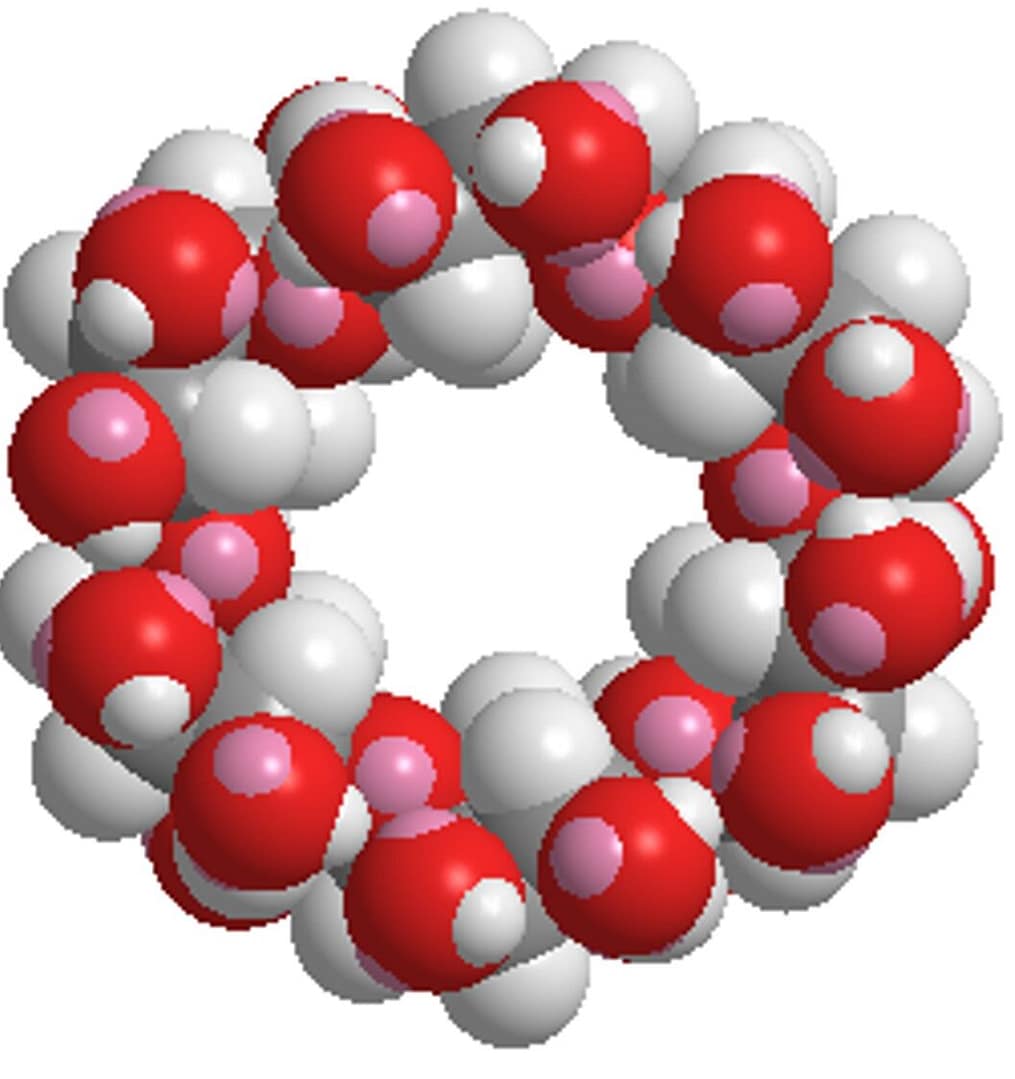
1. α-シクロデキストリン(α-Cyclodextrin)
日本語: デンプン由来の環状オリゴ糖で、分子を内部空間に取り込む性質を持ちます。分子認識や包接機能を利用した材料開発に広く利用されています。
English: A cyclic oligosaccharide derived from starch that can encapsulate molecules and enable advanced host–guest functions.
2. ホスト・ゲスト相互作用(Host–Guest Interaction)
日本語: 分子を選択的に取り込み保持する超分子化学の基本原理です。機能性材料や分離技術の性能向上に活用されています。
English: A supramolecular recognition mechanism that allows selective molecular capture and functional control.
3. CD-MOF
日本語: シクロデキストリンと金属イオンから構築される多孔質材料です。吸着、分離、触媒、医薬分野への応用が期待されています。
English: Cyclodextrin-based metal–organic frameworks with porous structures suitable for adsorption and separation technologies.
4. マイクロ汚染物質除去
日本語: 水中に微量存在する有機汚染物質を取り除く技術です。安全な水資源確保のために重要な研究分野です。
English: Technologies aimed at removing trace organic contaminants from water systems.
5. 機能性食品設計
日本語: 健康機能成分の安定化や味の改善を通じて、より摂取しやすい食品を開発する研究分野です。
English: The design of foods with improved health benefits, stability, and consumer acceptance.
日本語版
研究背景
α-シクロデキストリンは、分子を選択的に取り込む包接能を持つ天然由来材料です。近年では、単なる分子キャリアとしてだけでなく、多孔質材料、水処理膜、食品用ハイドロゲルなどの高度な機能材料の構成要素として注目されています。
今回紹介する研究は、構造設計、環境浄化、食品科学という異なる分野におけるαCD活用例を示しており、シクロデキストリン研究の広がりを理解する上で興味深い事例です。
研究内容
1. シクロデキストリン由来フレームワーク材料の構造設計
Structural hierarchies in cyclodextrin-derived biocompatible frameworks: From hydrogen-bonded assemblies to metal-organic architectures
- シクロデキストリン由来結晶構造やCD-MOFを体系的に整理した総説。
- 水素結合型構造から金属有機構造体までの発展を比較。
- 構造と安定性の関係を解析。
- 次世代多孔質材料の設計指針を提案した。
2. 水中マイクロ汚染物質除去用ナノファイバー
Rational design of poly-cyclodextrin nanofibers through crosslinker chemistry and cavity size for selective micropollutant removal
- αCD・βCD・γCDを用いたナノファイバー膜を開発。
- シクロデキストリン空孔サイズと架橋剤の影響を比較。
- 有機マイクロ汚染物質に対して選択的除去性能を実証。
- 水処理技術への応用可能性を示した。
3. 苦味を低減する食品ハイドロゲル
Macromolecular structure directs (-)-epigallocatechin-3-gallate capture in alginate/cyclodextrin hydrogels for bitterness masking
- 緑茶ポリフェノールEGCGの苦味を低減するハイドロゲルを開発。
- アルギン酸と異なるサイズのシクロデキストリンを組み合わせて評価。
- 分子を効率的に保持し、口腔内での放出を制御。
- 苦味を大幅に低減できることを示した。
期待される応用
これらの研究は、αCDが単なる包接材料ではなく、構造制御材料、環境浄化材料、食品機能化材料として活用できることを示しています。持続可能な水処理技術や機能性食品設計、高性能多孔質材料の開発など、幅広い分野への応用が期待されます。
English Version
α-Cyclodextrin for Advanced Materials, Water Purification, and Functional Foods
Research Background
α-Cyclodextrin is a naturally derived cyclic oligosaccharide known for its host–guest recognition properties. Recent studies have expanded its role beyond molecular encapsulation into framework materials, environmental technologies, and food systems.
Research Highlights
1. Structural Design of Cyclodextrin Frameworks
- Reviewed hydrogen-bonded assemblies and cyclodextrin-based MOFs.
- Analyzed structural organization and stability relationships.
- Proposed design principles for future porous materials.
2. Cyclodextrin Nanofibers for Water Treatment
- Developed nanofibrous membranes using cyclodextrins with different cavity sizes.
- Demonstrated selective removal of organic micropollutants.
- Showed how cavity size and crosslinking chemistry affect performance.
3. Hydrogels for Bitterness Masking
- Designed alginate/cyclodextrin hydrogels for EGCG encapsulation.
- Improved retention and controlled release of the bioactive compound.
- Significantly reduced perceived bitterness.
- Suggested applications in functional food development.
Overall Significance
Together, these studies demonstrate the versatility of α-cyclodextrin in material science, environmental remediation, and food engineering. By leveraging host–guest interactions and structural design, researchers are developing sustainable technologies with broad societal benefits.
References / 文献
- Saxena, S.; Lezeck, H.; Arias, M. J. L. Structural hierarchies in cyclodextrin-derived biocompatible frameworks: From hydrogen-bonded assemblies to metal-organic architectures. Carbohydrate Polymers (2026). DOI: 10.1016/j.carbpol.2026.125685
- Aboelkheir, M.; Lourie, M.; Uyar, T. Rational design of poly-cyclodextrin nanofibers through crosslinker chemistry and cavity size for selective micropollutant removal. Carbohydrate Polymers (2026). DOI: 10.1016/j.carbpol.2026.125765
- Hu, Y. et al. Macromolecular structure directs (-)-epigallocatechin-3-gallate capture in alginate/cyclodextrin hydrogels for bitterness masking. Food Hydrocolloids (2027). DOI: 10.1016/j.foodhyd.2026.113218