キーワード / Keywords
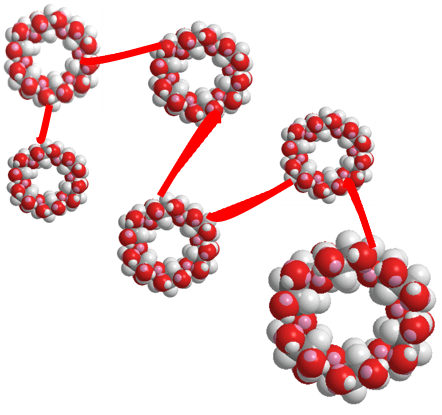
1. シクロデキストリンポリマー(Cyclodextrin Polymer)
日本語: シクロデキストリンの分子認識能力と高分子材料の加工性を組み合わせた材料です。環境浄化、電池、センサーなど多様な分野で利用が進んでいます。
English: Cyclodextrin polymers combine molecular recognition with polymer functionality, enabling applications in sensing, energy, and environmental technologies.
2. ホスト・ゲスト相互作用(Host–Guest Interaction)
日本語: 分子を選択的に取り込む超分子化学の仕組みです。高選択性センサーや分離材料の基盤となります。
English: A molecular recognition mechanism that enables selective binding and enhanced material performance.
3. 高分子電解質(Polymer Electrolyte)
日本語: イオンを運ぶ高分子材料で、次世代全固体電池の重要な構成要素として期待されています。
English: Ion-conducting polymers that play a key role in advanced solid-state battery technologies.
4. キラル認識(Chiral Recognition)
日本語: 鏡像関係にある分子を識別する技術です。医薬品分析やバイオセンシングで重要です。
English: The ability to distinguish molecular mirror images, essential for analytical and biomedical applications.
5. 持続可能材料(Sustainable Materials)
日本語: 再生可能資源や環境調和型設計を取り入れた材料です。将来の循環型社会を支える研究分野です。
English: Materials designed for environmental compatibility and long-term sustainability.
日本語版
研究背景
シクロデキストリンポリマーは、分子を内部に取り込む「ホスト・ゲスト相互作用」と高分子材料の機能性を兼ね備えた材料です。近年では、エネルギー貯蔵、分子センシング、機能性高分子設計など幅広い分野で研究が進められています。今回紹介する研究は、それぞれ異なる分野に属しながらも、シクロデキストリンを活用して材料性能を向上させている点で共通しています。
研究内容
1. 高性能な高分子電解質による次世代電池開発
Well-defined polymer electrolytes via controlled polymerizations
- 全固体リチウム金属電池に向けた高分子電解質を総合的に整理した総説。
- 分子構造や高分子トポロジーを精密に制御することで、イオン伝導性や界面安定性を向上できることを解説。
- β-シクロデキストリンを含む超分子設計も重要な材料戦略として紹介。
- 安全性と高エネルギー密度を両立する次世代電池への応用が期待される。
2. シクロデキストリンを利用した高感度キラルセンサー
Sensitive electrochemical sensor for selective detection of chiral amino acids based on covalent organic framework-cyclodextrin-gold nanocomposite
- シクロデキストリン、共有結合性有機構造体(COF)、金ナノ粒子を組み合わせたセンサーを開発。
- フェニルアラニンなどの鏡像異性体を高選択的に識別。
- 電気化学的に検出しにくいアミノ酸にも対応可能。
- 医薬品分析やバイオ診断技術への応用が期待される。
3. シクロデキストリンを活用した持続可能な発光材料
Covalent-supramolecular multivalent synergy coupling enables ultralong and robust sustainable organic phosphorescence
- セルロースとγ-シクロデキストリンを利用した有機リン光材料を開発。
- 長時間持続する残光特性と高い環境耐性を実現。
- 湿度やpHに応答して発光特性が変化。
- 情報暗号化、ウェアラブルフォトニクス、損傷検知への活用が期待される。
研究全体の意義
これらの研究は、シクロデキストリンポリマーが単なる添加剤ではなく、高機能材料を設計するための重要なプラットフォームであることを示しています。電池、センサー、光機能材料といった異なる分野において、分子認識と超分子相互作用を活用することで、新しい機能や性能向上が実現されています。持続可能社会に向けた材料開発の中で、シクロデキストリンポリマーの役割は今後さらに大きくなると期待されます。
English Version
Cyclodextrin Polymers for Energy Storage, Sensing, and Functional Materials
Introduction
Cyclodextrin polymers combine molecular recognition with advanced polymer architectures. Recent studies demonstrate their growing importance in energy storage systems, analytical sensing, and sustainable functional materials.
Research Highlights
1. Polymer Electrolytes for Advanced Batteries
- Reviewed precisely designed polymer electrolytes for solid-state lithium batteries.
- Highlighted how polymer topology affects ion transport and interface stability.
- Discussed supramolecular strategies involving cyclodextrin-based structures.
- Suggested pathways toward safer and higher-performance batteries.
2. Chiral Electrochemical Sensors
- Developed a sensor integrating cyclodextrin, COFs, and gold nanoparticles.
- Enabled selective recognition of amino-acid enantiomers.
- Demonstrated high sensitivity and good reproducibility.
- Relevant for pharmaceutical analysis and biosensing applications.
3. Sustainable Organic Phosphorescent Materials
- Constructed cellulose/γ-cyclodextrin phosphorescent networks.
- Achieved ultralong afterglow and environmental robustness.
- Exhibited reversible responses to humidity and pH.
- Suitable for optical security, photonics, and smart-material applications.
Overall Significance
Together, these studies illustrate how cyclodextrin polymers contribute to advanced materials through molecular recognition and supramolecular engineering. Applications range from next-generation batteries and sensors to smart optical systems, highlighting their versatility and long-term technological potential.
References / 文献
- Meng, J. et al. Well-defined polymer electrolytes via controlled polymerizations. Progress in Polymer Science (2026). DOI: 10.1016/j.progpolymsci.2026.102165
- Zhang, X. et al. Sensitive electrochemical sensor for selective detection of chiral amino acids based on covalent organic framework-cyclodextrin-gold nanocomposite. Analytica Chimica Acta (2026). DOI: 10.1016/j.aca.2026.346107
- Qiu, C. et al. Covalent-supramolecular multivalent synergy coupling enables ultralong and robust sustainable organic phosphorescence. Journal of Materials Chemistry A (2026). DOI: 10.1039/D6TA04429H