キーワード / Keywords
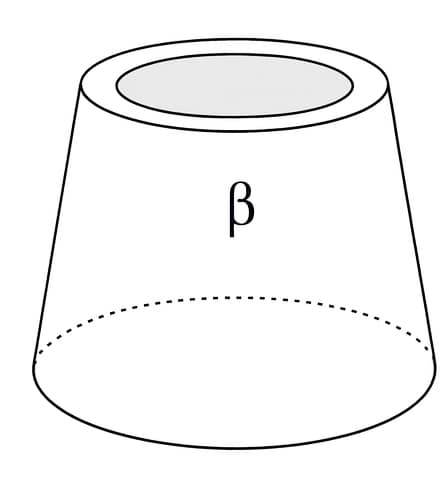
1. β-シクロデキストリン(β-Cyclodextrin)
日本語: ブドウ糖が環状につながった分子で、中央に疎水性の空洞を持ちます。分子の包接、選択的除去、界面調整などを通じて幅広い材料へ機能を与えます。
English: A cyclic glucose molecule with a hydrophobic cavity used for molecular inclusion, selective removal, and interfacial control in functional materials.
2. ホスト・ゲスト相互作用(Host–Guest Interaction)
日本語: シクロデキストリンの空洞が、形や性質の合う分子を選択的に取り込む仕組みです。汚染物質の吸着や薬物の保持など、多様な応用の基盤です。
English: Selective accommodation of a compatible guest molecule within a cyclodextrin cavity, supporting adsorption, stabilization, and delivery.
3. 生体模倣ナノ粒子(Biomimetic Nanoparticle)
日本語: 細胞膜など生体由来の構造を利用し、体内での認識や移動を調整する微粒子です。標的部位へ薬を届ける研究に用いられています。
English: A nanoscale carrier that uses biological structures such as cell membranes to control recognition, circulation, and targeted drug delivery.
4. 水処理複合材(Water-Treatment Composite)
日本語: シクロデキストリンを高分子、炭素、磁性粒子、膜などと組み合わせた材料です。回収性や耐久性を高め、多様な水中汚染物質へ対応します。
English: A material combining cyclodextrin with polymers, carbon, magnetic particles, or membranes to improve pollutant removal, recovery, and durability.
5. バイオマス熱硬化性樹脂(Biomass-Based Thermosetting Resin)
日本語: 植物由来原料を含み、硬化後に強固な網目構造を形成する樹脂です。強度、耐久性、環境負荷のバランスが重要になります。
English: A plant-derived resin that forms a permanent cross-linked network, requiring a balance of strength, toughness, durability, and sustainability.
日本語版
導入
β-シクロデキストリンは、中央に分子サイズの空洞を持つ環状オリゴ糖です。空洞へ特定の分子を取り込むだけでなく、化学修飾や複合化によって、細胞膜の性質の調整、水中汚染物質の捕捉、樹脂の強度と靭性の向上にも利用できます。
ここでは、動脈硬化を標的とする生体模倣ナノ粒子、排水処理用β-シクロデキストリン複合材の研究動向、室温で硬化するバイオマス由来熱硬化性樹脂を紹介します。三つの研究に共通するのは、β-シクロデキストリンを分子認識の容器としてだけでなく、界面や高分子ネットワークを設計する部品として活用している点です。
研究内容
1. 細胞膜のコレステロールを調整し、動脈硬化部位を狙う
Cholesterol-depleted macrophage membrane-coated nano-rapamycin for targeted atherosclerosis therapy
- β-シクロデキストリンを用いて、ナノ粒子を覆うマクロファージ膜からコレステロールを選択的に減らしました。
- コレステロールを減らした膜は流動性が高まり、炎症性マクロファージによる粒子取り込みが改善しました。
- ラパマイシンを搭載した膜被覆ナノ粒子は、免疫回避、血中滞留、動脈硬化プラークへの集積を高めました。
- 細胞試験では、泡沫細胞からのコレステロール排出を促し、炎症性サイトカインの分泌を抑えました。
- 動脈硬化モデルマウスでは、プラーク面積と脂質蓄積が減少し、コラーゲン量が増加しました。
- 全身の脂質値を変えずに効果が見られ、病変局所を中心とする作用が示唆されました。
- 動物で得られた結果であり、人での有効性と安全性の確認には追加研究が必要です。
2. β-シクロデキストリン複合材による水処理を体系化
β-Cyclodextrin-based composites for wastewater treatment: Recent advances, challenges, and future perspectives
- 2021~2026年に報告されたβ-シクロデキストリン系水処理材料を幅広く整理しました。
- 対象には医薬品、染料、農薬、重金属、PFASなどの新興汚染物質が含まれます。
- 遊離β-シクロデキストリンの回収性と安定性の弱点を、架橋や固定化によって補う方法を比較しました。
- 複合相手として、高分子、バイオマス、炭素材料、磁性粒子、MOF、COF、光触媒、分離膜が取り上げられました。
- 除去機構には、ホスト・ゲスト包接、吸着、光触媒分解、膜分離、界面相互作用があります。
- 計算化学や人工知能を用いた機構解析、性能予測、工程最適化も紹介されました。
- 実用化には、試験法の標準化、連続流・実排水試験、成分溶出、再生廃棄物、製造費、ライフサイクル評価が課題です。
3. 室温で硬化し、強さと靭性を両立するバイオマス樹脂
Room-temperature curable biomass-based thermosetting resins with ultrahigh strength, toughness and long-term durability
- バイオマス由来フェノール系プレポリマーと、アルデヒド化β-シクロデキストリンを架橋して樹脂を作製しました。
- β-シクロデキストリン由来の変形しやすい構造を、力を逃がす犠牲的なエネルギー散逸部位として利用しました。
- 動的イミン結合も変形時のエネルギーを吸収し、架橋網目を保ちながら靭性を高めました。
- 沸騰水に対する接着強度は1.94 MPa、剥離仕事は1317.8 mJでした。
- これらは従来型フェノール樹脂のそれぞれ1.49倍、2.49倍でした。
- 室温硬化時の乾燥接着強度は2.24 MPaで、沸騰水耐性接着強度は時間とともに0.71 MPaから1.25 MPaへ上昇しました。
- 原料の最大69.7%をバイオマス由来とし、フェノールについては100%のバイオマス代替を達成しました。
- 低温、湿熱老化、繰り返し気象条件に対する耐久性も示しました。
研究全体の意義
これらの研究は、β-シクロデキストリンの役割が「分子を包む容器」から、界面と材料構造を能動的に調節する設計要素へ広がっていることを示しています。医療分野では細胞膜のコレステロール量を調整して標的性を高め、水処理では多孔性、回収性、耐久性を複合化で補います。樹脂では環状構造の変形と動的結合を利用し、強度と靭性を両立します。
今後は、生体内での長期安全性、実排水中での連続運転と再生、大面積接着材料の製造再現性、使用後の回収・廃棄まで含む評価が重要です。β-シクロデキストリンは、医療、環境、建築材料を横断する持続可能な分子プラットフォームとして期待されます。
English Version
β-Cyclodextrin for Medicine, Water Treatment, and Sustainable Materials Design
Introduction
β-Cyclodextrin is a cyclic oligosaccharide with a molecular-scale cavity. In addition to encapsulating selected molecules, chemical modification and composite formation allow it to regulate cell-membrane properties, capture water contaminants, and improve the strength and toughness of polymer networks.
The studies highlighted here address a biomimetic nanoparticle for targeted atherosclerosis therapy, recent advances in β-cyclodextrin composites for wastewater treatment, and a room-temperature-curable biomass-based thermosetting resin. Each study uses β-cyclodextrin as an active component for engineering interfaces or networks rather than only as a passive molecular container.
Research Highlights
1. Cholesterol-Adjusted Cell Membranes for Atherosclerosis Targeting
- β-Cyclodextrin was used to selectively remove cholesterol from macrophage membranes coating rapamycin-loaded nanoparticles.
- Cholesterol depletion increased membrane fluidity and improved nanoparticle uptake by inflammatory macrophages.
- The membrane-coated particles showed enhanced immune evasion, systemic circulation, and plaque targeting.
- In cell studies, the nanomedicine promoted cholesterol efflux from foam cells and reduced pro-inflammatory cytokine secretion.
- In atherosclerotic mice, treatment reduced plaque area and lipid accumulation while increasing collagen content.
- The effects occurred without changing systemic lipid levels, suggesting a primarily lesion-localized mechanism.
- These findings were obtained in experimental models, and human efficacy and safety require further evaluation.
2. β-Cyclodextrin Composites for Wastewater Treatment
- The review examined β-cyclodextrin water-treatment materials reported from 2021 to 2026.
- Target pollutants included pharmaceuticals, dyes, pesticides, heavy metals, PFAS, and other emerging contaminants.
- Crosslinking and immobilization were compared as strategies to overcome the limited recovery and stability of free β-cyclodextrin.
- Composite partners included polymers, biomass, carbon materials, magnetic particles, MOFs, COFs, photocatalysts, and membranes.
- Removal mechanisms included host-guest inclusion, adsorption, photocatalytic degradation, membrane separation, and complementary interfacial interactions.
- Computational chemistry and artificial intelligence were discussed for mechanism interpretation, prediction, and process optimization.
- Practical barriers include standardized testing, continuous-flow and real-wastewater validation, leaching, regeneration waste, cost, scalability, and life-cycle assessment.
3. A Room-Temperature-Curable Biomass-Based Thermosetting Resin
- Biomass-derived phenolic prepolymers were crosslinked with aldehyde-modified β-cyclodextrin.
- Deformable cyclodextrin units provided a sacrificial pathway for dissipating mechanical energy.
- Dynamic imine bonds supplied additional energy dissipation while maintaining the crosslinked network.
- Boiling-water-resistant bonding strength reached 1.94 MPa, and debonding work reached 1317.8 mJ.
- These values were 1.49 and 2.49 times those of conventional phenolic resins, respectively.
- At room-temperature curing, dry bonding strength reached 2.24 MPa, while boiling-water-resistant strength increased from 0.71 to 1.25 MPa over time.
- Biomass-derived content reached 69.7%, with complete biomass substitution for phenol.
- The resin also resisted extreme cold, hygrothermal aging, and cyclic weathering.
Overall Significance
Together, these studies show that β-cyclodextrin is evolving from a molecular host into an active design element for interfaces and material networks. In medicine, it adjusts membrane cholesterol to improve targeting. In water treatment, composite structures improve porosity, recovery, and durability. In resins, cyclic deformation and dynamic bonding combine strength with toughness.
Future work should examine long-term biological safety, continuous operation and regeneration in real wastewater, manufacturing reproducibility for large bonded structures, and end-of-life recovery or disposal. β-Cyclodextrin offers a versatile molecular platform connecting medical, environmental, and sustainable structural materials.
References / 文献
- Zhang, R.; Liu, Y.; Cao, Z.; et al. Cholesterol-depleted macrophage membrane-coated nano-rapamycin for targeted atherosclerosis therapy. Journal of Nanobiotechnology 24(1) (2026), 881. DOI: 10.1186/s12951-026-04758-8
- Bian, R.; Xie, H.; Lyu, Y.; Liu, Y.; Li, J.; Li, J. Room-temperature curable biomass-based thermosetting resins with ultrahigh strength, toughness and long-term durability. Chemical Engineering Journal 548 (2026), 181758. DOI: 10.1016/j.cej.2026.181758
- Rezania, S.; Cho, J.; Beygisangchin, M.; Ghasemlou, M.; Park, J.; Mojiri, A.; Behroozi, A. H. β-Cyclodextrin-based composites for wastewater treatment: Recent advances, challenges, and future perspectives. Carbohydrate Polymers 391 (2026), 125811. DOI: 10.1016/j.carbpol.2026.125811