キーワード / Keywords
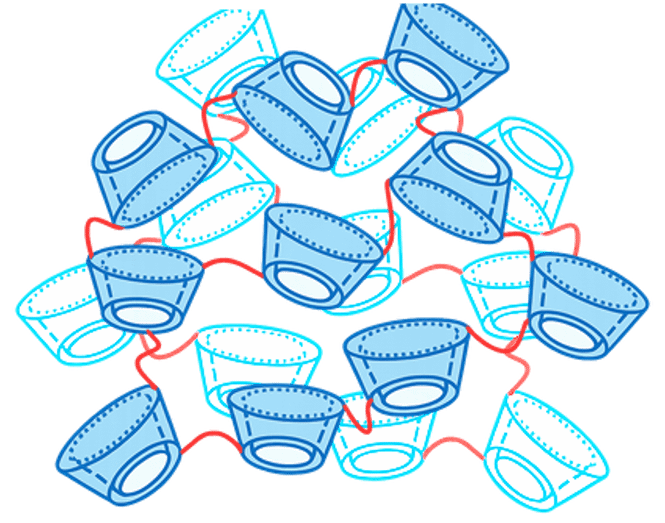
1. シクロデキストリンポリマー(Cyclodextrin Polymer)
日本語: シクロデキストリンを高分子化した材料で、分子を取り込みながら機能を付与できます。医薬品輸送、環境浄化、機能性材料など多様な分野で活用されています。
English: Polymerized cyclodextrin systems capable of molecular recognition, encapsulation, and advanced functional material design.
2. ホスト–ゲスト相互作用(Host–Guest Interaction)
日本語: 分子を選択的に取り込み結合する超分子化学の仕組みです。薬物送達や自己修復材料などの基盤技術として利用されています。
English: A molecular recognition mechanism enabling selective binding, delivery, and responsive material behavior.
3. 脳内薬物送達(Nose-to-Brain Delivery)
日本語: 鼻腔から脳へ直接薬剤を届ける技術です。血液脳関門を回避できる可能性があり、神経疾患研究で注目されています。
English: A strategy for transporting therapeutic compounds directly to the brain through the nasal route.
4. 超分子ゲル(Supramolecular Gel)
日本語: 分子間相互作用によって形成される柔らかい材料です。高い伸縮性や環境応答性を持つ次世代材料として期待されています。
English: Soft materials formed through supramolecular interactions with unique mechanical and responsive properties.
5. バイオ潤滑材料(Biolubricating Materials)
日本語: 生体組織の滑らかな動きを模倣する材料です。人工関節や再生医療分野での応用が期待されています。
English: Materials designed to mimic natural biological lubrication for biomedical applications.
日本語版
研究背景
シクロデキストリンポリマーは、分子を包み込む能力と高分子材料としての加工性を兼ね備えた機能性材料です。近年は、薬剤を目的部位へ届けるドラッグデリバリーシステム、超分子ゲル、高機能バイオ材料などの研究が進み、その応用範囲は大きく広がっています。
今回紹介する研究は、医療、ソフトマテリアル、生体模倣材料という異なる分野での活用例を示しています。
研究内容
1. アルツハイマー病を対象とした脳内薬物送達
Nose-to-brain delivery of a novel boronated curcuminoid via cyclodextrins: Biodistribution toward potential BNCT applications in Alzheimer’s disease
- シクロデキストリンを利用して、溶けにくい薬剤の溶解性を向上。
- 鼻腔投与による脳内送達を評価。
- 静脈投与よりも全身負荷を抑えながら脳への移行を確認。
- アルツハイマー病モデルで特定脳領域への集積が観察された。
- 神経疾患治療へ向けた新しい薬物送達技術として期待される。
2. γ-シクロデキストリン超分子ゲルの力学特性制御
Impact of Threading State on the Mechanics of γ-Cyclodextrin-Pyrene Gels
- γ-シクロデキストリンを利用した特殊な超分子架橋構造を構築。
- 同じ化学組成でも分子の結合様式によって性質が大きく変化。
- 1000%を超える高い伸びと優れた靭性を実現。
- 溶媒環境によって蛍光や粘弾性が変化。
- ウェアラブル材料やソフトロボティクスへの応用が期待される。
3. 自己再生型潤滑ハイドロゲル
Mechanically Robust Lubricating Hydrogels Employing Surface Host-Guest Regenerating Polymer Brushes
- シクロデキストリンのホスト–ゲスト相互作用を利用して表面構造を構築。
- 極めて低い摩擦係数を示す潤滑表面を実現。
- 摩耗後も再生可能な高分子ブラシ層を形成。
- 温度や光による摩擦制御も可能。
- 人工関節や高度な医療材料への応用可能性を示した。
研究全体の意義
これらの研究は、シクロデキストリンポリマーが単なる包接材料ではなく、「運ぶ」「支える」「再生する」という複数の機能を備えた先進材料であることを示しています。脳疾患治療、高機能ソフトマテリアル、生体模倣材料など、次世代医療と材料科学の両分野において重要な役割を担うことが期待されます。
English Version
Cyclodextrin Polymers for Drug Delivery, Smart Soft Materials, and Biomimetic Systems
Research Background
Cyclodextrin polymers combine molecular encapsulation capability with the versatility of polymer materials. Recent studies demonstrate their growing importance in advanced drug delivery, supramolecular materials, and biomedical engineering.
Research Highlights
1. Nose-to-Brain Drug Delivery for Alzheimer’s Disease
- Improved the solubility of a boron-containing therapeutic compound using cyclodextrin systems.
- Evaluated intranasal administration as a brain-targeting route.
- Reduced systemic exposure while enhancing brain accumulation.
- Showed selective accumulation in amyloid-rich regions in a disease model.
- Suggested potential for future neurodegenerative disease therapies.
2. Gamma-Cyclodextrin Supramolecular Gels
- Developed topology-controlled supramolecular gel networks.
- Demonstrated strong relationships between molecular architecture and mechanical behavior.
- Achieved exceptional stretchability and toughness.
- Displayed solvent-responsive fluorescence and viscoelasticity.
3. Regenerable Biolubricating Hydrogels
- Utilized host–guest recognition to anchor lubricating polymer brushes.
- Produced extremely low-friction hydrogel surfaces.
- Enabled repeated regeneration after wear damage.
- Demonstrated responsive friction control using external stimuli.
Overall Significance
Together, these studies show that cyclodextrin polymers are versatile platforms for targeted drug delivery, adaptive soft materials, and biomimetic biomedical systems. Their multifunctional nature may support the development of future healthcare technologies and advanced functional materials.
References / 文献
- Alberti D. et al. Nose-to-brain delivery of a novel boronated curcuminoid via cyclodextrins: Biodistribution toward potential BNCT applications in Alzheimer’s disease. Journal of Controlled Release, 2026. DOI: 10.1016/j.jconrel.2026.115270
- Oh J. et al. Impact of Threading State on the Mechanics of γ-Cyclodextrin-Pyrene Gels. Angewandte Chemie International Edition, 2026.
- Liu Y.R. et al. Mechanically Robust Lubricating Hydrogels Employing Surface Host-Guest Regenerating Polymer Brushes. Advanced Functional Materials, 2026. DOI: 10.1002/adfm.78001