キーワード / Keywords
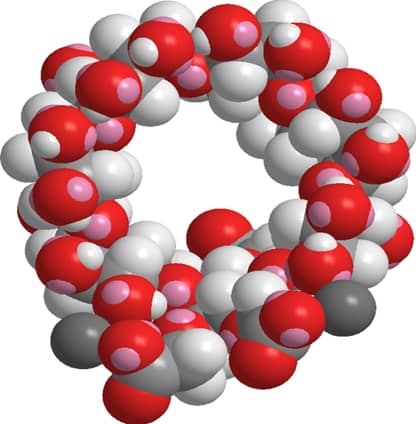
1. CMβCD(カルボキシメチル-β-シクロデキストリン)
日本語: β-シクロデキストリンへカルボキシメチル基を導入した分子です。水になじみやすく、空洞への包接や電荷・立体認識を利用して機能性成分を保持できます。
English: A water-compatible β-cyclodextrin derivative that retains functional molecules through cavity inclusion, charge effects, and molecular recognition.
2. ナノデリバリー(Nanodelivery)
日本語: 有効成分を微小な粒子へ封入し、安定性や放出時間を調整する技術です。必要な場所で長く働かせ、成分の急速な消失を抑える目的で利用されます。
English: A technology that encapsulates active compounds in nanoscale carriers to improve stability and control where and how long they are released.
3. 太陽界面蒸発(Solar Interfacial Evaporation)
日本語: 光を熱へ変換し、水面付近だけを効率よく蒸発させる方法です。水を濃縮しながらイオン移動を促し、低濃度資源の回収を助けます。
English: A solar-driven process that heats the water interface, concentrating solutes and accelerating ion transport for resource recovery.
4. 希土類イオン(Rare-Earth Ions)
日本語: 電子機器や高機能材料に使われる金属イオン群です。産業排水では低濃度かつ他の塩と共存するため、選択的な濃縮・回収が課題です。
English: Metal ions essential to advanced technologies that are difficult to recover selectively from dilute, salt-rich industrial wastewater.
5. キラル分離(Chiral Separation)
日本語: 鏡像関係にある分子を左右別々に見分ける分析です。同じ化学式でも作用や代謝が異なる場合があり、生体試料の精密評価に重要です。
English: The analytical separation of mirror-image molecules, which may differ in biological activity, metabolism, or toxicity despite sharing a formula.
日本語版
導入
CMβCDは、分子を取り込むシクロデキストリン空洞と、カルボキシメチル基による水へのなじみやすさを併せ持つ機能性分子です。その働きは、有効成分を包んでゆっくり放出するだけではありません。誘導体化したシクロデキストリンは、複合材料の結合部位や、似た分子を見分ける分析用の選択場としても使われます。
今回紹介する研究は、キウイフルーツの軟腐病を抑えるナノ粒子、太陽光で希土類イオンを濃縮する多孔質エアロゲル、脳組織中の鏡像異性体を識別する分析法を扱っています。用途は大きく異なりますが、分子を保持し、移動させ、選択するというシクロデキストリンの基本機能でつながっています。
研究内容
1. カルバクロールを長時間放出し、キウイフルーツの軟腐病を抑える
Carboxylated β-Cyclodextrin-Based Drug-Loaded Nanodelivery System for the Control of Kiwifruit Soft Rot
- クロロ酢酸によるカルボキシメチル化で、CMβCDナノスフェアを合成しました。
- 抗菌性成分カルバクロールを含浸し、CAR@CMβCDを作製しました。
- 粒子は主に球状または準球状で、平均流体力学径は278.9 nm、分散指数は0.128でした。
- カルバクロールの搭載量は13.46%で、112時間にわたる持続放出を示しました。
- カルバクロール単独より熱安定性が高まりましたが、試験表面での濡れ性と広がりは改善途上でした。
- 菌を用いた試験では強い抗真菌活性を示し、半数効果濃度は54.8 mg/Lでした。
- ヒト気管支上皮細胞では、100 mg/Lで細胞生存率81.59%超を示し、カルベンダジムよりアポトーシス率が低い結果でした。
- 菌糸の形態観察と染色試験から、抗真菌作用の仕組みを調べました。
2. 太陽光による蒸発で希土類イオンの移動と濃縮を促進
Solar Evaporation-Induced Mass-Transfer Enhancement in a Biomass-Derived Dual-Network Aerogel for Selective Enrichment of Rare-Earth Ions
- カルボキシメチルキトサン、酸化β-シクロデキストリン、PVA、カーボンブラックから二重ネットワーク型エアロゲルを作製しました。
- 階層的な連通孔、イオンとの配位部位、広い波長域の光熱変換機能を一つの材料へ組み込みました。
- 1.0 kW/m²の光照射下で、蒸発速度は2.19 kg/m²/hでした。
- ネオジムイオンを用いた動的濃縮では、吸着量が約190 mg/gとなり、静的吸着の136 mg/gより39.7%向上しました。
- 太陽界面蒸発による濃度上昇と、孔内のイオン輸送促進が同時に働きました。
- 実際の希土類産業排水では、ランタン、セリウム、ネオジム、ガドリニウムを優先的に濃縮しました。
- ガドリニウムの抽出率は85%でした。
3. CMβCDを選択剤にして脳内の鏡像異性体を分析
Determination of Enantiomers of Deschloroketamine and Its Metabolites in Wistar Rat Brains
- デスクロロケタミンと主要代謝物の鏡像異性体を、ラット脳組織中で識別する分析法を検討しました。
- 超臨界流体クロマトグラフィー・タンデム質量分析は、水酸化体と脱メチル化体を分離しました。
- 一方、元の化合物ではピーク形状が大きく乱れ、定量には適しませんでした。
- そこで、CMβCDをキラル選択剤とするキャピラリーゾーン電気泳動と、高感度Z字型検出セルを用いました。
- この方法により、元の化合物の鏡像異性体を定量できました。
- 高用量投与後の脳組織では、二つのデスクロロケタミン鏡像異性体がほぼ同程度でした。
- 代謝物norDXEでは、R体の濃度がS体より高い結果でした。
- 二種類の分離法を組み合わせることで、複雑な生体試料中のキラルプロファイルを評価しました。
研究全体の意義
三つの研究は、CMβCDと関連シクロデキストリン材料が、分子を「包む」「運ぶ」「見分ける」という異なる役割を担えることを示しています。果実保存では、抗菌成分をナノ粒子へ保持して作用時間を延ばします。資源回収では、酸化シクロデキストリンを含む多孔質材料がイオン輸送と選択濃縮を助けます。精密分析では、CMβCDの立体的な認識場が鏡像異性体の分離に利用されます。
今後は、果実表面での付着性と実貯蔵条件での保存効果、エアロゲルの繰り返し使用と回収工程、生体分析法の対象拡張と再現性を確認することが重要です。シクロデキストリン誘導体は、食品ロス低減、排水からの資源回収、高精度分析をつなぐ分子プラットフォームとして期待されます。
English Version
CMβCD for Molecular Selection and Delivery: Fruit Preservation, Resource Recovery, and Precision Analysis
Introduction
Carboxymethyl-β-cyclodextrin combines a molecular host cavity with improved compatibility in water. Its functions extend beyond the slow release of encapsulated compounds. Modified cyclodextrins can also provide binding sites in composite materials and selective environments for distinguishing closely related molecules.
The studies highlighted here address an antifungal nanocarrier for kiwifruit preservation, a solar-driven aerogel for rare-earth enrichment, and an analytical method for resolving mirror-image compounds in brain tissue. Although their applications differ, they are connected by the ability of cyclodextrin materials to retain, transport, and selectively recognize molecules or ions.
Research Highlights
1. Sustained Carvacrol Release for Kiwifruit Soft-Rot Control
- CMβCD nanospheres were synthesized by carboxymethylation using chloroacetic acid.
- The antimicrobial compound carvacrol was incorporated by impregnation to produce CAR@CMβCD.
- The particles were mainly spherical or quasi-spherical, with an average hydrodynamic diameter of 278.9 nm and a polydispersity index of 0.128.
- Drug loading reached 13.46%, and sustained release continued for 112 hours.
- Thermal stability improved, although wetting and spreading on the tested surface remained incomplete.
- Antifungal testing produced a half-maximal effective concentration of 54.8 mg/L.
- Human bronchial epithelial cells retained more than 81.59% viability at 100 mg/L, with a lower apoptosis rate than carbendazim.
- Hyphal morphology and staining experiments were used to investigate the antifungal mechanism.
2. Solar Evaporation Enhances Rare-Earth Ion Transport and Enrichment
- A dual-network aerogel was produced from carboxymethyl chitosan, oxidized β-cyclodextrin, PVA, and carbon black.
- The material combined hierarchical interconnected pores, ion-coordination sites, and broadband photothermal conversion.
- Under 1.0 kW/m² irradiation, the evaporation rate reached 2.19 kg/m²/h.
- Dynamic enrichment of neodymium reached approximately 190 mg/g, compared with 136 mg/g under static adsorption, a 39.7% improvement.
- Solar interfacial evaporation combined local concentration with enhanced ion transport through the porous network.
- In real rare-earth industrial wastewater, lanthanum, cerium, neodymium, and gadolinium were preferentially enriched.
- Gadolinium extraction reached 85%.
3. CMβCD Enables Chiral Analysis in Brain Tissue
- Analytical methods were evaluated for separating deschloroketamine and metabolite enantiomers in rat brain tissue.
- Supercritical-fluid chromatography coupled with tandem mass spectrometry separated hydroxylated and demethylated metabolites.
- Severe peak distortion prevented quantitative analysis of the parent-compound enantiomers by that method.
- Capillary-zone electrophoresis was therefore performed using CMβCD as the chiral selector and a high-sensitivity Z-shaped detection cell.
- This method enabled quantitative analysis of the parent enantiomers.
- After high-dose administration, the two deschloroketamine enantiomers were present at nearly equal concentrations.
- The R form of norDXE was more concentrated than the S form.
- Combining the two separation methods provided a practical workflow for chiral profiling in a complex biological matrix.
Overall Significance
Together, these studies show that CMβCD and related cyclodextrin materials can encapsulate, transport, and distinguish target species. In fruit preservation, an antimicrobial compound is retained in nanoparticles for prolonged action. In resource recovery, a porous cyclodextrin-containing aerogel improves ion transport and selective enrichment. In precision analysis, CMβCD provides a stereoselective environment for separating mirror-image molecules.
Further development should evaluate adhesion and performance under real fruit-storage conditions, aerogel reuse and recovery processes, and the reproducibility and scope of chiral analytical methods. Cyclodextrin derivatives may therefore connect food-loss reduction, recovery of valuable resources from wastewater, and high-resolution chemical analysis.
References / 文献
- Zhou, J.; Liu, Y.; Feng, M.; Mo, Y.; Li, C.; Liu, C.; Li, X. Carboxylated β-Cyclodextrin-Based Drug-Loaded Nanodelivery System for the Control of Kiwifruit Soft Rot. Food and Bioprocess Technology 19(10) (2026), 502. DOI: 10.1007/s11947-026-04583-9
- Yu, J.; Gao, S.; Li, J.; Guo, H.; Wang, F.; Liang, W.; Jiao, R.; Li, A. Solar Evaporation-Induced Mass-Transfer Enhancement in a Biomass-Derived Dual-Network Aerogel for Selective Enrichment of Rare-Earth Ions. Industrial & Engineering Chemistry Research (2026), Early Access. DOI: 10.1021/acs.iecr.6c04325
- Paskanová, N.; Hrubá, V.; Frühauf, P.; Jurásek, B.; Kuchař, M.; Řezanka, P.; Kohout, M. Determination of Enantiomers of Deschloroketamine and Its Metabolites in Wistar Rat Brains. Journal of Separation Science 49(9) (2026), e70503. DOI: 10.1002/jssc.70503